

























































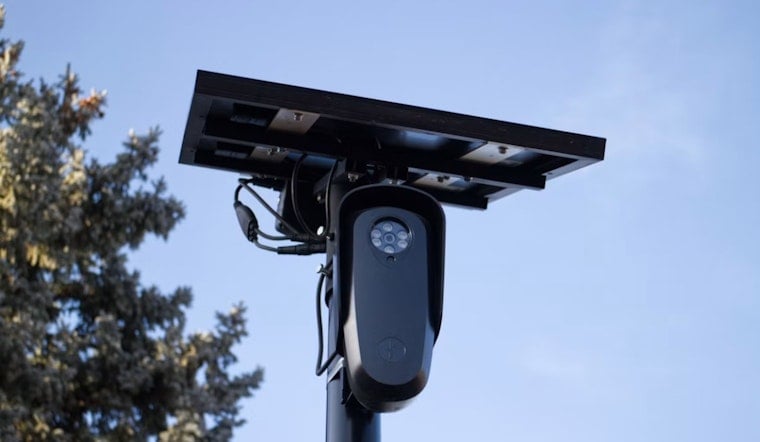
Wylie's six automated license plate readers are going dark. The Wylie City Council voted unanimously, 7-0, this week to discontinue the city's contract with Flock Safety, ending the program when the current agreement expires in October.
The vote makes Wylie the latest North Texas municipality to sever ties with the surveillance company, according to FOX 4 News Dallas-Fort Worth. As reported by CBS News Texas, Mayor Matthew Porter expressed concern that local data was stored and shared broadly with outside law enforcement agencies.
A Petition That Started It All
The council's decision followed a resident-led campaign spearheaded by Austin Gregory, founder of DeFlock Wylie, whose petition collected more than 700 signatures demanding greater data transparency and opposing multi-agency database sharing. Residents raised concerns that out-of-state law enforcement agencies could search local driver data without notifying Wylie police, per the same CBS Texas report.
Wylie originally approved its six Flock cameras in August 2024 at an annual cost of $27,000, funding the system through seized-asset forfeiture funds rather than the city's general budget. The deal was never put out for competitive bidding or given an individual public council vote, according to DeFlock Wylie's own account of the program's history.
A Tight Deadline To Walk Away
The timing of Tuesday's vote was no accident. Under Wylie's original agreement with Flock Group Inc., the city had to submit written notice of non-renewal at least 30 days before its October 13 expiration date, making September 13 the strict deadline to avoid an automatic 24-month contract extension through October 2028, DeFlock Wylie notes.
Pflugerville Pulls The Plug The Same Night
Wylie wasn't alone. The Pflugerville City Council also voted unanimously to end its Flock Safety contract and disable 28 cameras the same night, after public records revealed 459 outside organizations — including out-of-state entities — had conducted nearly 1.6 million searches hitting Pflugerville's camera network over a six-month period, as detailed by MySA. Audit records showed outside searches outnumbered local police queries by 315 to 1, a lopsided gap that helped fuel Pflugerville's own reversal, as Hoodline reported.
Flock cameras are now subject to a nationwide debate over privacy concerns, and recent criminal cases in Texas have sharpened that scrutiny. In Lufkin, a police officer was arrested and indicted this month on 100 felony counts after an internal investigation found he improperly ran more than 45,000 Flock camera searches in roughly 200 days, according to Newsweek, which reported that one individual license plate was queried nearly 3,500 times. The department suspended its entire camera network in response.
A separate case out of Katy drew similar alarm. A former Katy police officer was indicted in April on felony charges of stalking and misuse of official information after allegedly running more than 2,300 unauthorized Flock camera searches over 11 months to track his ex-wife, per KHOU. He was fired following an internal affairs probe, a case Hoodline covered in depth in its report on the officer accused of stalking.
Flock Responds, But Cities Keep Walking Away
Facing mounting nationwide privacy backlash and officer misuse cases, Flock Safety CEO Garrett Langley announced company-wide policy updates earlier this month, including reducing default data retention from 30 days to 7 days and mandating misuse audit tools, according to Fox Business. Flock noted that more than 90 percent of non-plate searches occur within seven days of capture.
Even so, the reforms haven't stopped the wave of municipal exits playing out across the state this month. Yet not every level of Texas government is retreating from the technology. The Texas Department of Public Safety approved a $26 million contract with Flock Safety in 2025 to install license plate readers along state highways supporting Operation Lone Star border enforcement, as reported by The Texas Tribune.
Dallas is moving in the same direction as the state, not its suburbs. The Dallas Police Department maintains more than 600 Flock cameras under a $5.74 million contract running through June 2028, conducting more than 800,000 searches on the network in 2025 alone while retaining captured data for up to a year — a policy Dallas police defend as necessary for complex criminal investigations, per the Tribune's reporting. That divide, between suburban councils pulling out and state and metro agencies expanding, is likely to keep defining the fight over license plate surveillance across North Texas in the months ahead.





