

























































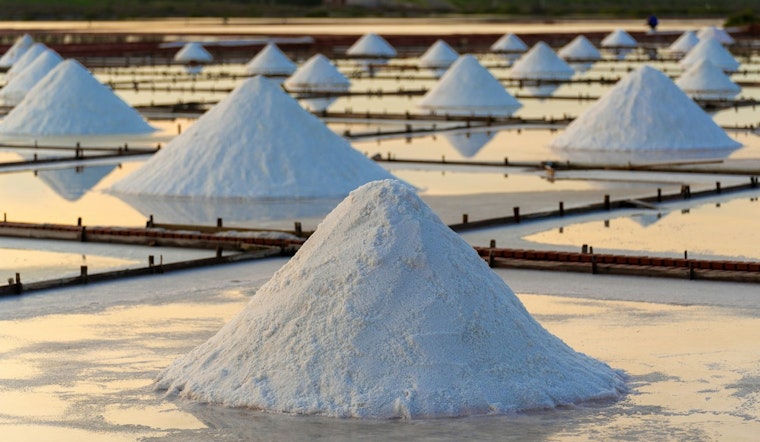
Yorkville's public works crews are heading into winter with less salt than they wanted and a much bigger bill than they budgeted for. The Yorkville City Council voted on August 11 to approve a $256,243 emergency contract with Midwest Salt after the state's joint purchasing program failed to attract a single bidder for the city's road salt needs.
The breakdown left Yorkville and roughly 260 other cities without a supplier this year, according to Shaw Local. Yorkville had previously procured its salt through Illinois Central Management Services, the state agency that negotiates bulk contracts on behalf of local governments under the Illinois Governmental Joint Purchasing Act. This year, that agency received an empty bid for Yorkville's supply, leaving the city to fend for itself on the open market.
Public Works Director Eric Dhuse told the outlet the shortfall is unlike anything he has seen. “The salt shortage has not happened in his 26 years of bidding salt,” he said, describing a scramble that sent municipalities across the region searching for whatever tonnage they could find. Dhuse said the supplier shortage sent everybody scrambling to try to find salt, and that the mine closure's effects were compounded by above-average snowfall in much of the country last season.
A Statewide Bidding Collapse
Yorkville wasn't alone in getting shut out. Kendall County towns were in a similar salt-supply predicament, and the county board itself declared an emergency to approve $350,000 for bulk rock salt supplies, with the resulting contract priced much more expensive per ton than the previous year. Neighboring communities, including the Village of Channahon, reported the identical problem in an August 2026 notice, as the state's joint procurement program came back with no bids for bulk road salt across multiple Illinois municipalities.
Yorkville issued seven bids to fill its salt demand and got responses from just two companies. One of them, Compass Minerals, which supplied Yorkville salt at $72 per ton last year, told the city it was already booked up and had no remaining salt to sell. That left Midwest Salt, based in West Chicago, as the only viable option, quoting the city $111.41 per ton — a price the contract will require the company to deliver by October 1.
Why the Market Cracked
The roots of the shortage trace back to Louisiana. Cargill closed the Avery Island salt mine, the oldest operating salt mine in the United States, removing more than 2 million tons of salt from markets nationwide. The closure followed a December 2020 roof collapse that killed two miners; the mine was fully flooded and sealed by 2022, according to Powder & Bulk Solids.
That lost capacity landed in a market already stretched thin. Per the U.S. Geological Survey's Mineral Commodity Summaries 2026, cited by Crux Investor, 2025 was the first year chemical industry demand surpassed highway de-icing as the largest end market for U.S. salt, with domestic consumption climbing to 57 million metric tons while domestic production stayed flat at 40 million metric tons. Widening that gap, U.S. net import reliance for salt hit 31% in 2025, up from 23% the year before, according to data reported by Discovery Alert — a dependence that leaves highway departments exposed to shipping bottlenecks and spot-market spikes that can run up to three times normal contract rates.
The premium Yorkville is paying shows up clearly against other Illinois contracts. The Village of Winnebago locked in delivered bulk rock salt at $87.42 per ton from Morton Salt through the state's joint purchasing program for this winter, making Yorkville's $111.41-per-ton emergency deal roughly 27% higher.
Stretching What's Left With Brine
Under the new contract, Midwest Salt secures 2,300 tons for Yorkville, well short of the 3,500 tons the city initially hoped for. Yorkville currently has 700 tons on hand and uses around 2,500 tons in a bad winter, so Dhuse said the city can still fill its bins and have enough salt for the season — just with less cushion than usual.
To make the reduced supply last, Yorkville will rely more heavily on liquid brine and calcium additives this year. That approach has research behind it: a University of Wisconsin-Madison Traffic Operations and Safety Lab study found that pre-treating roads with a 23.3% sodium chloride brine mixture cleared roadways more than two hours faster on average while cutting overall rock salt usage by 23% compared with conventional granular salting. The National League of Cities has separately found that proactive brine applications can reduce storm-response material costs by up to 90% compared with post-storm de-icing, with some Midwestern cities saving over $100,000 annually after the switch.
Calcium additives serve a different purpose during the coldest stretches. Plain rock salt loses its melting power once pavement temperatures drop below roughly 15 to 20 degrees Fahrenheit, according to Illinois Department of Transportation and industry technical standards, which is why blending in calcium-based compounds can extend de-icing effectiveness down to about -20 degrees.
New Legal Options for Future Winters
Illinois lawmakers have already moved to give cities more flexibility for next time. Public Act 103-0865, which took effect January 1, 2025, amended the Illinois Governmental Joint Purchasing Act to let local public bodies tap national cooperative purchasing programs when the traditional lowest-bidder state contracts fail, according to a summary from Robbins Schwartz. That change means municipalities like Yorkville won't be entirely dependent on the state's master contract process if this year's bidding collapse repeats itself.
For now, Yorkville's $256,243 contract with Midwest Salt is signed and locked in, and Dhuse and his crews are counting on brine trucks and calcium blends to make the reduced tonnage stretch through whatever the coming winter brings.





