

























































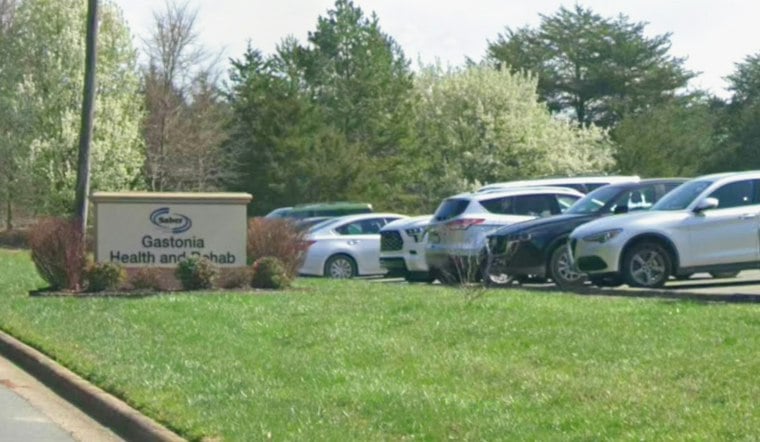
Fourteen long-term care facilities within 25 miles of Charlotte carry the federal government's lowest possible one-star rating, according to data published on Medicare.gov/Care Compare, which evaluates nursing homes on fire safety, health assessments, staffing ratios, complaint investigations, and infection prevention. Among them is Copperfield Health & Rehabilitation in Concord, a facility that has recorded abuse-related citations severe enough to cap its health inspection score.
As reported by WSOC-TV, the federal government publishes these nursing home ratings through Medicare.gov/Care Compare, and the one-star designation places all 14 facilities in the lowest tier nationally. Copperfield received an actual-harm abuse citation under Tag F0600 in February 2026, one of three immediate-jeopardy citations the Concord facility has racked up over three years, according to NursingHomeLens. The 120-bed, for-profit home averages 2.69 nursing hours per resident day, below the North Carolina median of 3.11, per the same data.
How the Abuse Flag Works
Under federal criteria, the Centers for Medicare & Medicaid Services automatically caps a facility's health inspection rating at two stars if it is cited for abuse causing actual harm — severity level G or higher — on its latest standard survey or a complaint inspection within the past 12 months, according to CMS guidance described by CMS Compliance Group. The red abuse icon that flags such citations on Care Compare was introduced in October 2019 to help families spot severe or recurring safety deficiencies.
Copperfield is not the only Concord facility on the list. Cabarrus Health and Rehabilitation Center, also located in Concord, carries a one-star rating as well, per the WSOC-TV report. Other facilities named include Gastonia Health & Rehab Center and The Greens at Gastonia in Gastonia; White Oak Manor – Charlotte, University Place Nursing and Rehabilitation Center, and Charlotte Health & Rehabilitation Center in Charlotte; Pine Crest Health & Rehabilitation and Pelican Health Randolph LLC; PruittHealth – Union Pointe in Monroe; Crestview Health & Rehabilitation and Glenwood Health & Rehabilitation in Mooresville; and Magnolia Manor and PruittHealth, both across the state line in Rock Hill, South Carolina.
Why the Ratings Look the Way They Do Now
The one-star scores arrive amid a shifting federal oversight landscape. In December 2025, the U.S. Department of Health and Human Services repealed the minimum staffing mandate that had required 3.48 nursing hours per resident day nationwide, returning staffing oversight primarily to state survey agencies and facility-level assessments, according to the U.S. Department of Health and Human Services. The repeal was carried out under Secretary Robert F. Kennedy Jr. on the grounds that rigid staffing quotas disproportionately burdened rural facilities.
CMS also changed how it scores inspections. Effective July 2025, health inspection ratings are now calculated using the two most recent standard surveys instead of three, with the most recent survey weighted at 75 percent because of ongoing inspection backlogs, per the American Health Care Association. CMS began publicly displaying aggregate performance data for multi-facility nursing home chains on Care Compare that same month.
Then in July 2026, CMS issued guidance under memo QSO-26-14-NH introducing a risk-based survey process that streamlines standard inspections for top-performing five-star facilities, freeing up inspection resources to focus more intensive scrutiny on low-rated one-star homes like the ones surrounding Charlotte. Federal law still requires every certified nursing home to undergo a standard recertification survey at least once every 15 months, regardless of rating.
State Enforcement and the Cost of Care
North Carolina's Division of Health Service Regulation enforces its own penalties alongside federal star ratings, classifying Type A1 violations for resident death or serious abuse and neglect under General Statutes § 131D-34 and applying mandatory treble fines for repeat citations within 12 months. State inspectors conduct unannounced standard recertifications and complaint investigations for all licensed facilities in addition to federal oversight.
Statewide, North Carolina's 419 CMS-certified nursing homes average an overall rating of 2.9 out of 5 stars, just below the 3.0 national average, while logging an annual nursing staff turnover rate of 50.4 percent — 9 percent higher than the national benchmark, according to The Care Ratings. Nursing homes within the city of Charlotte itself average an overall rating of 2.5 stars, per the same source.
The financial stakes for families remain steep. A private room at a North Carolina skilled nursing facility costs roughly $10,798 a month, or about $129,575 annually, per WSOC-TV's reporting. Genworth Financial's 2024 survey put the state's annual median cost at $118,625 for a private room and $105,850 for a semi-private room, with North Carolina ranking 34th nationwide for semi-private nursing home costs.
In Cabarrus County, home to both one-star Copperfield and Cabarrus Health and Rehabilitation Center, adults aged 65 and older make up 13.2 percent of the population, compared to 16.3 percent statewide, according to ElderVoice. The county maintains a higher median household income than the state average despite the presence of the low-rated homes, the same source notes.
Facilities designated Special Focus Facilities under federal rules face mandatory bi-annual inspections and risk termination from Medicare and Medicaid if quality does not improve within 18 to 24 months, though the federal SFF list is capped at under 150 facilities nationwide due to regulatory resource constraints. It remains unclear how individual facilities named in the Charlotte-area data, including Copperfield, are implementing corrective action following their citations.





