

























































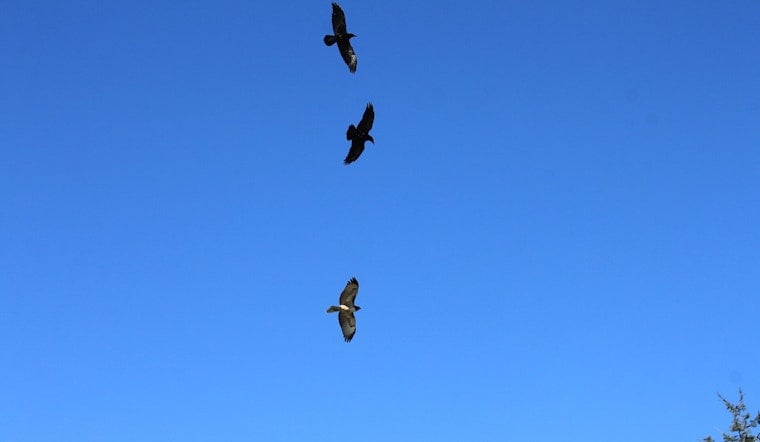
The crows are back in downtown Portland, and there are already about 1,500 of them gathering near Pioneer Courthouse Square as the fall roost begins to take shape. Researchers tracking the birds expect that number to swell to more than 20,000 by the time winter sets in, marking the return of one of the city's strangest annual wildlife spectacles.
Gary Granger, a certified Oregon naturalist who works with the Portland Crow Roost project, has been out following the clues the birds leave behind as the flock rebuilds downtown, according to KATU. The return of the crows each fall has become something of a seasonal signal for downtown Portland, and Granger's group is among the researchers working to understand why the birds keep choosing the city core over quieter, rural options. Granger co-founded the citizen science initiative in late 2017 alongside physician Dr. Rebecca Provorse, and the pair regularly conduct nocturnal counts across 13 miles of gridded streets within a 400-block downtown zone, according to SciStarter.
A Population That Keeps Climbing
The scale of the roost has grown dramatically since organized counting began. In January 2024, researchers with the Portland Crow Roost project recorded a peak winter population of 22,370 roosting crows downtown, a fourfold increase since systematic counts started in late 2017, per data published by PDXScholar. Early estimates from 2013 had put the downtown flock at around 5,000 birds, making the current numbers a striking jump even by the standards of a city already known for large urban bird gatherings.
Wildlife experts at the Bird Alliance of Oregon attribute the flocking pattern to a mix of factors unique to the urban core, according to reporting by the Northwest Examiner. Those factors include the urban heat island effect, dense tree canopy, night lighting that helps deter predators like Great Horned Owls, and easy access to food waste. City microclimates retain ambient heat overnight, giving crows a warmer place to roost than the surrounding countryside.
Falconry Keeps the Flock Moving, Not Away
Because the roost brings real costs along with the spectacle, downtown business groups have leaned on non-lethal deterrents for years. Downtown Portland Clean & Safe has contracted Integrated Avian Solutions since 2017 to fly trained Harris's hawks four to five nights a week between October and April, hazing crows out of a 72-block commercial core. The strategy isn't meant to eliminate the birds — falconers instead nudge them toward open, grassy waterfront areas where droppings cause less property damage.
Those infrastructure impacts are real for property owners. Earlier this year, the Northwest Community Conservancy in the Pearl District paid $24,000 to Integrated Avian Solutions for a private hawk abatement program after crows began damaging rooftop insulation, pecking at HVAC equipment, and soiling sidewalks, the Northwest Examiner's report notes. It's a costly reminder that managing the roost, rather than removing it, is the only option currently on the table.
Why Poison Isn't an Option
That limitation is by design. The Portland City Council voted unanimously in June 2019 to ban the use of toxic bird poisons, known as avicides, on all municipal property, according to OPB. City leaders instead mandated non-lethal deterrent methods such as falconry hazing and power-washing. American crows are also federally protected under the Migratory Bird Treaty Act, making it illegal to kill or harm the birds without federal permits, as Hoodline has previously reported.
Before falconry entered the picture, the city's approach to crow droppings was considerably more mechanical. Local business improvement districts spent tens of thousands of dollars in 2016 on a motorized, Zamboni-style sidewalk scrubber nicknamed the “Poopmaster 6000,” per KATU. Mechanical sweepers ultimately couldn't keep pace with droppings landing on benches, awnings, and elevated structures, which helped push the shift toward hawks a year later.
Part of a Larger Regional Pattern
Portland's roost isn't the only shifting corvid gathering in the region. A flock of up to 20,000 crows near Seattle relocated from the UW Bothell campus to Redmond in 2025 following habitat changes and construction, Hoodline previously reported, showing how development and environmental shifts can push these roosts into new towns across the Pacific Northwest.
Local ornithologists with the Portland Crow Roost project also draw comparisons between the winter crow gathering and the city's autumn Vaux's Swift phenomenon, in which tens of thousands of migrating swifts roost nightly inside the chimney of Chapman Elementary School. Both spectacles draw crowds of spectators and researchers each year, reinforcing Portland's reputation as a hub for large urban bird gatherings. As the crow numbers climb toward their winter peak, Granger and his fellow researchers will keep tracking the flock's movements block by block, trying to pin down exactly what keeps drawing tens of thousands of birds back to the same downtown streets.





