

























































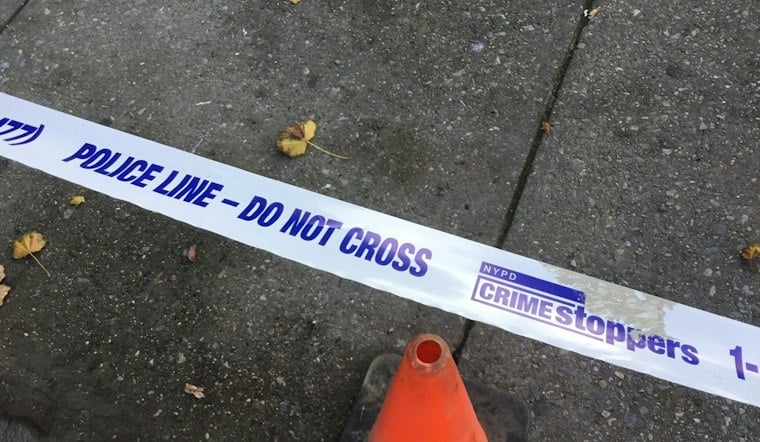
A 55-year-old Brooklyn man has been arrested and charged with rape in connection with a 1995 attack on a Bedford-Stuyvesant rooftop, more than three decades after the crime went cold. Williams Stephens was taken into custody at his Brooklyn home after NYPD detectives used genetic genealogy to link him to DNA collected from the scene, according to police.
A Rooftop Attack Near Marcus Garvey Boulevard
According to the New York Daily News, the attack happened on August 2, 1995, when a 36-year-old woman was approached from behind and forced onto the roof of a building on Pulaski Street near Marcus Garvey Boulevard. Police say the attacker threatened her with a gun, raped her, and then robbed her of her jewelry before fleeing. Detectives collected DNA evidence from the scene that day, but at the time it matched no one on record.
For years the case sat unresolved after being assigned to the NYPD Special Victims Unit's Cold Case Squad. The Daily News reports that Stephens has no prior criminal record, a detail that likely kept him off investigators' radar for decades even as the evidence sat waiting for a match.
How a 2005 Filing Kept the Case Alive
The case might have expired years ago if not for a legal maneuver from the early 2000s. The John Doe Indictment Project, an initiative of Mayor Michael Bloomberg's administration, used a $350,000 Department of Justice grant to secure grand jury indictments against unknown perpetrators based solely on their DNA profiles before five-year limitation periods could run out, according to FindLaw. Police say the mystery man's DNA from this case was pre-indicted in 2005 under that same strategy, tolling the statute of limitations before it could expire.
New York State had five- and ten-year statutes of limitations for sex offenses. Because the Bed-Stuy attack happened a decade before that change, prosecutors needed the earlier John Doe indictment to keep the door open for a future arrest. The legal tactic was later upheld by the New York State Supreme Court Appellate Division First Department, which ruled in the 2008 case People v. Martinez that John Doe DNA indictments satisfy constitutional grand jury and notice requirements while legally tolling the statute of limitations, according to the Touro Law Review.
The Genetic Genealogy Squad's Growing Track Record
The break in the case came from the NYPD's Investigative Genetic Genealogy Squad, which worked alongside the Special Victims Unit's Cold Case Squad to crack it. Genetic genealogy works by linking DNA recovered at a crime scene to relatives who have submitted their own genetic information to public databases, and police say the attacker's DNA was ultimately linked to one of Stephens' family members, generating the lead that led detectives to him. The unit was newly formed as the first specialized team of its kind for a local police agency in New York state, according to Newsday.
The squad has racked up a string of high-profile results in recent months. Just last month, it worked with the NYC Office of the Chief Medical Examiner to identify the 1,654th victim of the 2001 World Trade Center attacks, marking the first time genetic genealogy was used to identify remains from that attack, as Hoodline reported at the time. And back in March, NYPD Cold Case detectives used the same technology to finally name a 1990 Bedford-Stuyvesant homicide victim, identifying her as 21-year-old Sheila Ramsey after her remains had gone unidentified in a Gates Avenue basement for decades, a case Hoodline covered as the Bed-Stuy Boiler Room case.
Once Established, Charges Follow a Familiar Path
Once genetic genealogy generates a lead, investigators still have to build a criminal case the traditional way. Police say detectives developed enough evidence to establish probable cause to charge Stephens, following the same blueprint used against a Georgia man arrested last October. In that case, Queens prosecutors charged Michael Benjamin with five 1990s rapes after matching a 2005 John Doe DNA indictment to DNA collected from a discarded cup, according to the Queens District Attorney's Office.
Stephens is due for arraignment in Brooklyn Criminal Court. The case unfolds against a backdrop of staffing declines and resignations at the NYPD's Cold Case Squad. That staffing pressure, combined with a growing library of consumer DNA data, helps explain why genetic genealogy has become an increasingly central tool for cracking cases that had otherwise gone cold for decades.





