

























































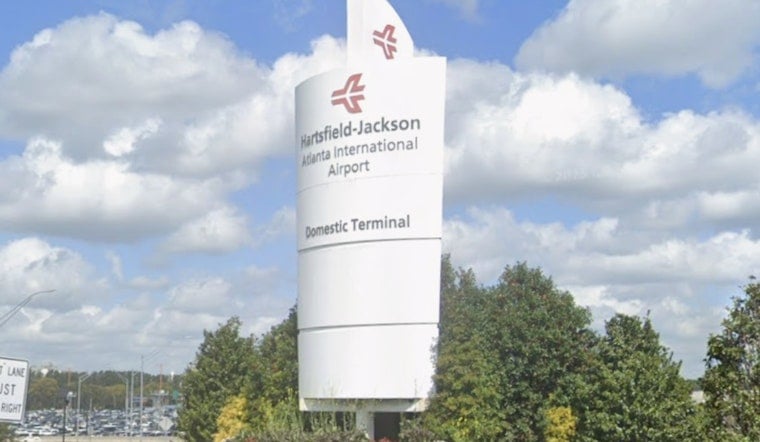
Federal officers at Hartsfield-Jackson Atlanta International Airport have seized more than 4,000 pounds of khat so far this year across four separate enforcement actions, a haul U.S. Customs and Border Protection says carries an estimated street value of roughly $500,000. Despite the size of the seizures, CBP has not said whether any arrests or charges resulted from the four Atlanta busts as of early September.
The plant material, sometimes called Abyssinian tea or African salad, showed up both in commercial cargo and in passenger luggage, according to FOX 5 Atlanta. CBP officers intercepted cargo shipments originating from India, the Netherlands and Nigeria, and on August 13 searched the checked luggage of two U.S. citizens who had just arrived on a flight from Paris, according to a U.S. Customs and Border Protection release.
Khat contains two stimulants, cathinone and cathine, that the Drug Enforcement Administration classifies differently: cathinone is a Schedule I controlled substance, while cathine sits under the far less restrictive Schedule IV. Per the DEA, khat can cause increased heart rate and blood pressure, insomnia, anxiety and agitation. The World Health Organization classified khat as a drug of abuse in 1980, citing its potential for psychological dependence, according to 11Alive.
Why Smugglers Race the Clock
The science behind the smuggling operations traces back to the plant itself. Cathinone, khat's primary active stimulant, naturally degrades into the weaker cathine within roughly 48 hours of harvest unless it's specially preserved — a chemical clock that pushes traffickers toward the fastest possible commercial air routes, according to the DEA Diversion Control Division. That urgency helps explain why smugglers lean on nonstop international flights and moist packaging to keep the plant material classified as the more potent, and more heavily penalized, Schedule I substance.
The legal stakes tied to that degradation window are steep. Under 21 U.S.C. § 960, importing Schedule I cathinone carries a maximum federal prison sentence of 20 years, compared with just five years for importing Schedule IV cathine, per FindLaw. CBP says the khat seized in Atlanta will be destroyed.
Part of a Broader Late-Summer Pattern
Atlanta's four seizures are only part of a larger national push. CBP has seized nearly 19,000 pounds of khat nationwide during the first 10 months of the current fiscal year, following approximately 46,000 pounds seized across all of fiscal year 2025. Hartsfield-Jackson, which handled more than 106 million passengers in 2025 and remains the world's busiest airport, was among the airports involved in the recent khat seizures, according to Air Service One.
The Atlanta interceptions land amid a wider late-summer surge of khat busts at other major U.S. airports. At Dulles International Airport in Virginia, CBP officers on August 14 intercepted a passenger arriving from Paris with 368 pounds of khat packed into eight checked suitcases, and turned that traveler over to local airport police for felony state prosecution, according to CBS News. Hoodline has also reported on a separate 764-pound Dulles bust involving travelers arriving from Casablanca and Paris, while Chicago O'Hare and Baltimore/Washington International each logged their own multi-hundred-pound passenger luggage seizures in August.
Where the Khat Was Headed
Concealment inside legitimate-looking freight isn't new to these cases. Earlier this year, CBP agriculture specialists at Dulles intercepted 139 pounds of Ethiopian khat hidden inside 10 boxes within a commercial spice shipment bound for Sacramento, California. Domestic consumption of khat is concentrated primarily within East African and Middle Eastern immigrant communities in metropolitan areas such as New York City, Washington, D.C., Minneapolis and Dallas, according to the U.S. Department of Justice.
Large-scale federal khat enforcement is not new, either. In July 2006, federal prosecutors executed what they called Operation Somalia Express, charging 44 members of an international smuggling ring in what the Drug Enforcement Administration called the largest khat prosecution in U.S. history, after seizing more than five tons of khat valued at over $2 million. The plant is consumed socially, but cathinone is a Schedule I controlled substance.
For now, the Atlanta case remains open in one key respect: CBP has not confirmed whether any of the four local seizures have led to arrests or charges, even as the airport's khat haul climbs into the thousands of pounds and joins a growing list of similar busts across the country's busiest air hubs.





