

























































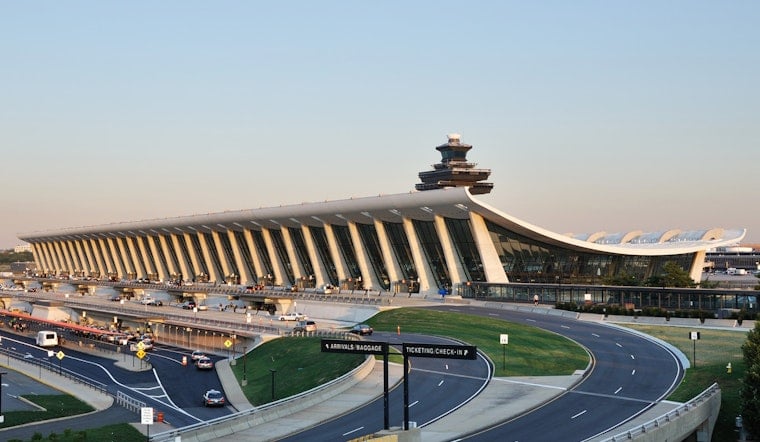
Two men arriving at Washington Dulles International Airport from Casablanca and Paris were carrying a combined 14 checked bags stuffed with bundles of dried plant material, and when Customs and Border Protection officers took a closer look, they found 764 pounds of khat worth an estimated $90,000. Virginia state police troopers arrested both men on felony charges after CBP officers turned them over to state custody.
The travelers were identified as 33-year-old Dorian Lamin Cham of Woodstock, Georgia, and 33-year-old Dama Jawara of the Bronx, New York, according to WBFF Fox45 News. Cham and Jawara each checked seven bags and carried one bag on board, and field tests confirmed the plant material inside as khat. Virginia state police troopers charged both men with transporting a controlled substance into Virginia and with felony possession with intent to distribute.
A Stimulant Leaf With Two Legal Faces
Khat is a leaf typically grown in East Africa and the Arabian Peninsula, consumed by chewing or brewing, and also known as Abyssinian tea or African salad, per the station's report. It's classified as a controlled substance in the United States and can cause delusions, loss of appetite, difficulty breathing and an increased heart rate. According to the Drug Enforcement Administration, freshly harvested khat leaves contain cathinone — a Schedule I stimulant with high abuse potential and no accepted medical use — which naturally breaks down after roughly 48 hours into cathine, a Schedule IV substance, as CBS News reports.
That narrow chemical window helps explain why smugglers lean so heavily on fast transatlantic flights rather than slower shipping routes. The World Health Organization designated khat a drug of abuse back in 1980 over its potential for psychological dependence and health effects including severe hypertension, heart palpitations and manic delusions, per the same CBS News account.
Charges Carry Steep Mandatory Minimums
Under Virginia Code § 18.2-248.01, transporting one ounce or more of a Schedule I substance into the state with intent to sell or distribute is an unclassified felony punishable by 5 to 40 years in prison, including a mandatory minimum three-year prison term and fines up to $1,000,000, according to the Virginia Law Code. A second or subsequent transportation conviction carries a 10-year mandatory minimum. Separately, Virginia Code § 18.2-248(C) sets a first-offense sentence of 5 to 40 years and a maximum fine of $500,000 for possessing a Schedule I or II substance with intent to distribute — a charge prosecutors can pursue based on luggage volume and packaging alone, even without evidence of a completed sale.
CBP Area Port Director Christine Waugh framed the arrests as a message to prospective couriers. “These arrests should be a warning to all would-be smugglers that the small fee drug trafficking organizations are paying you to haul khat and other illicit drugs won't cover the cost of the severe consequences you'll face when Customs and Border Protection officers catch you,” Waugh said. She added that CBP “appreciates its partners' willingness to hold smugglers accountable and help end the khat smuggling trend.”
Part of a Regional Surge
The Dulles seizure is the latest in a run of khat busts across the Washington-Baltimore corridor. On August 14, Metropolitan Washington Airports Authority Police arrested a New York man after CBP officers found 368 pounds of khat in his luggage at Dulles. Just days before that, officers at Baltimore/Washington International Thurgood Marshall Airport seized 412 pounds of abandoned khat from a London flight, followed by 847 pounds packed into a dozen suitcases carried by two New York-bound travelers — busts Hoodline previously covered.
In June, CBP officers at Dulles also intercepted 139 pounds of Ethiopian khat hidden inside a commercial air cargo shipment of mixed spices bound for Sacramento, California, as Reston Patch reported, showing traffickers are working both cargo and passenger-baggage channels. CBP officers say they've reported increased attempts to transport khat in traveler baggage more broadly, a trend visible nationwide: federal officers seized roughly 46,000 pounds of khat during fiscal year 2025 and nearly 19,000 pounds across the first nine months of fiscal year 2026, according to Daily Voice.
Even against that national backdrop, August's regional numbers stand out. Federal and regional law enforcement seized a combined 2,391 pounds of khat across four major interdictions at Dulles and BWI Marshall in that single month alone. Still, the largest recorded U.S. khat interdiction remains a 2020 case in Seattle, where federal authorities seized 10 tons of the substance falsely labeled as green tea inside a maritime shipping container from Kenya — a scale passenger-baggage smuggling has yet to approach.





