

























































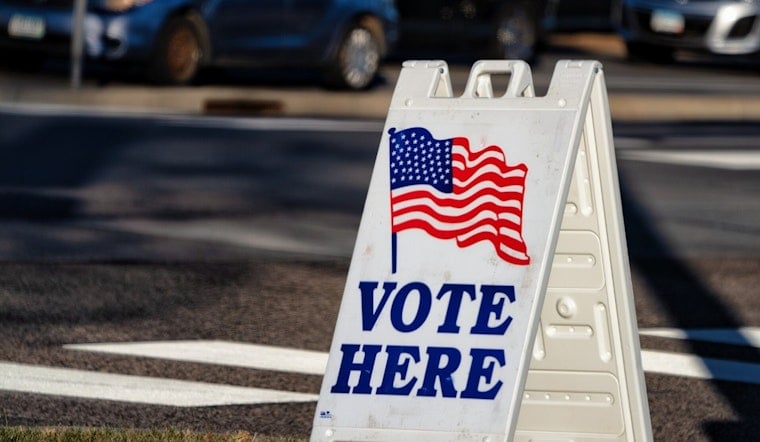
More than 41,000 Missourians on felony probation or parole can now register to vote for the first time this fall, after a law quietly rewired the state's decades-old felony disenfranchisement rules. Many of them still don't know it. Advocates worry that newly eligible voters could be deterred before the October 7 registration deadline.
The change stems from House Bill 1871, a sweeping election-law package signed by Gov. Mike Kehoe in July 2026 that took effect August 28, according to Axios. The bill was sponsored by Republicans and cleared the legislature with notable bipartisan backing: the Senate passed it 25-6 on May 11 and the House followed 101-47 on May 12, with 10 Senate Democrats and 50 House Democrats joining Republican majorities, according to Ballotpedia. Missouri restored voting rights to more than 41,000 people, per The Sentencing Project.
State Representative Melanie Stinnett, a Springfield Republican, championed the reform after meeting a disenfranchised constituent while knocking on doors during her campaign, according to Bolts Magazine. Legislative proponents also pointed to research suggesting that justice-involved people who have their voting rights restored and participate civically show lower rates of re-incarceration, the outlet reported.
A Law With No County-Level Tracking
Before HB 1871, Missouri used to bar voting for anyone with a felony conviction until their entire sentence — prison, probation, and parole — was completed, according to the Missouri Department of Corrections. That put the state among a minority nationwide with such a strict post-conviction ban, per the same account. Eligible people already regain the right to vote once they leave prison; the new law extends that to people still serving probation or parole in the community.
According to a 2013 study available through the National Institutes of Health’s PubMed Central, approximately 13% of African American men are disqualified from voting because of a felony conviction.
Missouri publishes no county-level count of newly eligible voters, per Axios, which makes it harder for local election officials and advocates to know exactly who needs to hear the news. In Jackson County alone, corrections offices handle roughly 5,000 supervision cases a year combined, the outlet reported, giving a sense of scale even without an official tally.
Who's Still Left Out
The law does not restore rights to everyone under supervision. Beyond murder and sex offenses, HB 1871 excludes people serving probation or parole for child endangerment, assault, and incest from regaining their voting rights until their full sentence is complete, according to The Sentencing Project. People convicted of murder or sex offenses must complete probation or parole before voting, per Axios.
Advocacy groups analyzing state criminal justice profiles in September 2026 found the 41,000 newly re-enfranchised Missourians break down into more than 31,000 people serving probation and roughly 10,000 on parole, according to Empower Missouri. Those still barred from voting make up about 20 percent of Missourians under supervision — more than 10,000 people, per The Sentencing Project, as cited by Axios.
Advocates Push State to Notify Voters Directly
Coalition demand letters have asked the Department of Corrections to notify each person leaving prison of their voting eligibility and to provide each eligible person with a voter-registration application, Axios reported. The Department of Corrections did not respond to the outlet's questions about the demand letters.
Voting rights groups are pushing Missouri to inform newly eligible voters directly rather than leave them to stumble across outdated state guidance. Lieberman, whose coalition sent the demand letters, told Axios: “You can register today, and it will be valid.” The coalition also plans to urge prosecutors not to charge mistaken registrations as fraud, according to the same report, a safeguard aimed at people who might register in good faith despite conflicting information from state sources.
HB 1871 was not solely about rights restoration. The omnibus bill also established August 12 as annual Election Worker Appreciation Day, expanded the polling-place electioneering ban boundary from 25 to 50 feet, and restricted recurring campaign donations made without affirmative consent, according to Ballotpedia.
What Comes Next Before Election Day
The voter-registration deadline for the November 3 general election is October 7, according to Axios. Missouri voters can also take advantage of excuse-based in-person absentee voting starting September 22, followed by no-excuse in-person absentee voting beginning October 20, according to the Kansas City Election Board. Anyone with questions about registration or eligibility can call the Election Protection Hotline at 866-687-8683.
The Sentencing Project's 2024 national study estimated that 4 million Americans remain disenfranchised due to felony convictions. Missouri's 2026 law expands ballot access for people living in the community rather than incarcerated. For the tens of thousands of Missourians newly eligible this fall, the bigger obstacle may not be the law itself, but simply finding out it changed at all.




