

























































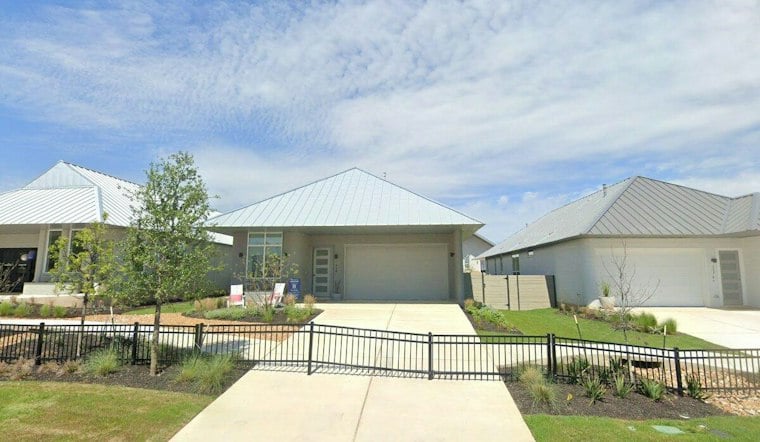
A family in Nevada, Texas is awaiting completion of a 1,700-square-foot, three-bedroom, two-bathroom home being built with a giant automated printer that handles concrete placement alongside a small conventional crew — a project estimated to cost them roughly $100,000 less than a smaller stick-built house would have. The Briones family's home is one of only a few in the region built using concrete 3D printing, a technology builders and housing experts say could help address labor shortages, supply issues and housing affordability.
According to print3dtechnologies.com, the Briones' 3D-printed home cost about $200,000, while a smaller traditionally built home in the same area would have run more than $300,000. The report notes that automated machines can print concrete homes layer by layer within weeks, sometimes days, rather than the months a conventional build typically takes. It's the kind of gap that has builders, including in Florida markets grappling with their own affordability squeeze, watching the technology closely — a topic covered in a Tampa-focused report from FOX 13 Tampa Bay based on a LendingTree study.
Printing Walls Is Only Part Of The Job
Despite the dramatic price difference in the Briones case, the technology has real limits. Research from Texas A&M's Real Estate Research Center found that printing mainly handles wall framing, while foundations, roofs, windows, doors, finishes and plumbing still make up nearly 80 percent of total construction cost. That means even a home built with a robotic printer still requires plenty of conventional labor and materials to finish.
The same research also found that 3D-printed construction can require fewer manual laborers on site, but demands a higher level of technical expertise from the workers who remain — a shift in what kind of workforce the housing industry needs, not necessarily a smaller one. Estimates of savings vary widely across the industry: the Real Estate Research Center notes that 10 to 15 percent savings compared with traditional stick-built homes are not uncommon, while a 2018 study cited in the same research pointed to potential savings as high as 30 percent under certain conditions.
Bigger Projects Are Testing Whether The Tech Can Scale
The Briones home isn't the only proof point. Homebuilders Icon and Lennar have been developing a 100-home community of 3D-printed houses called Wolf Ranch in Georgetown, Texas, according to print3dtechnologies.com. As of July, 95 of the 100 planned homes had been finished, and many had already been sold and occupied, per Reason Foundation. Those homes range from 1,850 to 3,000 square feet with three or four bedrooms, and sold for between $475,000 and $599,000 — figures that show the technology being applied at a larger scale, even if the price points there run well above the Briones' build.
Reason's analysis also cites evidence from manufacturer COBOD suggesting 3D-printed homes can be built up to 20 times faster than traditional construction. In Virginia, nonprofit builder Alquist 3D has completed two 3D-printed house builds since it was founded in 2020, according to TIME. Alquist reported cost savings of 15 percent for its 3D-printed homes compared with traditional stick-built construction, and the concrete exterior of one of its 1,200-square-foot Habitat for Humanity homes was constructed in just 22 hours.
Consumer Appetite Exists, But Scale Remains The Hurdle
Public interest in the concept appears strong. A Realtor.com survey cited by TIME found that 66 percent of consumers would consider living in a 3D-printed home, including 75 percent of millennials. Still, the outlet describes scale as the biggest challenge currently facing the 3D-printed housing industry, since few printers exist and the process is still being refined.
The broader 3D-printing industry likewise remains far from ready to be deployed at a scale that would rival lumber-built homes, with limited equipment availability industry-wide. The outlet also reported that the Dallas Builders Association's executive director expects the technology to become a much more substantial part of the market only in 15 to 20 years — a timeline that underscores how early this shift still is.
Cost Comparisons Vary Widely By Company And Project
Pricing across the industry is far from standardized. PRINT3D Technologies says it can build homes for as little as $105,000, according to Construction Tech Review, while reported prices for comparable machines range from $49,000 to more than $125,000, with some reported costs reaching $800,000.
The technology's roots in home construction trace back to 2018, when the first fully 3D-printed home in the United States was unveiled at Austin's South by Southwest conference, according to The Zebra. That 650-square-foot concrete home was printed onsite and cost approximately $10,000 to build. Internationally, Dubai has set a goal of having 25 percent of its new buildings constructed through 3D printing by 2030, per the same report — a sign of how far ahead some governments are pushing the technology compared with the still-nascent efforts in most of the United States.





