

























































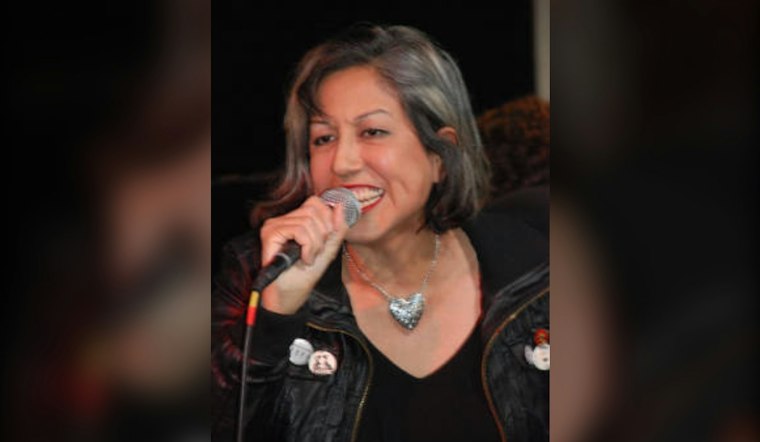
Alice Bag has spent nearly 50 years fronting bands and refusing to let anyone erase Latinos from the story of Los Angeles punk rock, and now she is making that case on a new platform. The pioneering Chicana punk icon recently joined The De Los Podcast to argue that Latino musicians did not just participate in punk's earliest days in Southern California — they helped build the genre's foundation from the ground up.
From The Bags To A New Generation of Listeners
Bag, who cofounded and fronted The Bags before later leading the Alice Bag Band, used the appearance to push back on what she calls a revisionist narrative that punk rock began as a white genre. As reported by the Los Angeles Times, she told hosts Fidel Martinez and Suzy Exposito that the California punk scene was diverse from the start, and that Latinos built its foundation alongside their white counterparts. The De Los Podcast, hosted by De Los editors Martinez and Exposito, covers stories, people, and cultural moments shaping the Latino experience in the U.S. and beyond, releasing new episodes weekly on YouTube and major podcast platforms.
Bag pointed to Margot Olavarria and Kid Congo Powers as fellow architects of that foundation, according to the same interview. Olavarria was the Go-Go's original bassist and was replaced by Kathy Valentine in December 1980. Kid Congo Powers, born Brian Tristan in La Puente in 1959, founded a Ramones fan club in 1976 and performed with The Gun Club, The Cramps and Nick Cave and the Bad Seeds, per AllMusic.
A Political Awakening At The Chicano Moratorium
Per the podcast interview, Bag traced her own political and personal identity back to 1970, when she encountered the Chicano Moratorium — a massive anti-war protest in Los Angeles — as her first real exposure to identity politics. Seeing the marchers, she said, is what led her to identify as Chicana. She has described punk rock itself as a sanctuary that gave her the freedom to embrace that identity, telling the podcast she never felt she did not belong in the scene.
That sense of belonging has deep roots across L.A.'s early punk geography. The Bags, the Go-Go's, and Kid Congo Powers all helped shape Los Angeles punk. Willie Herrón III, a member of Los Illegales, founded East L.A.'s Vex Club.
Hollywood's Punk Roots
Hollywood had its own punk birthplace in The Masque. Opened in Hollywood in 1977 by Scottish immigrant Brendan Mullen, it served as L.A.'s first dedicated punk venue until 1978; fire marshals cited violations, according to the Los Angeles Times. Mullen had rented the 10,000-square-foot space for $850 a month as a rehearsal facility before it evolved into an unlicensed club.
Passing The Torch To Punk's Next Generation
Bag said on the podcast that Latino punk musicians were inventing what punk looked and felt like in Los Angeles, and she expressed enthusiasm about the next wave of young punk rockers carrying that legacy forward. She cited The Linda Lindas and The Iron Orchids as examples of young Los Angeles punk bands keeping the scene alive, saying young children attending punk shows keep the genre fresh and exciting. The Linda Lindas were among the bands Bag highlighted.
Bag's own catalog has kept expanding well past punk's first wave. Her memoir is titled Violence Girl: From East LA Rage to Hollywood Stage, and recounts her experiences as a Chicana punk musician. She released a self-titled solo debut on Don Giovanni Records in 2016, followed by Blueprint in 2018, which featured guest vocals from Kathleen Hanna and Allison Wolfe and was named one of the best albums of that year by both NPR and the Los Angeles Times.
The De Los Podcast conversation arrives just weeks after Bag closed a major chapter of her live career: on September 9, the Alice Bag Band played its final concert at The Wiltern in Los Angeles, opening for Bikini Kill, according to LA Weekly. Bag cited physical aging and a desire to close out the band's chapter while she could still perform at high energy as her reasons for retiring the project. On the podcast, she spoke about the importance of representation and preserving punk history.





