

























































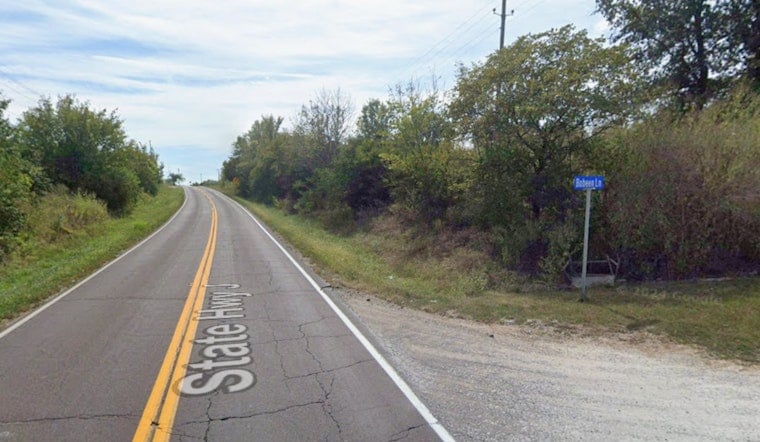
A state of emergency is in effect in Troy, Missouri, after a leaking anhydrous ammonia tank forced multiple schools into shelter-in-place mode and sent evacuation orders through the Meadowridge subdivision early Friday. The leak was reported near the intersection of Highway J and Bobeen Lane, a rural corridor that connects farmland to fast-growing residential neighborhoods on the edge of town.
Troy officials issued the state of emergency declaration as crews worked to contain the leak, according to KSDK. Multiple schools in the Lincoln County School District were ordered to shelter in place while the leak was active, and residents of the nearby Meadowridge subdivision were told to evacuate, per the same report. The precise location of the leaking tank, near Highway J and Bobeen Lane, was detailed in scanner traffic reports shared on a St. Charles Missouri Scanner Traffic Facebook post.
The response drew in a wide swath of local and state agencies. The Lincoln County Sheriff's Office, Lincoln County Emergency Management, Lincoln County Fire Protection District #1, the Missouri State Highway Patrol, the Missouri Department of Transportation, the Missouri Department of Natural Resources, and the State Emergency Management Agency were all involved in managing the incident, according to a separate scanner traffic post shared by the same Facebook group.
Why a Small Leak Can Turn Into a Big Evacuation
Anhydrous ammonia is stored under pressure as a liquid and expands rapidly into a gas once it escapes containment, forming a heavy cloud that clings low to the ground, according to the Centers for Disease Control and Prevention. That behavior is precisely why emergency crews move quickly to clear homes and schools near a leak site: acute exposure can cause chemical burns, blindness, and respiratory failure.
The chemical is a fixture of Midwestern agriculture. Roughly 80% of all commercially manufactured ammonia in the United States goes toward agricultural use, and about a third of that volume is applied directly to farm soils in its pure anhydrous form, per the Agency for Toxic Substances and Disease Registry. Its high nitrogen concentration makes it a favorite among crop producers, but it also means pressurized ammonia tanks are routinely stored and hauled through rural communities like Lincoln County.
Regulatory Oversight and Past Incidents
Facilities that handle agricultural anhydrous ammonia in Missouri fall under state oversight. Under Missouri Code of State Regulations 10 CSR 10-6.255, which took effect in February 2025, the Missouri Department of Natural Resources holds delegated enforcement authority over federal chemical accident prevention rules for these operations, requiring facilities to maintain Risk Management Plans and meet engineering safety standards.
This is not the first time ammonia containers have posed a hazard in the region. In March 2021, the U.S. Environmental Protection Agency's Region 7 office and the Missouri Department of Natural Resources carried out a specialized recovery operation to secure an abandoned 1,000-gallon anhydrous ammonia tank that was found floating in the Missouri River near Claysville, according to the EPA. Portable nurse tanks like that one are frequently moved between farms during fertilizing season, adding to the risk of accidental releases.
Troy's emergency crews have handled other significant hazmat calls recently. In February 2025, first responders managed a tractor-trailer fire near Cuivre Ford Road on U.S. Highway 61, a major commercial freight route running through Lincoln County. Local firefighters also have access to specialized training: the University of Missouri Extension's Fire and Rescue Training Institute regularly offers an eight-hour course on responding to ammonia incidents, covering nurse tanks, transport containers, and bulk storage leaks.
A Growing Exurb Meets Rural Infrastructure
Friday's leak highlights a tension that has been building for years around Troy, the county seat of Lincoln County. The city recorded a population of 12,686 at the 2020 U.S. Census after a 20% growth rate over the previous decade, according to the City of Troy Economic Development office. Lincoln County as a whole grew by 13% over the same span to reach nearly 60,000 residents, making it one of the fastest-growing counties in the state.
That growth has pushed subdivisions like Meadowridge closer to rural highways such as Highway J, where agricultural chemicals are routinely stored and transported. It remains unclear who owns or operates the leaking tank, whether the leak originated from a transport vehicle or a stationary facility, and whether atmospheric monitoring detected any gas migration into nearby homes or schools. Whether the Missouri Department of Natural Resources has opened a formal inspection under the state's anhydrous ammonia regulations is also not yet known.



