

























































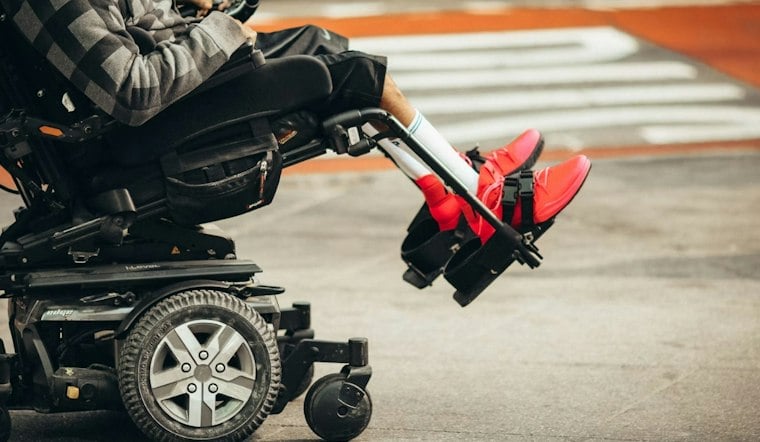
For years, Ryan Free loaded his three sons into a pickup truck one at a time, ferrying each boy separately to school and medical appointments because there was no way to fit all their wheelchairs together. That daily routine, which reportedly ate up roughly five hours, changed after an anonymous donor stepped in to gift the Southern Utah family a wheelchair-accessible van.
All three of Ryan Free's sons — Ray, Levi and Aiden — live with Duchenne muscular dystrophy, a genetic condition that causes muscles to weaken over time, according to ABC4 Utah. Ray and Aiden already use power wheelchairs, while Levi currently uses a manual wheelchair and is expected to move to a power chair as he gets older, the outlet reports. Before the van arrived, Ryan Free had no choice but to transport his sons individually in his truck, a routine that left him missing significant amounts of work, according to Lynn Free, who spoke to the station.
A Diagnosis That Runs Through the Family
Duchenne muscular dystrophy affects roughly 1 in every 3,500 to 5,000 live male births worldwide, and it stems from the body's inability to produce functional dystrophin protein, according to the CDC. The condition is inherited in an X-linked recessive pattern, giving female carriers a 50% chance of passing the mutated gene to each son, per Parent Project Muscular Dystrophy. Because males have only one X chromosome, they lack a second functional copy to compensate for the mutation.
As the disease progresses, mobility loss typically accelerates from early childhood into early adolescence, underscoring why an accessible, multi-passenger vehicle becomes essential as children like Ray, Levi and Aiden grow older.
The Gift That Changed Their Routine
The van arrived after an anonymous family offered to buy one for the Frees, and the donor reportedly received numerous additional contributions from others hoping to help fund it, per Lynn Free's account to the station. Ryan Free said he was shocked and emotional when he learned about the gift, and told ABC4 Utah he was very appreciative of the donors. Lynn Free described the van as a godsend for a family that had been stretched thin simply getting kids to class and to doctor visits.
Brand-new wheelchair-accessible vans modified by mobility manufacturers typically cost between $70,000 and $90,000, while custom vehicle conversions alone generally run $20,000 to $40,000, according to BraunAbility. Vans configured for wheelchair access often include features such as automatic ramps and restraints, which helps explain why such vehicles remain financially out of reach for many families already managing high medical costs.
Together at Last, and Headed North for Make-A-Wish
With the new van, the family will be able to transport all three sons at once instead of running separate trips, a shift that is expected to save time and reduce stress on the household. Ryan Free said the van will let him take all of his children on adventures together, something the old arrangement made nearly impossible.
The van will also allow the family to travel north to Salt Lake City for Make-A-Wish experiences, with two of the three boys not yet having been able to complete their wishes and now able to do so. The Salt Lake City-to-St. George route is 303 miles, with pure driving time under five hours and an FAQ estimate of 4.5 to 5 hours each way, according to the Wayro AI Trip Planner. Make-A-Wish also serves the Salt Lake City area.
A Broader Landscape of Treatment and Advocacy
The Free family's story unfolds against the broader medical backdrop for Duchenne muscular dystrophy.
Regulatory scrutiny over pediatric rare disease therapies has intensified elsewhere too. In March, U.S. Sen. Ron Johnson pressed the FDA after drug maker PTC Therapeutics withdrew its U.S. approval application for Translarna, a Duchenne medication that some families said helped boys retain their ability to walk, as Hoodline previously reported. Families navigating Duchenne diagnoses frequently face these kinds of regulatory and insurance hurdles alongside the everyday logistical strain of caregiving, which is part of why direct, tangible support like a donated van can feel immediately life-changing.
Community fundraising and support for muscular dystrophy families take many forms. For the Free family, though, it was a single anonymous act of generosity that put all three of Ryan Free's sons in one vehicle together.





