

























































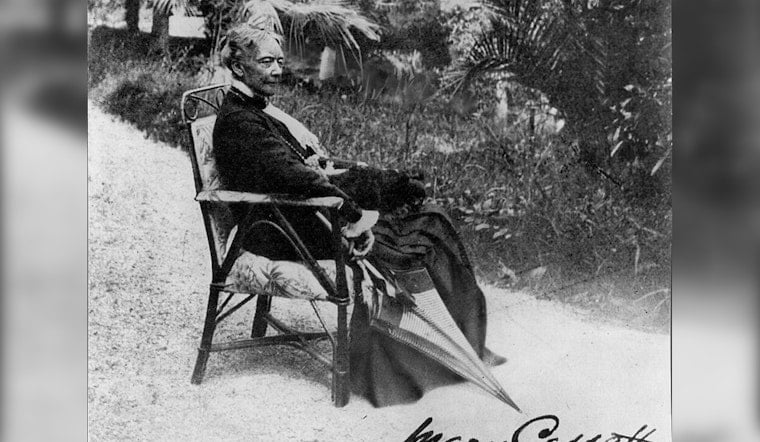
The Art Institute of Chicago has opened its first deep dive into Mary Cassatt in more than 25 years, a sprawling exhibition that pairs roughly 70 paintings, pastels and prints with the strange, unresolved story of a mural the artist made for Chicago that vanished more than a century ago. “Mary Cassatt: After Impressionism” opened to visitors after a well-attended opening weekend, marking the 100th anniversary of the artist's death in 1926.
The exhibition, which runs through January 3, arrives as the Art Institute's first major Cassatt-focused show since the 1998 retrospective “Mary Cassatt: Modern Woman,” which was co-organized with the Museum of Fine Arts, Boston, and the National Gallery of Art, according to the Traditional Fine Arts Organization. As reported by WBEZ Chicago, curator Annelise K. Madsen described Cassatt as a “relentless experimenter,” one who was “pathbreaking and determined to do what she wanted for herself.” The show explores Cassatt's evolution after her association with the French Impressionists, tracing how her style shifted following Edgar Degas's invitation for her to exhibit with the avant-garde group.
A Mural That Vanished From Chicago
Long before this exhibition, Cassatt had a direct and personal connection to Chicago. Bertha Honoré Palmer, who served as president of the 1893 World's Columbian Exposition's Board of Lady Managers, personally recruited Cassatt in 1892 to paint a 60-by-14-foot mural called “Modern Woman” for the Woman's Building at Jackson Park, according to the Art Institute of Chicago. Cassatt reportedly had nine months to complete the massive triptych, which depicted more than 20 women and girls in nature — picking apples, dancing, playing music, and chasing a personification of fame, per the museum. Madsen noted that Cassatt earned the same pay as the male muralists working on the fair.
The mural helped raise Cassatt's profile in the United States, and it made her one of the early women artists to complete a public mural in the country, the museum says. But the Woman's Building was demolished after the fair closed in 1893, and the mural itself was last accounted for in 1912. Today it is considered lost or destroyed, its whereabouts unknown. Cassatt herself described the grueling pace of the commission in a letter to a friend, writing, “I certainly did not spend the summer in singing and dancing, but in the hardest of work.”
Because the physical mural cannot be shown, the exhibition instead uses easel-sized artworks to reconstruct its story. The only known surviving color visual record of the mural is a print plate in William Walton's contemporary volume “Art and Architecture of the World's Fair,” which is displayed inside the show. Research into the mural's fate drew on archival material from Chicago's Newberry Library, alongside partnerships with curators Gillian Marcus and Nicole R. Myers of the Dallas Museum of Art, according to HENI Art News.
From Impressionism to Japanese-Inspired Printmaking
Beyond the mural mystery, the exhibition traces how Cassatt's technique transformed after she encountered an 1890 Paris exhibition of Japanese woodblock prints spanning the 17th to 19th centuries. Madsen said Cassatt “was energized by Japanese prints and considered how to adapt their aesthetics,” a shift that led to her landmark 1891 suite of ten color aquatint and drypoint prints, first shown at Galeries Durand-Ruel in Paris, according to the Spellman Gallery. That printmaking period sits at the heart of the show's exploration of her post-Impressionist inspiration.
The exhibition also includes “The Child's Bath,” a painting the Art Institute acquired in 1910 depicting a mother washing her child's feet — one of many works throughout Cassatt's career exploring women and children in everyday moments. Born in Pennsylvania in 1844, Cassatt spent most of her life in France, where she built her reputation depicting women in ordinary domestic activities rather than idealized or mythological scenes.
Madsen said the exhibition offers visitors “an opportunity to reconsider Cassatt's work and expand the story of her lifetime of art-making,” framing the show as highlighting Cassatt's ties to Chicago beyond just the lost mural. Cassatt was also an influential advisor to the museum in an earlier era: in 1906, she persuaded Art Institute board president Charles L. Hutchinson to purchase El Greco's 1577–79 painting “The Assumption of the Virgin” after East Coast institutions, including the Metropolitan Museum of Art, had declined it, according to the Art Institute of Chicago.
Planning a Visit
“Mary Cassatt: After Impressionism” is on view in Galleries 182–184 of the Modern Wing at the Art Institute of Chicago, 111 S. Michigan Ave. The museum manages admission to the galleries with a virtual line system, with wait times averaging 30 to 90 minutes, per the museum's visitor guidance. Non-members need a $7 exhibition ticket in addition to general admission to see the show, which runs through January 3.
The Cassatt exhibition anchors the museum's broader fall lineup, running alongside other major surveys including “Lee Miller: Fearless” and “Beyond Form: Abstraction at Midcentury,” the latter of which highlights 65 international artists, according to the Art Institute. Cassatt's work is also drawing regional attention beyond Chicago — Hoodline recently reported that her 1908 painting “Mother and Child on a Boat” will appear in an upcoming exhibition on women Impressionists at the Saint Louis Art Museum.





