

























































A road-rage confrontation on the streets of Auburn ended with a felony arrest last week after police say a drone tracked the suspect's car until officers could pull it over. The driver is accused of pulling out what looked like a handgun during a dispute with another motorist, and investigators say the airborne technology made the difference in catching him quickly.
According to KIRO 7 News Seattle, the incident began when two cars were driving near State Route 18 and West Valley Highway before continuing toward West Main Street and C Street Northwest, where the drivers exchanged words. The reporting driver told officers the other motorist pulled out what looked like a handgun during that confrontation, and said he tried heading toward the police department out of fear for his safety. Police say the other driver followed him until turning into a nearby parking lot.
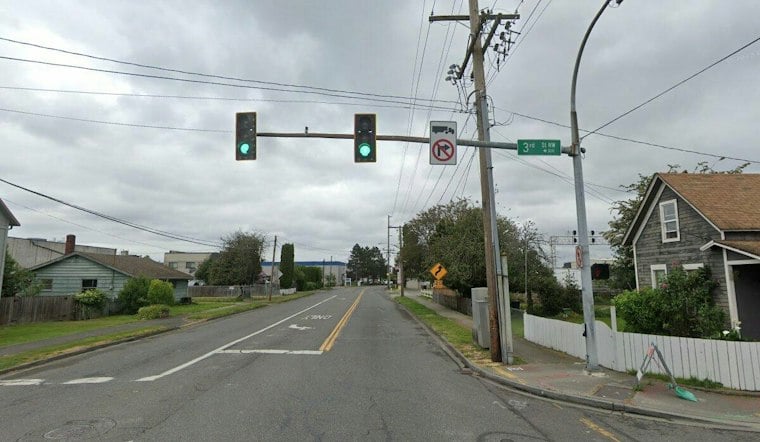
Officers were called to the area of Third Street Northwest and C Street Northwest just after 5 p.m. last Tuesday, September 15. Rather than relying solely on patrol cars to search the area, Auburn police deployed its Skydio drone as a first responder system, which helped find and track the car until officers could pull it over, the outlet reports.
Felony Harassment Arrest Follows Drone-Assisted Stop
Once officers caught up with the vehicle, investigators established probable cause to arrest the suspect on suspicion of felony harassment. Officers arrested the suspect, recovered a gun during the investigation, and booked him into King County Jail, per the same account. The station's report does not identify the suspect, and it remains unclear whether prosecutors have since filed formal charges.
Auburn police launched their drone program back in 2019, and the department's ongoing trial of the system is scheduled to conclude on October 9. The department has continued expanding its use of technology to support investigations and public safety efforts, KIRO 7 notes, though this incident offers a concrete example of how the drone functioned in the field rather than just in policy discussions.
Part of a Broader National Push
Auburn's drone-assisted arrest fits into a much larger wave of similar programs spreading across the country. As of February, more than 1,000 public safety agencies nationwide had received Federal Aviation Administration waivers needed to automate drone operations and launch their own drone-as-first-responder systems, according to the Electronic Frontier Foundation. The FAA issued more of those waivers between April 2025 and February 2026 than it had during the previous seven years combined, the organization reports.
These programs increasingly rely on artificial intelligence to automate flights from launchpads placed around a city, allowing a single operator to manage multiple drones at once, per the Electronic Frontier Foundation. Other cities have touted dramatic results: the National League of Cities reports that Queen Creek, Arizona, resolved a high-risk traffic stop in just under seven minutes with drone assistance, while Schenectady City Police found that 64 percent of calls involving a dispatched drone were cleared without ever sending officers to the scene. In 2025, the Taylor Police Department in Taylor, Michigan, used responder drones to help arrest 14 child predators, the League notes.
Questions Remain About How Often Drones Are Used
Not every deployment involves a dramatic chase like the one in Auburn. The Electronic Frontier Foundation notes that although police departments often promote drones for high-risk incidents, an analysis of Chula Vista's program found that such situations may make up only a small portion of deployments, which often occur in response to low-risk calls for service instead. The organization's reporting raises broader questions about transparency as more cities adopt the technology.
Auburn's own drone trial is set to wrap up on October 9, though that date marks the end of the current testing period rather than any determination about the program's future. For now, the department is pointing to the road-rage arrest as evidence that the system can help officers respond faster when a driver is accused of brandishing a weapon in traffic.




