

























































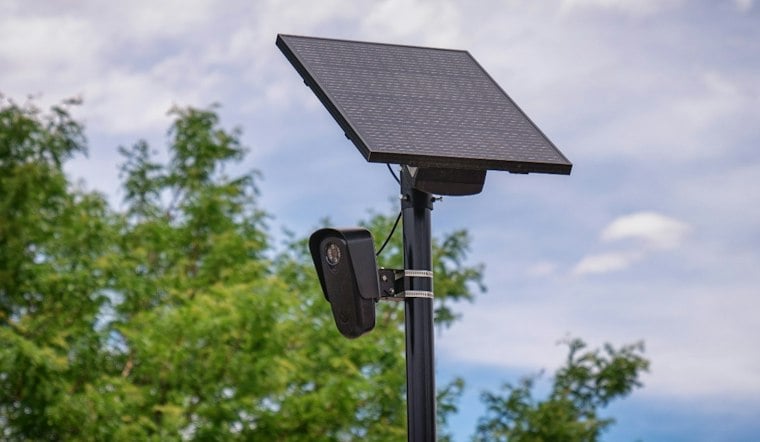
Bakersfield police say automated license plate readers contributed to investigations into two alleged sex crimes involving children this month. One case involves the alleged kidnapping and rape of an 11-year-old girl; in the other, a suspect allegedly met with a 16-year-old girl. Police say information from the Flock camera system helped investigators identify suspects in both cases.
According to BakersfieldNow, the Bakersfield Police Department said images from the cameras provided vehicle and license-plate leads in the investigations. Detectives then used those leads with ownership records and information about people connected to the vehicles as they worked to identify suspects and make arrests.
A Well-Documented Privacy Trade-Off
A Well-Documented Privacy Trade-Off The cases arrive as Bakersfield's Flock network has grown into a sprawling data-collection operation. The city's camera network has fueled local debate over data privacy and access, per the same BakersfieldNow report. The department maintains a policy of automatically deleting captured scan data after 30 days unless images are archived for an active criminal investigation.
That scale did not happen overnight. Per the Atlas of Surveillance, an open-source database maintained by the Electronic Frontier Foundation, Bakersfield police purchased 21 Flock cameras in 2021 before signing a three-year, $308,700 contract in 2023 to add 37 more units.
Legal Guardrails and a Skeptical Scholar
California law already sets boundaries on how agencies like Bakersfield's can use that data. Under California Civil Code § 1798.90.5, enacted through Senate Bill 34 in 2015, law enforcement agencies operating license plate reader systems must publish formal usage and privacy policies and are barred from selling or sharing the data with out-of-state or non-law enforcement entities, per the California Department of Justice.
UC Berkeley law professor Catherine Crump, who studies technology law, has said she supports the use of license plate readers while remaining concerned about the expanding scope of camera networks and the length of time data is retained, according to BakersfieldNow. Crump has pointed to LAPD records showing 320 million plate hits, most involving people who were not on any hot list or wanted for a known crime, a pattern later examined by the California State Auditor.
A California State Auditor review examined law enforcement ALPR practices.
What State Oversight Has Found
California's experience provides a broader benchmark for evaluating local ALPR programs. According to the California Department of Justice, a recent California State Auditor survey found that most California law-enforcement agencies collect and use ALPR images, while few have appropriate usage and privacy policies. That statewide finding does not by itself establish whether Bakersfield's program complies with best practices. The information cited here identifies the department's 30-day deletion policy and the statewide concerns about retention, access and searches involving vehicles not linked to suspects, but it does not provide a Bakersfield-specific comparison of how often those searches occur or how the department's practices were rated in the survey.
Part of a Larger National Reckoning
Bakersfield's reliance on the technology comes as scrutiny of Flock Safety mounts elsewhere. The company operates roughly 120,000 cameras, capturing not just plate numbers but vehicle make, model, color and other physical characteristics, according to CBS News. In response to backlash over camera database misuse, Reps. Raja Krishnamoorthi and Michael Cloud introduced bipartisan federal legislation this month that would withhold 10 percent of federal highway funding from states failing to restrict license plate reader use to five approved categories, including investigating serious felonies and locating missing persons.
For now, Bakersfield police are crediting the Flock system with helping identify a suspect tied to the alleged kidnapping and rape of an 11-year-old girl and a separate case involving a suspect who allegedly met with a 16-year-old girl. Whether the technology's investigative value will outweigh the mounting privacy concerns raised by residents, legal scholars and lawmakers remains an open question playing out in city halls and statehouses well beyond Kern County.





