

























































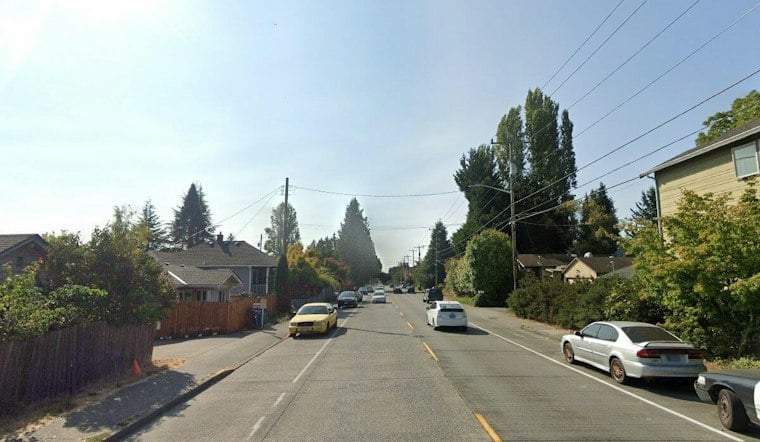
Thirteen speed cushions are headed for Ballard's 8th Avenue NW, part of a redesign that includes traffic-calming measures along the corridor. The safety improvement project, currently in the design phase, covers 8th Avenue NW between NW 46th Street and NW 70th Street, and construction is expected to wrap up sometime this fall, according to KIRO 7.
What's Actually Being Built
The project, as reported by KIRO 7, includes a traffic diverter at NW 70th Street, two new radar speed signs, and new marked crosswalks with pedestrian islands at NW 49th, NW 51st, NW 53rd, and NW 70th streets. Walk/bike flashing signs are also planned for NW 70th Street. The city has said the work is possible thanks to local funding from the voter-approved Seattle Transportation Levy, which Seattle voters passed.
Because the 13 speed cushions are intended to prevent drivers from swerving into bike lanes to dodge the bumps, the Seattle Department of Transportation designed a layout that physically shifts the bike lane into the curbside lane using paint and barriers, according to SDOT. The plan also calls for deleting parking spots near speed humps, a tradeoff that can create friction in neighborhoods where curb space is already tight, per the same agency's plan documents. SDOT's design also adds small concrete median islands at the new marked crosswalks.
A Traffic Diverter and Flashing Beacons at the Corridor's North End
At NW 70th Street, the corridor's northern terminus and a major crossing point for people heading to the neighborhood park and market, SDOT's design pairs a physical traffic diverter with button-activated rectangular rapid flashing beacons. The combination is meant to force through-traffic off the residential stretch while making crossing pedestrians more visible to drivers, according to the agency.
The push for these changes didn't come out of nowhere. Orange pedestrian crossing flags were distributed at NW 70th Street, as reported by KOMO News. Rebecca Rouleau, who owns Take 5 Urban Market on 8th Avenue NW, told the station she regularly hears tires screeching outside her shop and often ends up helping neighborhood kids cross the street safely.
Low-Cost Fixes Came First
Before any of this construction began, SDOT completed what it calls “intersection daylighting” at 8th Avenue NW's intersections with NW 51st, NW 53rd, and NW 70th streets in 2025 — city crews added visibility improvements at those corners using paint, posts, and signage that restrict parking near intersections without removing existing legal stalls, according to the SDOT Blog. The current project builds directly on that earlier daylighting work, which was designed to improve sightlines cheaply before the city committed to heavier physical construction.
The funding trail runs back to Seattle's eight-year, $1.55 billion Transportation Levy, which voters approved in November 2024 and which Hoodline covered in an earlier report on the levy's rollout. That levy includes approximately $160.5 million for Vision Zero and related school and neighborhood safety work, according to SDOT. It is part of Seattle's transportation funding picture.
Vision Zero Under Political Pressure
SDOT has used a similar approach elsewhere in North Seattle. Along nearby 3rd Avenue NW in Crown Hill, the agency installed speed cushions and marked crosswalks in August 2024 after traffic data showed drivers consistently exceeding the 25 mph limit, a project Hoodline detailed in its coverage of a rollover crash at a Crown Hill intersection. Under Seattle Municipal Code and the city's Vision Zero framework, default speed limits sit at 20 mph on non-arterial residential streets and 25 mph on arterials.
Corridor projects like this one are unfolding against a backdrop of mounting scrutiny at City Hall. In April, Seattle City Council Transportation Committee Chair Rob Saka requested a formal performance audit of SDOT's Vision Zero initiative amid concerns the city remains off track to eliminate traffic deaths and serious injuries by its 2030 goal, as Hoodline reported in its piece on how street deaths put City Hall on the spot. Seattle's Vision Zero program has a 2030 goal, and the project comes as city leaders scrutinize progress toward it while the sources also discuss levy-funded neighborhood safety work.



