

























































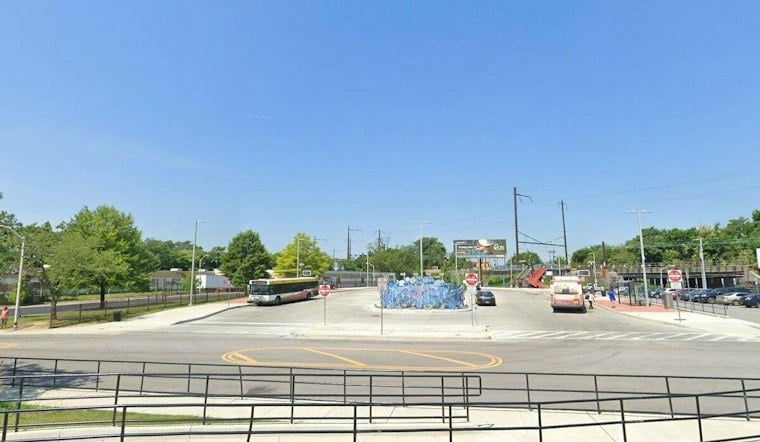
Construction crews will break ground October 6 on a $50 million overhaul of Baltimore's 20-mile east-west bus corridor, kicking off a multi-year project that promises dedicated lanes, safer crosswalks, and faster commutes for riders on the CityLink Blue and Orange lines. The work will unfold in phases through 2029, with individual bus stop upgrades expected to take roughly three to five days per location.
The Maryland Department of Transportation Maryland Transit Administration announced the start date for the RAISE East-West Transit Priority Project, according to Baltimore Fishbowl. The project spans 20 miles, running from eastern Baltimore County through downtown Baltimore into western Baltimore County, and is designed to improve speed, reliability, and safety for riders, pedestrians, and cyclists alike. Construction crews will work mostly during weekday daytime hours, stepping outside that window only when necessary, per the same report.
A Corridor Linking Jobs Across the Region
The 20-mile corridor connects the Fox Ridge community in eastern Baltimore County to the Centers for Medicare & Medicaid Services in western Baltimore County, expanding transit access to more than 180,000 jobs, according to data cited by USDOT. Major employment hubs along the route include CMS, the Social Security Administration, and Johns Hopkins Bayview Medical Center. The project will improve access to Johns Hopkins Bayview and points east, and to CMS in the west, the Baltimore Fishbowl report notes.
Federal backing for the effort traces back to a $22 million USDOT Rebuilding American Infrastructure with Sustainability and Equity grant awarded in 2021, matched by $18 million from MDOT and $10 million from the Baltimore City Department of Transportation, according to Conduit Street. Maryland's congressional delegation supported the federal grant, the Baltimore Fishbowl report states.
Where the $50 Million Is Going
The investment supports dedicated bus lanes, bus stop enhancements, pedestrian and bicycle safety improvements, and transit signal priority technology, per MDOT MTA project planning documents obtained through RAISE Baltimore. Dedicated bus lanes are a central part of the project. The project scope calls for at least 10 lane-miles of dedicated bus lanes along major corridors including Edmondson Avenue, Fayette Street, and Eastern Avenue, intended to help buses bypass vehicular congestion during peak travel hours.
Beyond the lanes themselves, riders can expect upgraded traffic signals that give buses priority, lane curbs designed to keep buses on schedule, better lighting at bus stops, enhanced boarding areas, new crosswalks, and accessible sidewalk ramps, according to the Baltimore Fishbowl report. Active transportation also gets a boost: the project includes a 1.5-mile on-street buffered bicycle lane connecting Downtown Baltimore directly to the West Baltimore MARC rail station, a key transfer point for regional commuter rail passengers.
Project Will Proceed in Phases
The initiative will address transit and pedestrian infrastructure along the corridor in phases.
Officials Weigh In as Meetings Approach
Baltimore Mayor Brandon M. Scott said the dedicated bus lanes, enhanced boarding areas, and expanded accessibility align with his administration's goal of a safer, more connected, and more accessible city, per the Baltimore Fishbowl report. Sen. Angela Alsobrooks, Ranking Member of a Senate transportation subcommittee, said the federal funding will help transform the CityLink Blue and CityLink Orange corridors, while Congressman Kweisi Mfume said the project will enhance safety and ease travel to major destinations across Baltimore. Governor Wes Moore said the project will provide safe, reliable transportation and connect Maryland communities to opportunities.
The Maryland Transit Administration will host two virtual public meetings on September 22 — one from noon to 1:30 p.m. and another from 6 p.m. to 7:30 p.m. — giving community members a chance to ask questions about construction plans and timelines, according to the Baltimore Fishbowl report. The project will occur in stages specifically to minimize neighborhood disruptions as work moves down the corridor.
How the Bus Upgrades Fit Into Baltimore's Bigger Transit Picture
State transit planners view these bus priority enhancements as near-term, surface-level improvements. The long-planned Red Line rapid transit project remains under state evaluation for potential light rail or bus rapid transit options, as Hoodline previously reported. Governor Moore revived Red Line planning in 2023, while the larger rail question remains under consideration.
Baltimore's broader transit picture also includes overall bus system performance and planned service frequency increases. Together, the RAISE lanes and other planned investments represent two pieces of a broader push to make Baltimore's bus network faster and more reliable.




