

























































Paulette Levy spent years watching the pain in her left hand get worse, until a cortisone shot left her barely able to use it at all. So when doctors laid out her options, she asked a simple question: what could be done to preserve her independence? The answer became Baltimore's first thumb joint replacement surgery, and Levy says the results have exceeded what she imagined.
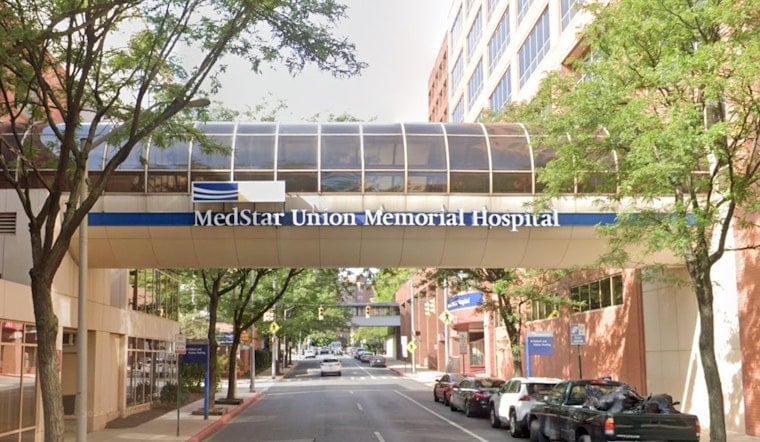
Levy underwent outpatient thumb joint replacement surgery on June 24, according to WBAL-TV. The procedure was performed by Dr. Aviram Giladi, a hand and upper extremity surgeon at the Curtis National Hand Center at MedStar Union Memorial Hospital, who became the first surgeon to perform the operation in Baltimore. Levy told the station her pain level before surgery was excruciating, and that doctors had presented her with the traditional option of removing a bone and replacing cartilage with a tendon before she proposed the joint replacement instead.
Six days after surgery, Levy said she was pain-free. Within less than three months, she reported that her thumb felt wonderful, and that her grip strength was improving every day, allowing her to lift more weight day by day. She also said she has been able to perform activities of daily living independently again, aided by home exercises included in her recovery.
A New Option Beyond Bone Removal
Thumb carpometacarpal osteoarthritis is the second most common form of hand arthritis, and it disproportionately affects postmenopausal women, with radiographic signs showing up in as many as a third of that population and symptomatic disease striking women three to six times more often than men, according to the National Institutes of Health. The condition, which can result from wear and tear, hand use, or inflammation, wears down the thumb joint over time and can severely limit the pinch and grip strength needed for everyday tasks like opening jars or turning keys. Treatment has traditionally been guided by how uncomfortable a patient feels, starting with therapy, injections, or other interventions before surgery becomes the solution when comfort can't otherwise be found.
For decades, the surgical fallback for advanced cases was Ligament Reconstruction and Tendon Interposition, a procedure that requires removing the trapezium wrist bone entirely and rebuilding the joint using a forearm tendon graft. That approach, per UCHealth, has remained the standard of care for years despite recovery times of two to three months or longer spent in casts and splints. Dr. Giladi said joint replacement recovery is much faster than recovery from those prior approaches, and that patients end up happier with the outcome, with near-full strength restored.
Following a Cautious National Rollout
The device behind Levy's surgery, the TOUCH CMC 1 Prosthesis made by KeriMedical, received FDA Premarket Approval in July 2025 as the first total thumb joint prosthesis with dual mobility available in the United States, after having been used in European clinical settings since 2018. Because of surgical risks, the implant was rolled out cautiously in the U.S., with the first American procedure performed in mid-September 2025 by Dr. Jonathan Tueting at Rush Orthopaedics & Sports Medicine in Illinois — a milestone Hoodline covered in its first-of-its-kind Chicago surgery report.
Baltimore's introduction to the technology followed a similar sequence within MedStar Health's own network. The first Washington, D.C.-area procedures using the implant took place at MedStar Georgetown University Hospital in April 2026, and Dr. Giladi performed Baltimore's first two TOUCH CMC 1 replacements at MedStar Union Memorial the following June, according to MedStar Health. Giladi said Levy was the perfect candidate for the surgery, and he reported that early results from the procedure have been incredibly encouraging.
Inside the Curtis National Hand Center
Levy's surgery took place at a facility with deep roots in the specialty. The Curtis National Hand Center, founded in 1975 by Dr. Raymond M. Curtis — who helped establish hand surgery as an independent medical specialty after World War II — treats more than 25,000 patients annually and is designated by the state of Maryland as the nation's only Level I Hand and Upper Extremity Trauma Center. The center completed a $3.2 million expansion and renovation of its 23,000-square-foot facility in April 2024, per the same account from MedStar Health.
Dr. Giladi serves as Research Director at the Curtis National Hand Center and holds academic appointments as an assistant professor at both Johns Hopkins University and Georgetown University. He was named a top doctor in orthopedic hand surgery by Baltimore magazine in November 2023, credentials that underscore why the hospital was positioned to bring the new implant to Maryland patients.
The FDA cleared the TOUCH CMC 1 specifically for patients with Eaton-Littler Stage II or Stage III carpometacarpal osteoarthritis who continue to experience severe pain despite exhausting conservative treatments such as cortisone injections and hand therapy, according to Hackensack Meridian Health. Major health systems nationwide, including Duke Health in North Carolina, UCHealth in Colorado, and Jersey Shore University Medical Center in New Jersey, began performing and studying the procedure in 2026 as part of post-approval clinical tracking, joining Baltimore as part of a broader wave of adoption among academic medical centers watching how the implant performs over time.





