

























































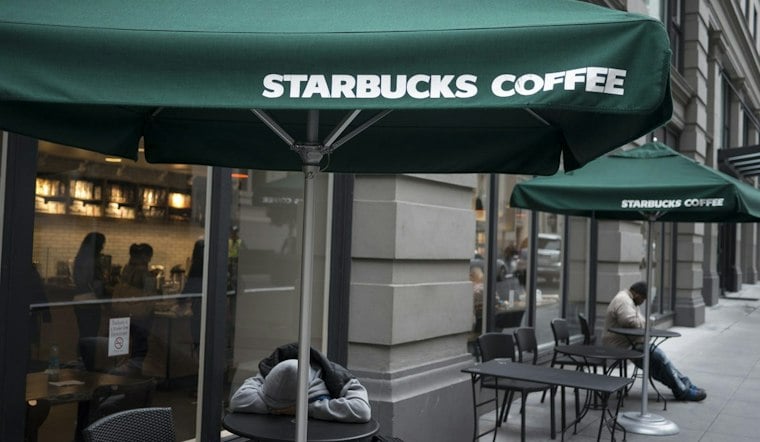
A local coffee shop is set to take over a vacant Starbucks storefront just blocks from the University of San Francisco, filling a space that has sat empty near the corner of Fulton and Masonic since the end of 2024. Barista Coffee & Brunch plans to open its second San Francisco location at 1799 Fulton Street sometime in fall 2026, with an opening window pegged to either late October or early November.
A Second Home for the Presidio Heights Favorite
A Second Home for the Presidio Heights Favorite The move was reported by KRON4, which noted that the new NOPA cafe sits about two blocks from USF's campus. Barista's original location, at 3313 Sacramento Street in Presidio Heights, opened roughly three years ago according to city records, and the brand serves Lavazza Italian coffee alongside crepes, bagels, salads, and avocado toast, according to Barista Coffee & Brunch. The company is reportedly already eyeing a third location once the NOPA cafe gets up and running, per the same KRON4 report.
The Fulton Street space Barista is inheriting isn't a blank slate. Commercial listings describe the storefront as a 1,200-square-foot, second-generation cafe space on a corner lot, meaning much of the plumbing and buildout Starbucks left behind should lower the startup costs for the new tenant, according to a LoopNet listing cited in local real estate research.
Why Starbucks Pulled Out of the Corner
Starbucks closed the 1799 Fulton Street location at the end of 2024, part of a wave of San Francisco closures that also included the 120 Fourth Street store in South Beach, which closed in November, and the 2222 Fillmore Street store in Lower Pacific Heights, which closed December 1, according to The Real Deal. The Fulton Street location closed December 22. Nationally, Starbucks announced it would close 250 stores across North America, with at least 13 of those closures landing in the Bay Area, per KRON4's reporting. The company has said it expects 1,500 stores to be retrofitted by September 30, 2026.
The retreat traces back to financial pressure at the corporate level. Starbucks Chief Financial Officer Rachel Ruggeri reported in late 2024 that persistent declines in customer foot traffic were squeezing both revenue and earnings across North America, as reported by Newsweek. Since CEO Brian Niccol took over in late 2024, the company has also rolled out a “Back to Starbucks” restructuring plan that ended its open-door restroom policy, now requiring a purchase before customers can use store facilities, according to Eat This Not That.
Independent Cafes Moving Into Vacated Storefronts
Barista's expansion fits a pattern real estate brokers have been tracking since the closures began. Independent and regional coffee roasters moved quickly to sign leases on the turnkey, second-generation spaces Starbucks left behind, taking advantage of pre-equipped buildouts that keep renovation costs down, per the same Real Deal report. San Francisco's formula retail rules add another wrinkle: under Section 303.1 of the city's Planning Code, any chain with 11 or more locations worldwide faces strict conditional-use permitting in neighborhood commercial districts, according to the San Francisco Planning Department — a hurdle independent operators like Barista don't have to clear.
City supervisors have been debating how those rules intersect with vacancy rates elsewhere in San Francisco. In January 2025, legislation was introduced to relax formula retail restrictions along high-vacancy corridors such as Van Ness Avenue, aiming to speed up re-tenanting of empty storefronts, according to the San Francisco Chronicle.
The Block Is Losing More Than a Coffee Chain
Barista's arrival comes just weeks after another major closure across the street. The Lucky Supermarket at 1750 Fulton Street permanently shut down on September 11, after parent company Save Mart notified 48 employees that the store was no longer financially viable, according to SFist. Before it closed, that Lucky had been identified by a San Francisco Chronicle price survey as the city's second least expensive grocery store for basic goods, trailing only Trader Joe's, per the same SFist report.
That leaves USF students and NOPA residents facing a stretch of Fulton Street that lost a familiar coffee stop and, across the street, one of the neighborhood's more affordable grocery options within roughly two years of each other. A new cafe filling the old Starbucks footprint offers a jolt of retail activity, but it does little to replace the grocery store's role as a low-cost food hub for the area, a dynamic SFist's reporting tied directly to the nearby closures.





