

























































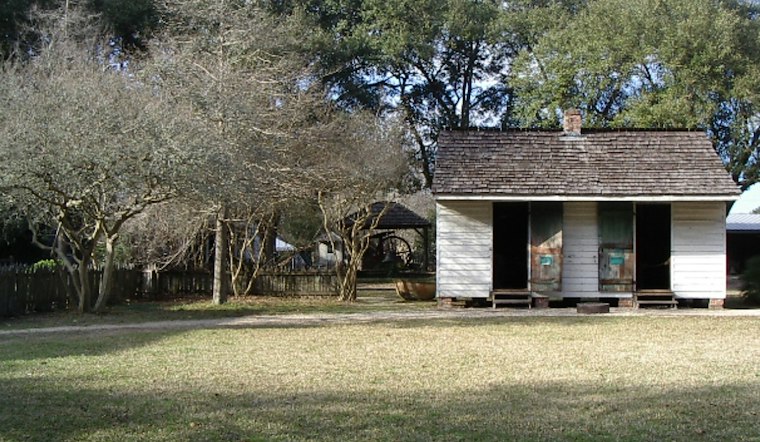
Cannon fire, colonial music and open-hearth cooking will return to a former plantation on the edge of Baton Rouge this weekend, as the LSU Rural Life Museum marks 247 years since Spanish forces seized the city from the British. The Siege of Fort New Richmond anniversary event runs Saturday and Sunday, September 19 and 20, with military drills, battle reenactments and demonstrations of soldiers' and civilians' daily lives during the American Revolution.
According to WBRZ, the museum has partnered with the Waldeck 3rd Regiment, a living-history group, to stage the reenactment, and the museum plans to release a full schedule of event times, performances and battle reenactments. The site itself sits on the former Windrush plantation, a property donated to Louisiana State University in 1964 by landscape designer Steele Burden and his family in a gift valued at $270 million — the largest donation in LSU history, according to 64 Parishes. Burden began relocating threatened historic structures there in 1970, and the outdoor complex now spans 25 acres with 32 historic outbuildings spread across the Working Plantation, Upland South Region, Gulf Coast Region and Exhibit Barn, per the LSU Rural Life Museum.
What Actually Happened in 1779
The battle being commemorated was no minor skirmish. In September 1779, Spanish Louisiana Governor Bernardo de Gálvez led a force of more than 1,400 men, including about 520 regulars, in a campaign against British outposts, according to 64 Parishes. The campaign captured Baton Rouge.
British engineers had only begun building Fort New Richmond in July 1779, throwing up an earthen redoubt ringed by an 18-foot-wide moat, wooden stakes and 13 cannons, according to U S Military History. Gálvez staged a northern feint while his men dug siege trenches, and after firing began on September 21, the British garrison — roughly 400 regulars and 150 militia — surrendered the following day. The surrender terms also covered Fort Panmure at Natchez, where 80 grenadiers were stationed and which Spanish troops took control, per 64 Parishes. Once captured, Spanish authorities renamed the post Fort San Carlos.
Why a German Regiment Is Marching in Louisiana
Dickson's defenders at Fort New Richmond weren't purely British. The garrison included troops from the German Principality of Waldeck-Pyrmont, mercenaries contracted by Great Britain to help garrison its West Florida outposts, according to Wikipedia's entry on the Battle of Baton Rouge. The modern Waldeck 3rd Regiment living-history group is co-hosting this weekend's event alongside the museum.
The multi-national makeup of both armies is central to understanding the battle: Gálvez's coalition of Spanish troops, Acadians, free men of color and Native allies faced off against a British defense leaning heavily on German soldiers far from home. It's a reminder that the Revolutionary War's Gulf Coast theater looked very different from the fighting in the thirteen original colonies. The campaign removed British forces from the Mississippi River area, according to 64 Parishes.
Weekend Schedule and Ticket Prices
The anniversary event runs daily from 9 a.m. to 4:30 p.m. both days, featuring military drills, battle reenactments, open-hearth cooking, colonial music and dance, and craft demonstrations such as candle-making and butter-making, according to the LSU calendar listing. It marks the inaugural 247th anniversary living history weekend at the museum.
Event access is included with general museum admission, and museum members get in free. Regular museum admission applies to other visitors, per the museum's posted rates.
Part of a Bigger Statewide Push
The Baton Rouge reenactment isn't happening in isolation. It's part of Louisiana's America 250 semi-quincentennial programming, which also includes the exhibition Gálvez and Louisiana in the American Revolution at the Cabildo in New Orleans, according to Louisiana State Museums. State museum officials have been highlighting Gálvez's Gulf Coast campaign as the country's 250th anniversary approaches, positioning this weekend's living-history event at the Rural Life Museum as one piece of a broader effort to elevate Louisiana's role in early American history.




