

























































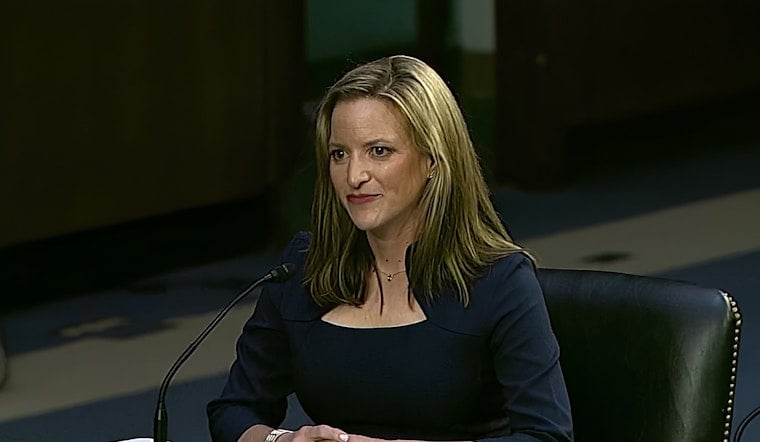
Michigan Secretary of State Jocelyn Benson has built a commanding financial edge over U.S. House member John James in the race to succeed term-limited Gov. Gretchen Whitmer, with new campaign finance filings showing the Detroit Democrat holding about four times more cash on hand than her Shelby Township Republican rival heading into the fall stretch.
The fundraising reports, covering July 20 through August 24 and including the August 4 primary, show Benson's campaign raised $1.8 million and spent $2.3 million during the period, leaving her with $5.9 million available as of August 24, according to The Detroit News. James, by contrast, raised about $1.2 million in private contributions and spent roughly $1.1 million, leaving his campaign with $1.5 million on hand over the same stretch.
A Contested Filing Deadline
The disparity in reported cash arrived alongside a dispute over paperwork. Campaign fundraising disclosures were due on Thursday, but James's disclosure did not appear on Michigan's online campaign-finance portal until yesterday, after the state Bureau of Elections asked the James campaign to review its filings for accuracy before public posting, per the Detroit outlet's reporting.
James's campaign pushed back on any suggestion of tardiness. Spokeswoman Alyvia Bailey said the campaign filed on time and had confirmation of that filing, and the campaign separately criticized the Secretary of State's office over delays in posting its disclosure. Angela Benander, spokeswoman for the Secretary of State's office, is named in the filing dispute alongside Bailey in the paper's account, though the dossier does not detail her response to the campaign's criticism.
Bailey also used the moment to question whether voters should trust Benson to run the state, a message that echoes the broader Republican attack line James has leaned on since clinching his party's nomination.
Outside Money Fills the Gap for James
James's direct campaign account tells only part of the financial story. A super PAC backing him, Mission Michigan, had spent more than $4.7 million as of late July, fueled largely by a $6 million contribution from West Michigan mega-donors Dan and Pamella DeVos, according to Bridge Michigan. That outside spending gives James's side significant additional advertising firepower even as his own committee's direct cash lags well behind Benson's.
Complicating matters further for James, his campaign accepted $371,000 in public campaign funding during the primary, which under Michigan campaign finance law caps total primary campaign spending at $2 million unless statutory exceptions apply. Bridge Michigan's reporting notes that constraint helps explain why James's direct spending stayed limited even as he fought through a crowded, costly primary field.
Benson, meanwhile, also drew institutional support, with the Democratic Governors Association's Victory Fund contributing $80,000 to her campaign on August 21 and the Building Bridge political action committee giving $83,250 on August 20, per the same Bridge Michigan account.
Diverging Paths Out of the Primary
The cash gap traces partly to how each candidate reached the general election. Benson won the Democratic nomination on August 4 with more than 80% of the vote against Genesee County Sheriff Chris Swanson, a landslide that let her preserve campaign resources, according to ClickOnDetroit. James, by comparison, won his primary with roughly 50% of the vote in a multi-candidate field that included self-funded businessman Perry Johnson of Bloomfield Hills, who spent $32.8 million of his own money on his bid, as Hoodline previously reported.
That primary fight was contentious well before votes were cast. In May, a super PAC supporting James and a booster supporting Johnson filed dueling petition signature challenges with the Board of State Canvassers, each alleging widespread fraud and invalid signatures on the other candidate's filings, according to Bridge Michigan's earlier coverage of the dispute.
Polling and a Ballot Measure Complication
Post-primary polling from EPIC-MRA, conducted August 22 through August 28, showed Benson holding a 45% to 41% lead over James among likely Michigan voters, according to data compiled by MultiState. The financial and polling advantages give Benson's campaign a measure of cushion heading into the fall.
Her filing also surfaces a potential vulnerability. Benson's campaign accepted donations from top executives at DTE Energy and Blue Cross Blue Shield of Michigan, even as she has publicly endorsed Proposal 2, a November ballot initiative that would ban political contributions from regulated utilities and major state contractors, Bridge Michigan reported. The apparent tension between her donor list and her stated policy position could become a talking point as the campaign continues.
James, for his part, launched his first broadcast general election advertisement on Thursday, aiming at Democratic governance by citing Michigan's national rankings of 45th in education and 43rd in the economy, according to EUP News. The ad marks his first paid broadcast push of the general election, arriving roughly two months before Election Day after he held off on television spending through the primary while Benson advertised heavily beforehand.
Running Mates Set the Fall Matchup
Both campaigns enter the general election with their full executive tickets in place. Benson tapped Michigan Senate Majority Leader Winnie Brinks of Grand Rapids as her running mate on August 19, creating the first major-party all-female executive ticket in Michigan history, according to Reproductive Freedom for All's coverage of the announcement. James selected State Representative Jay DeBoyer of Clay Township, a former St. Clair County clerk, as his choice for lieutenant governor ahead of the parties' nominating conventions.
The fundraising period covered by the new filings ended 71 days before the November election, meaning both campaigns still have significant time to raise and spend before voters decide who succeeds Whitmer, who cannot seek a third term because of term limits.





