

























































Astronomers have confirmed the youngest planet ever detected outside our solar system, and the discovery leaned heavily on archival data gathered years ago at the summit of Maunakea on the Big Island. The planet, called Elias 2-24 b, is less than 1 million years old and is still actively pulling in gas and dust from the disk surrounding its infant host star.
The confirmation came from a study combining observations from the W. M. Keck Observatory, the Atacama Large Millimeter/submillimeter Array (ALMA), and the European Southern Observatory's Very Large Telescope, according to Kauai Now. The research was led by Diego Portales University in Chile and published in The Astrophysical Journal Letters. Lead author Andrea Bernardi, a doctoral student at the university, said Elias 2-24 b is the youngest planet detected so far and is still actively accreting material, per the same outlet's report.
The host star, Elias 2-24, sits roughly 450 light-years from Earth in the Ophiuchus star-forming region, according to Space Daily. Elias 2-24 b now holds the record for youngest known exoplanet, breaking a mark previously shared four ways among 5-million-year-old worlds orbiting the stars PDS 70 and WISPIT 2, as detailed by NASA Science. The system is no more than about 1 million years old, according to Gizmodo's reporting on the discovery.
A Wide Orbit That Defies Standard Models
Elias 2-24 b occupies a prominent gap in its star's protoplanetary disk at a distance of roughly 55 astronomical units — about 55 times the distance between Earth and the sun, and ten times Jupiter's distance from our own sun, per Space Daily. Model comparisons using 1-million-year evolutionary tracks put the planet's mass between 1.9 and 4.0 Jupiter masses, not counting extra light produced by ongoing accretion, according to the study published in The Astrophysical Journal Letters.
That combination of size, age, and distance from its star is the puzzle at the center of the discovery. Standard core-accretion models predict that forming a Jupiter-mass planet takes roughly 5 million years at 5 AU, so assembling a giant world at 11 times that distance in under 1 million years poses a major challenge to existing theory, Gizmodo reported. Co-author Lucas Cieza, a professor at Universidad Diego Portales, described Elias 2-24 b as a much younger version of a planetary system like our own, according to Kauai Now — a striking comparison given that our own solar system is billions of years old. The findings ultimately support the standard theory of giant planet formation and point to a specific stage of the core accretion model, per the outlet's account of the study.
How Old Keck Images Held the Answer
The gap in the disk that would eventually reveal Elias 2-24 b was spotted by ALMA in the early 2010s, but confirming an actual planet required tracking its motion across archival Keck images taken in 2018 and 2020, according to Uncrowned Addiction. Astronomer Alice Zurlo had conducted initial research on the system using Keck's Near-Infrared Camera 2 (NIRC2) in 2018, but that early look turned up only a faint signal insufficient to identify a planet, per Kauai Now.
Bernardi later reanalyzed those same 2018 observations using new data-processing techniques and identified a signal consistent with a forming planet. The team's pipeline relied on the VIP Python package and principal component analysis to isolate the faint planetary point source from residual starlight noise, according to the study published via ResearchGate. High-contrast imaging depended on NIRC2's vortex coronagraph and adaptive optics system, which suppressed the star's glare and corrected for atmospheric blurring, Space Daily reported. Additional archival Keck observations obtained in 2020, along with independent data from the Very Large Telescope and supporting evidence from ALMA, helped confirm the discovery.
Why Archived Data Still Matters
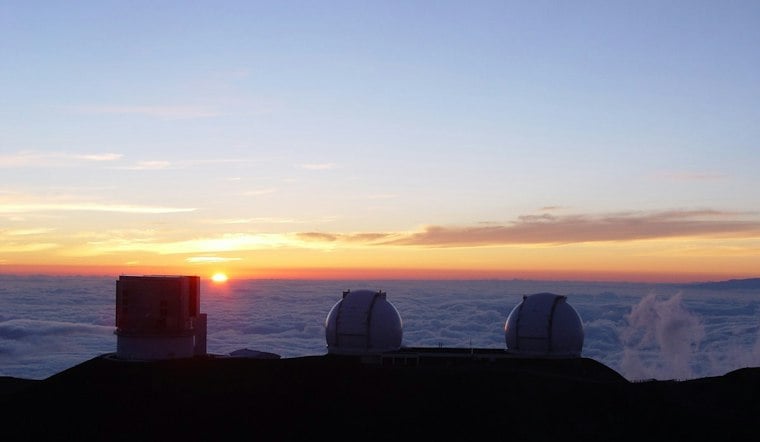
The Keck Observatory Archive, a NASA-funded partnership between Keck Observatory and the NASA Exoplanet Science Institute at Caltech/IPAC, preserves all data ever taken at the twin telescopes atop Maunakea on the Big Island. John O'Meara said astronomical data can have a remarkably long shelf life, according to Kauai Now's reporting — a point underscored by the fact that a 2018 dataset once thought inconclusive ultimately delivered a record-breaking result years later.
Bernardi said the planet's extreme youth is what makes it remarkable, and the research team continues to study Elias 2-24 b as a laboratory for understanding how planets form. The team hopes to obtain spectroscopy and other measurements of the planet, which could reveal its atmosphere, temperature, mass, and ongoing growth, per the outlet. Astronomers also anticipate that future observatories such as NASA's Nancy Grace Roman Space Telescope will carry next-generation coronagraphs capable of directly imaging similarly infant planets closer to their host stars, according to Tech Explorist.
For now, Elias 2-24 b remains in what researchers describe as a brief but critical growth phase, rapidly pulling in gas from its surrounding disk and building its atmosphere in real time. It joins a growing list of discoveries traced back to Maunakea's telescopes, following recent Keck-assisted finds involving the universe's most distant quasars.




