

























































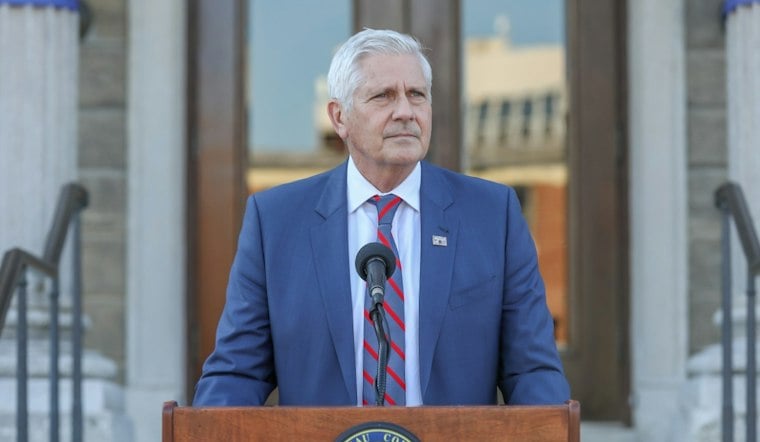
Republican gubernatorial candidate Bruce Blakeman is promising to tear down Kathy Hochul's signature green energy mandates if he wins the governor's race in November, framing the state's push toward electric vehicles and electrified buildings as a hidden tax squeezing New York's middle class. The Nassau County executive says the state's zero-emission vehicle rules strip away consumer choice, drive up sticker prices, and threaten to overload the electrical grid.
Blakeman's pledge, first reported by the New York Post, takes direct aim at Advanced Clean Cars II, the rule Hochul has backed that requires all new passenger cars, pickup trucks and SUVs sold in New York to be zero-emission by 2035. He argues Hochul treats middle-class commuters as a revenue stream, pointing to 21 toll and fare hikes under her administration along with the congestion-pricing toll for entering Manhattan. That congestion charge began imposing a $9 daytime toll on E-ZPass passenger cars entering Manhattan south of 60th Street starting January 5, 2025, according to CBS News.
The Regulatory Timeline Behind the Fight
The Advanced Clean Cars II rule was officially adopted by the New York State Department of Environmental Conservation on December 29, 2022, setting a requirement that zero-emission vehicles make up 35 percent of new passenger car and light truck sales in model year 2026, before climbing to 100 percent by 2035, according to NYSDEC.
Hochul has defended the mandate as a way to spur zero-emission vehicle innovation and cut greenhouse gas emissions and air pollution statewide, per the Post's reporting. Her administration made $30 million available in April to subsidize New Yorkers' purchase or lease of electric vehicles, and she has said state and federal investments are incentivizing residents, local governments and businesses to make the switch.
A Gap Between Mandates and the Market
The trouble, according to industry data, is that consumer demand hasn't caught up to the state's targets. Electric vehicles made up just 9.8 percent of new light-duty vehicle sales in New York in late 2024, according to Recurrent — a wide gap behind the 35 percent threshold set for model year 2026. Jack Weidinger, chairman of the Greater Automobile Dealers Association of NY and owner of a Cadillac dealership in Great Neck, has said the deadlines for transitioning to electric vehicles do not match reality, per the Post. Dealers have pushed for the deadline to be extended, warning the current timeline could otherwise destroy the market.
Hoodline's own reporting has traced how those pressures are already playing out on the ground. In August, Western New York auto dealerships were unable to sell the gas-powered 2026 Ford Escape in New York because it failed emissions standards, and Ford had discontinued the model. New York Senate Republicans had already tried a legislative fix, introducing Senate Bill S8099 in May 2025 to force a statutory delay in the Department of Environmental Conservation's enforcement of the rule, according to the New York State Senate. The department itself issued enforcement discretion measures the same month to give manufacturers compliance flexibility amid federal waiver disputes, per the New York State Department of Environmental Conservation.
Buildings, the Grid, and a Court Win for Hochul
Vehicles aren't the only front in this fight. New York's building-energy rules are another point of contention, alongside mandates affecting building energy use under the state's Climate Act.
Blakeman's argument about grid strain comes as New York considers how heating and transportation electrification could affect demand on the electric grid, particularly during winter weather. Fossil fuels supplied 62 percent of the state's energy during a ten-day period.
Blakeman's Broader Affordability Push
The vehicle and building mandates are just one piece of Blakeman's affordability-focused campaign against Hochul, who is seeking a second full term. In April, Blakeman proposed liquidating the state's Climate Investment Account to return roughly $2.4 billion to electric utility ratepayers. In May, his campaign also pursued ballot access.
Some Democratic lawmakers have themselves urged Hochul to delay the timeline for shifting New Yorkers from gas-powered cars to electric vehicles, according to the Post's reporting, and the state has already adjusted its own climate targets, changing its greenhouse-gas reduction goal from 40 percent by 2030 to 60 percent by 2040.
Hochul's Campaign Response
Hochul's campaign did not directly address Blakeman's criticism of the electric-car mandate, instead moving to tie him to President Trump's energy and tariff policies. Campaign spokesperson Ryan Radulovacki said Blakeman opposed Hochul's efforts to reduce high auto-insurance costs and supported Trump's gas prices and tariffs, according to the Post. Hochul's campaign has also touted her reforms aimed at lowering auto-insurance costs for New Yorkers, pointing to that record as gas prices surged amid the U.S. war with Iran.
The clash over green mandates adds to a growing list of flashpoints between the two campaigns ahead of November, following Blakeman's earlier vows to kill New York's BitLicense and to cut taxes as part of an anti-socialism agenda aimed at suburban voters.



