

























































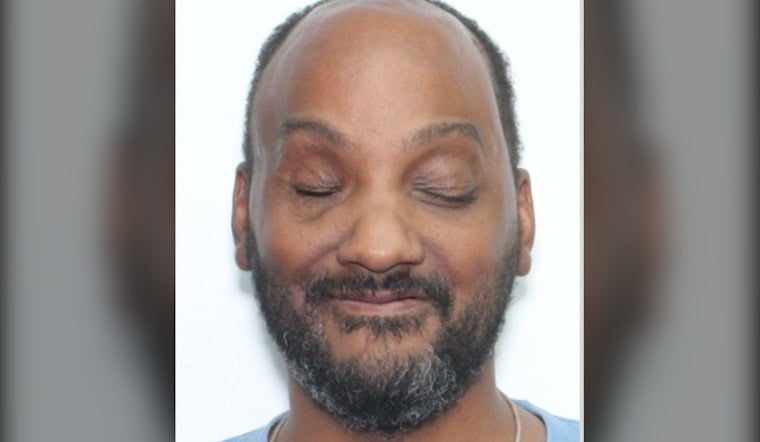
Melvin Strode, a 52-year-old blind man who lives with a traumatic brain injury, has been missing since before dawn Thursday, and Kansas City, Kansas police are calling him endangered as the search stretches into its second day. Strode was last seen around 5 a.m. near his home close to 75th Street and State Avenue, walking with a cane, and he has not been located since.
The Kansas City, Kansas Police Department has asked the public for help finding him, according to FOX4KC. Strode is described as a Black man standing 6 feet tall and weighing 190 pounds, with black hair, a full beard and a mustache. He usually wears sunglasses and a medical alert necklace, and he has a forearm tattoo reading “RIP” alongside a name that has not been identified. When he was last seen, he was wearing a grey shirt, grey pants and black shoes.
Why His Condition Raises the Stakes
Strode's combination of blindness and a traumatic brain injury has heightened concern for his safety. Research highlighted by the Brain Injury Association of America and the National Academies of Sciences notes that people living with traumatic brain injuries frequently experience severe disorientation, executive dysfunction, cognitive fatigue and memory loss, all of which create elevated risk during emergencies or when navigating without assistance. Those factors are part of why police are treating his disappearance as urgent rather than routine.
Police are directing anyone with information to call 911 immediately, the report notes. The department is not asking the public to wait for updates before reaching out — any tip, however small, could help locate him quickly.
The Area Where He Was Last Seen
The intersection near where Strode disappeared sits along a well-traveled stretch of Kansas City, Kansas. According to RideKC, 75th Street and State Avenue is directly served by Route 101, a primary east-west transit line connecting Wyandotte County to the 47th & State Metrocenter, downtown Kansas City, Kansas, and downtown Kansas City, Missouri. Further east along that same corridor, the 47th & State Metrocenter functions as a major regional transit hub, with park-and-ride facilities, KCKPD's Midtown Patrol Division office, and mobility management services run by the local Area Agency on Aging — infrastructure that could factor into how far a missing person might travel on foot or by bus from the area.
How Kansas Law Handles Missing Adult Cases
Kansas law sets a strict, fast timeline for cases like this one. Under K.S.A. 75-712c, law enforcement agencies are required to accept missing person reports without delay and enter them into the National Crime Information Center and Kansas Bureau of Investigation missing persons systems within two hours of receiving the minimum required information, according to the Kansas Office of Revisor of Statutes. State guidelines also make clear there is no mandatory waiting period before reporting a missing adult, dispelling a common misconception that families or officers must wait 24 or 48 hours before a report can be filed.
Kansas also maintains specialized alert systems for vulnerable missing adults. The state's Silver Alert protocol, enacted by the Kansas Legislature in 2009, creates a voluntary framework between law enforcement and media outlets to broadcast urgent alerts for missing adults suffering from dementia or mental and medical conditions that impair sound decision-making and survival, per the Attorney General of Kansas. In 2024, lawmakers went further, establishing the Purple Alert Plan for missing adults with intellectual or developmental disabilities who are unable to return to safety without assistance. It remains unclear whether either alert has been formally activated in Strode's case.
The Kansas City, Kansas Police Department serves roughly 153,000 residents across 125 square miles with about 340 sworn officers spread across three patrol divisions, fielding an average of 900 emergency 911 calls a day through its Wyandotte County communications center. For those with non-urgent information rather than an emergency tip, the department directs the public to its non-emergency dispatch line at (913) 596-3000 or its Report Desk at (913) 573-8680. Statewide, the Kansas Bureau of Investigation's clearinghouse typically has between 500 and 700 active missing person records entered in the NCIC database at any given time, underscoring how many families across Kansas are navigating similar searches right now.
Anyone who sees Melvin Strode or has information about his whereabouts is urged to call 911 immediately.




