

























































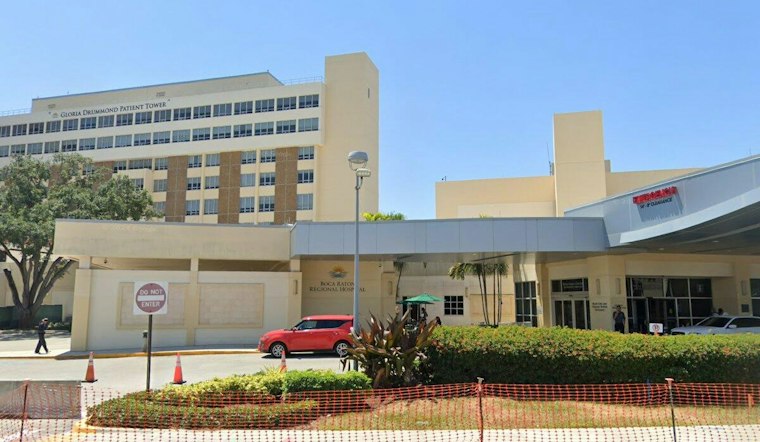
The immediate outcome for Lexie Lawler, the Boca Raton labor and delivery nurse who lost her job after a TikTok video wishing severe birth trauma on then-pregnant White House Press Secretary Karoline Leavitt went viral, is a recommended $250 fine and reprimand — not a final disciplinary order. The recommendation from a Florida administrative law judge, issued in September, is far less severe than the license revocation sought by top Florida officials in January, but the Board of Nursing still must decide whether to adopt it.
Judge Robert Cohen of the Florida Division of Administrative Hearings cited Lawler's 12 years as a licensed registered nurse without prior discipline and concluded that losing her long-term job at Baptist Health Boca Raton Regional Hospital had already been a significant consequence, according to CBS News. He recommended a penalty at the low end of the allowable range, along with continuing education that includes social-media instruction and payment of any documented investigation and prosecution costs.
The saga began in January when Lawler posted a TikTok video saying, “As a labor and delivery nurse, it gives me great joy to wish Karoline Leavitt a fourth-degree tear,” going on to add graphic remarks hoping Leavitt would “rip from bow to stern and never sh*t normally again,” according to Newsweek. Leavitt, who was 28 at the time, had just announced in late December she was pregnant with her second child, making her the first White House Press Secretary in U.S. history to serve while expecting, per the same outlet. A fourth-degree perineal tear is the most severe classification of childbirth trauma, involving complete tearing through the perineal tissue, anal sphincter and rectal mucosa, often requiring surgical repair and carrying the risk of long-term fecal incontinence, according to the Cleveland Clinic.
Video Spread by Libs of TikTok Before Firing
The clip was disseminated by Chaya Raichik, who uses the social-media moniker Libs of TikTok, helping it reach a wide audience quickly. Baptist Health fired Lawler shortly after the video spread, and her attorney, Julie Gallagher, did not challenge the hospital's right as an at-will employer to terminate her once the fallout included hundreds of harassing phone calls to hospital staff, according to footage reviewed via WPEC CBS12. Gallagher argued the case differently before the state, however, contending that no patient ever saw the video and that Florida failed to prove the comments were made in front of or directed at a patient.
Judge Cohen rejected that interpretation of the rule. He concluded that the provision did not require the statement to be made in a patient's physical presence and that Lawler understood the severity of what she was wishing on someone associated with labor and delivery. His order distinguished public posting from private communication, reasoning that a post limited to close family or friends would present a different issue.
State Sought Full License Revocation
The Florida Department of Health had cited unprofessional conduct as the basis for suspending Lawler's license through an emergency order, a mechanism the department issued on January 28 after officials claimed the off-duty video posed an immediate, serious danger to public health and safety, according to MedPage Today. Florida Attorney General James Uthmeier had said the Board of Nursing should “yank this vile person's license, immediately.” Healthcare policy experts told the outlet that using an emergency suspension order over off-duty social media remarks was highly unusual, since state nursing boards typically reserve that tool for direct patient harm, criminal charges, drug diversion or on-the-job impairment.
Lawler pushed back on the emergency order itself, filing a petition on February 19 with Florida's First District Court of Appeal arguing the suspension violated her First Amendment rights and failed to meet the statutory bar for an “immediate serious danger” under Florida Statute § 120.60(6), per the same WPEC CBS12 account. Later that month, the appellate court issued a partial stay allowing Lawler to work in administrative nursing roles without direct patient contact while her appeal proceeded, according to The Mirror US.
What the emergency order did — and did not — decide
Florida distinguishes emergency action from discipline imposed after a full hearing. A Florida Department of Health performance report says state law authorizes an immediate stop to activities considered an imminent threat and distinguishes emergency restriction orders, which limit practice, from emergency suspension orders, which suspend a license under the order's terms. In a separate 2020 case involving alleged COVID-19 safety failures by a nursing-home administrator, the Florida First District Court of Appeal found an immediate serious danger but rejected the full suspension because the agency had not explained why less restrictive measures would not adequately protect the public. That distinction helps explain why an emergency order and a later disciplinary recommendation can produce different outcomes. For online conduct, the National Council of State Boards of Nursing's social-media guide advises nurses to maintain professional boundaries when using electronic media, in addition to addressing confidentiality and privacy. The guide is general guidance rather than a Florida disciplinary rule, but it shows that professional expectations for nurses' online behavior extend beyond whether patient information is disclosed.
Local and Financial Fallout in Boca Raton
Boca Raton Mayor Scott Singer called Lawler's comments “disgusting” in January and personally contacted Baptist Health leadership about the situation, according to the Daily Citizen. Meanwhile, Lawler's husband, Tim Lawler, launched a GoFundMe titled “Help Lexie Lawler Fight Retaliation for Speaking Out,” which raised more than $30,000 to cover her legal expenses and living costs after the firing and license suspension.
Gallagher has said she plans to file exceptions to Cohen's recommended order, so the case remains open while the report goes to the Board of Nursing for a final decision. The Florida Department of Health rule at issue covers abusive, threatening or foul language used in front of a patient or directed toward a patient, and Gallagher has argued that the language must have been said in front of or directed at an actual patient. The board will decide whether to adopt Cohen's low-end recommendation or impose tougher discipline.




