

























































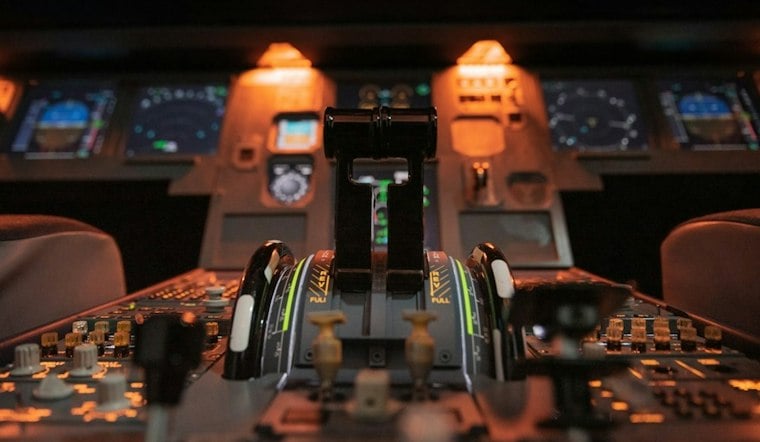
Boeing has identified a previously undisclosed software glitch on the 737 Max that could switch off some automated flight guidance for pilots in certain landing scenarios, and the company says it is racing to fix it. The issue can crop up when flight crews alter a preprogrammed flight path after a missed approach, leaving pilots without access to automated vertical navigation during a specific stretch of the landing sequence.
Boeing said it informed all 737 operators about the software issue last month, according to Reuters. The problem emerged from a cockpit software update and appears to affect only the latest version of the flight management computer software, meaning some Max operators will not be impacted because they are not running that build. Boeing is now working with the FAA on a software update meant to permanently address the issue, with the company saying, “Our engineers are working on a software update to permanently address the issue,” per the same account.
When the glitch occurs, the aircraft switches from vertical navigation mode to a simpler level of automation, and pilots then need to manually perform extra steps to complete the landing. Boeing said information shared with operators reinforced existing pilot procedures for safely handling such cases. The manufacturer is also working with airlines on a procedure that would let pilots reenable automated vertical navigation if the glitch occurs mid-flight.
Regulators Open a Formal Safety Review
The FAA confirmed it is aware of a potential issue in a software update for the flight computers on certain Boeing 737 Max airplanes, according to KSL.com. The agency said it would convene a Corrective Action Review Board and take immediate action if it identifies a safety concern, the outlet reported. That board is the FAA's standard process for evaluating potential unsafe conditions on aircraft, according to the Federal Aviation Administration.
Boeing, airlines and regulators are now assessing how widespread the flawed software is and whether it poses a broader flight-safety concern, the Reuters report noted. The Wall Street Journal reported the software issue, and Boeing said it sent a company document describing the problem to operators in August.
Airlines Split on Response as Deliveries Loom
Southwest Airlines and United Airlines have asked Boeing not to deliver new 737 Max aircraft equipped with the affected software, requesting an earlier version instead, per the Reuters report. Alaska Airlines, meanwhile, said it does not operate Max planes with the affected software version and is not impacted.
The Seattle Times reported that Boeing had identified the software issue on the 737 Max. The 737 Max remains a troubled program for the manufacturer, in the paper's framing.
A Program Still Defined by 2018 and 2019
The renewed scrutiny lands against the backdrop of two fatal 737 Max crashes that led to a worldwide grounding of the aircraft. Lion Air Flight 610 crashed in October 2018, and Ethiopian Airlines Flight 302 crashed in March 2019, according to a Reuters timeline of the crisis.
Preliminary accident reports found that MCAS, short for Maneuvering Characteristics Augmentation System, pushed the planes' noses down in both incidents, partly in response to erroneous sensor readings, as detailed by Fortune. Those crashes remain part of the backdrop to regulatory scrutiny of the 737 Max.





