

























































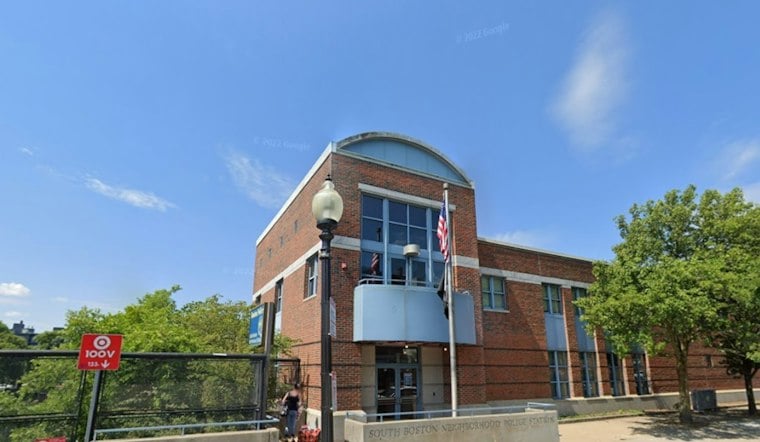
Boston police ran 45 Flock Safety license plate cameras across the city for a free five-month pilot, and within three days, outside law enforcement agencies were already able to access the vehicle data those cameras collected — despite a contract that specifically required data sharing to be switched off. Now city officials say they are done with Flock altogether.
The breach came to light through Boston's own surveillance oversight process. As reported by The Boston Globe, the city adopted Flock's automatic license plate reader system at no cost for the pilot, with cameras logging plates, vehicle descriptions, locations, timestamps, and photos of every passing car. Boston police detectives were supposed to be the only ones with database access for investigative purposes, per the city report the Globe reviewed. Instead, a nationwide lookup feature got switched on by error, letting other agencies reach into Boston's data just three days into the program in 2025, according to the same report.
Boston Police confirmed to the city that its sharing settings were supposed to be off, and once the error was discovered, the department directed Flock to disable the feature, per the city report cited by the Globe. The report did not specify which outside agencies accessed the data or what they searched for, and Boston Police said they found no records of complaints or misuse tied to the pilot. City officials say they will now cease using Flock going forward, the Globe reports. Flock did not return a request for comment from the paper.
A Nationwide Network Built for Sharing
Flock bills itself as the largest manufacturer of AI-enabled license plate cameras, operating a network of more than 120,000 cameras across 49 states and capturing roughly 20 billion license plate scans a month, according to the company as cited by the Globe. While sharing within an agency's own camera network is optional, the broader Flock system can be reached either through a nationwide database or direct sharing between departments. Lawmakers have proposed warrant requirements for access to license plate reader data. The Globe also discusses Flock's data-sharing practices.
Boston's surveillance oversight requirements are what forced the error into public view in the first place. Under the city's Surveillance Oversight Ordinance, enacted in 2021 and implemented in August 2022, departments must publish surveillance policies and file annual public usage reports. Boston approved the use of license plate readers back in 2022, and the council is expected to review the latest surveillance report, according to the ordinance's framework.
Officer Misuse Cases Feed a Statewide Backlash
Flock's license plate readers have triggered backlash from communities nationwide, and Massachusetts has become something of an epicenter. Massachusetts has seen documented misuse cases involving police officers in Revere, Stow, and New Bedford, per Globe reporting. That pattern echoes a case Hoodline covered directly: a Revere officer suspended after an internal investigation confirmed he improperly accessed Flock cameras and state databases to track a woman with an active restraining order against him, according to WCVB. Similar misuse investigations led to officer discipline or resignations in Stow and New Bedford this year, the same reporting shows.
Flock's license plate readers have triggered backlash from communities nationwide, and Massachusetts has become something of an epicenter. The ACLU of Massachusetts says at least 25 municipalities have opted out of Flock contracts over privacy, misuse, and oversight concerns. That tally aligns with broader tracking data from the organization showing more than 25 Massachusetts municipalities have canceled, suspended, or declined to renew Flock deals, with activists citing default nationwide data sharing, absent warrants, and potential police misuse as the driving factors.
Vendor Errors Have Happened Before
Boston's experience is not the first time Flock has changed camera operations without a municipality's blessing. Flock installed two cameras in Cambridge without the city's knowledge, and Cambridge terminated its Flock contract in December 2025 over what officials called a breach of trust, according to a statement from the City of Cambridge. A similar episode played out in Littleton, where officials discovered in July 2026 that Flock had reactivated five deactivated cameras without notifying the town — after Littleton had paused its six cameras that May to evaluate privacy concerns — prompting the town to cut electrical power to the units and move to terminate the contract, according to Eyes Off MA. Flock said it was following its standard operating procedure in the Littleton reactivation. Crockford told the Globe that Flock's business practices have had negative consequences for the communities involved.
Boston Pivots to Axon and Motorola
Rather than abandon license plate readers entirely, Boston Police have adopted new pilots with Axon and Motorola Solutions — Axon launched a 30-camera pilot in June 2026, and Motorola began a 45-camera pilot in February 2026, per the Globe. Both vendors would not allow outside agencies to directly access Boston's pilot data; instead, law enforcement agencies can ask Boston police to conduct a search on a case-by-case basis, the Globe reports. That mirrors a broader shift statewide, as departments moving away from Flock increasingly turn to competitors like Axon and Motorola, which keep vehicle image logs locally controlled rather than tied to an open nationwide lookup system, according to WGBH.
Benjamin Weber spoke about balancing public safety and civil liberties in connection with social media surveillance, according to the Flipside. The City Council will vote on any new technologies Boston adopts going forward, following the same ordinance process that surfaced this episode.
Courts and Lawmakers Widen the Scrutiny
A Suffolk County Superior Court judge ruled in September 2026 that Massachusetts State Police must release public records disclosing the locations of its automated license plate reader cameras and audit logs of officer search queries, following a 2023 lawsuit brought by civil liberties advocates, per WGBH. That lawsuit concerned an MSP ALPR database and requested audit records, according to the same report.
Meanwhile, state lawmakers advanced legislation known as H.3755 in March 2026 that would bar law enforcement from accessing license plate reader data without a warrant, cap data retention at 14 days, and prohibit surveillance of constitutionally protected activities. The bill passed the Joint Committee on Transportation by an 11-0 vote and remained pending before the House Committee on Ways and Means as of September 2026, WGBH reports. At least 1,187 active license plate reader cameras are currently installed across Massachusetts, according to crowdsourced tracking data and WGBH's analysis, part of a nationwide total estimated at more than 138,000 cameras.
Municipalities keep moving on their own timelines even as the state debate continues. The New Bedford City Council introduced an ordinance in September 2026 requiring public hearings and council approval before any license plate readers can be deployed locally, following a temporary police pause on Flock cameras there amid community pushback, according to The New Bedford Light. Hoodline has tracked similar exits in other Massachusetts communities, a wave that, with Boston's exit, now touches the state's capital city.



