

























































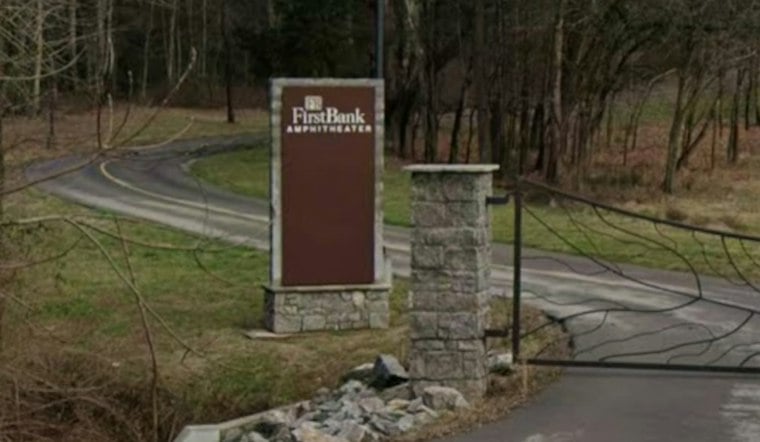
Brad Pitt's survival thriller Heart of the Beast had its global world premiere Wednesday night at FirstBank Amphitheater in Franklin, and the star-studded event doubled as a showcase for a Tennessee film industry that state officials say is nearing $1 billion in annual production spending. The film, which follows a former soldier and his loyal German shepherd fighting to survive the Alaskan wilderness after a plane crash, stars Pitt alongside J.K. Simmons and Anna Lambe, and hits theaters nationwide on September 25.
Despite its Alaskan setting, the film was actually shot on location across New Zealand, including Queenstown and Fiordland, according to Odyssey Pictures. That detail underscores just how much of the modern studio pipeline — location scouting, post-production, scoring, and premiere logistics — can be separated from where a movie is actually filmed, and it's precisely that separated pipeline Tennessee officials are racing to capture. As reported by WSMV, the premiere itself adds to what the Tennessee Entertainment Commission describes as mounting signs of growth in the state's film industry.
The screenplay, written by Cameron Alexander, had a long road to the screen. It first surfaced as an unproduced script on Hollywood's 2017 Black List before director David Ayer and producer Damien Chazelle signed on in March 2024, according to Wikipedia. That nearly decade-long development arc is fairly typical for major studio features, but it also means Tennessee's marquee premiere night was built on groundwork laid years before any state incentive dollars entered the picture.
A Quarry Turned Amphitheater Sets the Scene
Pitt reportedly chose the outdoor Tennessee venue specifically because it matched the survival theme of the film, the WSMV report notes. FirstBank Amphitheater, which seats 7,500, sits inside a former quarry used in the 1960s that sat abandoned before opening as a concert venue in 2021, per Live Nation Special Events. The rugged, quarry-carved setting gave the premiere a backdrop that echoed the wilderness survival story unfolding on screen.
The premiere was followed three days later by Pitt's scheduled appearance as grand marshal at Bristol Motor Speedway's Night Race, a stop Hoodline covered in its report on Pitt's Bristol grand marshal turn. The two high-profile appearances in East and Middle Tennessee within the same week gave the state's entertainment agency an unusually concentrated stretch of national visibility.
Fifteen Years From $100 Million to Nearly $1 Billion
Tennessee film production spending has grown from about $100 million annually to nearly $1 billion annually over roughly 15 years, per the same WSMV account. Bob Raines, executive director of the Tennessee Entertainment Commission, points to the television series Nashville as a turning point for the state's production industry, the report states. The commission, which manages grants and incentives for in-state production, started its grant program in 2007 and had provided $99 million in incentives through 2024, according to the same account.
A Tennessee Entertainment Commission post describes an increase in the state's film-industry economic output over five years, according to the Tennessee Entertainment Commission. The agency has also provided non-incentivized help — location scouting, permitting, community liaison work — to more than 2,100 production projects statewide since 2014, per the Center for Economic Research in Tennessee.
Whites Creek Campus and a Berry Hill Scoring Stage
Much of that growth is showing up in concrete, poured infrastructure. The commission promised $156 million in state grants for Rock Nashville, a live entertainment rehearsal and storage space in Whites Creek, over the past two years, the WSMV report notes. The 55-acre, 610,000-square-foot campus officially opened in January 2026 with 13 band and production studios plus two arena- and amphitheater-sized rehearsal stages, according to MusicRow. Beyond the buildings, Rock Nashville directly employs roughly 50 local staff and 500 partner vendor personnel, and it supports between 200 and 400 temporary local workers daily during tour production cycles, per the same outlet.
The commission has also committed $275 million to the Berry Hill scoring stages, a project intended to let orchestras record musical scores in Nashville rather than sending Nashville-written scores to be recorded in Hollywood, as they had been before, per WSMV. Officials describe the project as one of the only purpose-built soundstages outside Hollywood, designed to keep orchestral scoring work in Music City rather than losing it to the coast. Berry Hill itself spans less than one square mile yet historically houses roughly 40 to 60 recording studios and music publishing companies, according to Nashville Post — a density that helps explain why the neighborhood was chosen for the scoring campus. Ground is expected to break on the Berry Hill site soon.
Incentives Stack Up Beyond the Grant Checks
The direct grant rebate is only part of the state's pitch. Tennessee also offers a 25% cash grant rebate for qualified production spend alongside a Qualified Production Credit that can offset up to 50% of a company's state franchise and excise tax liabilities, according to the Tennessee Entertainment Commission. Occupants staying 30 or more continuous days are not required to pay the occupancy tax after the thirtieth day, the same source notes — a provision relevant to extended location shoots.
Whether a major studio actually relocates remains unresolved. There's persistent chatter that Paramount could potentially move from California to Nashville, though that's characterized only as a rumor, and the commission has declined to comment on the speculation, according to WSMV. Officials say companies express interest weekly in moving studios or building infrastructure in Tennessee, and the agency describes its role as supporting foundational, consistent work for the state rather than chasing any single headline deal.





