

























































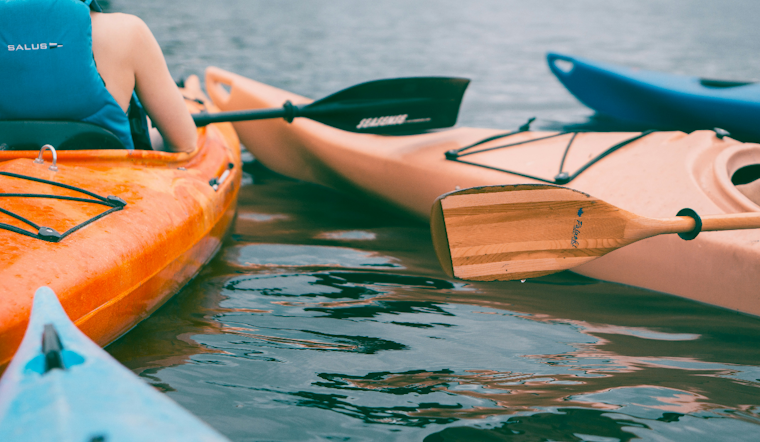
The water on the Indian River in Brevard County doesn't just ripple under a paddle stroke these late-summer nights — it glows. Brady-Yak Kayak Tours has been taking visitors out onto the waterway to see it happen firsthand, and the Florida coast is about to reach peak bioluminescence season, according to FOX 35 Orlando.
Brady-Yak Kayak Tours operates its bioluminescent excursions on the Indian River, letting paddlers experience the water lighting up around their boats as they move through it, per the same FOX 35 Orlando report. The tours are based in Brevard County, where the lagoon system is a magnet for both eco-tourists and marine scientists. The glow itself comes from microscopic, single-celled organisms called *Pyrodinium bahamense*, which produce light through a chemical reaction between luciferin and luciferase whenever they're agitated by a paddle stroke or a passing fish, according to UF/IFAS Extension.
When the Glow Is Brightest
Peak bioluminescence brightness in Brevard County's Indian River Lagoon runs from June through September, and local tour operators point to new moon phases as the best time to go, since darker skies sharpen the visual contrast against the glowing water, according to Visit Space Coast. The phenomenon doesn't vanish once the calendar turns toward fall, either. From October through May, the lagoon's bioluminescence shifts from dinoflagellates to comb jellies, translucent, non-stinging ctenophores that flash blue-green light when touched, per the Treasure Coast Almanac.
Most of Brevard County's night-paddling excursions launch from Haulover Canal, tucked inside the 140,000-acre Merritt Island National Wildlife Refuge near Titusville, where low ambient light pollution helps the glow stand out, according to Paddle Florida. That same darkness is part of what makes the northern Indian River Lagoon so unusual — marine researchers note it's one of the few estuarine environments in North America with predictable summer dinoflagellate blooms, putting it in the same company as Puerto Rico's famous bioluminescent bays, per UF/IFAS Extension.
A Toxin Behind the Light Show
The organism responsible for that glow has a darker side. The Florida Fish and Wildlife Conservation Commission has kept a permanent ban on harvesting puffer fish from the Indian River Lagoon in place since 2004, because saxitoxins produced by *Pyrodinium bahamense* accumulate in puffer fish tissue and can cause paralytic shellfish poisoning in humans, according to the Florida Fish and Wildlife Conservation Commission. The exposure isn't limited to fish humans might eat. A 2020 study led by Florida Institute of Technology researchers detected saxitoxin in Indian River Lagoon bottlenose dolphins during both bloom and non-bloom periods, pointing to chronic exposure among the estuary's apex predators, according to a report from HSWRI.
A Multi-Billion-Dollar Estuary Under Restoration
The lagoon that hosts these kayak tours also carries enormous economic weight. A 2025 economic study found the Indian River Lagoon generates $28.3 billion in annual economic value across five Florida counties, with every dollar spent on ecosystem restoration returning $24 in economic benefits, per TCPalm. Brevard County voters have already backed a decade-long half-cent sales tax, approved in 2016 through the Save Our Indian River Lagoon program, that's projected to generate $489 million for septic conversions and water restoration projects meant to curb the nutrient runoff feeding harmful algal blooms, according to National Geographic.
What Paddlers Need to Bring After Dark
Florida boating safety rules require non-motorized craft out after dark to carry Coast Guard-approved personal flotation devices for every paddler, along with a sound-producing whistle and a white light ready to signal any oncoming vessel, per the Florida Bioluminescence Guide. Those requirements matter on a waterway shared with motorized boat traffic in near-total darkness, where a paddler's visibility can make the difference in avoiding a collision.
The glowing water isn't unique to Brevard County this summer — Hoodline has covered similar night-paddling tours along North Carolina's coast, though those displays are generally described as less intense than the Indian River's summer blooms. Closer to home, other translucent and bioluminescent marine organisms have been turning up along the Space Coast between June and October, a trend Hoodline detailed in its report on the harmless “jumping sticks” that puzzled beachgoers last month.





