

























































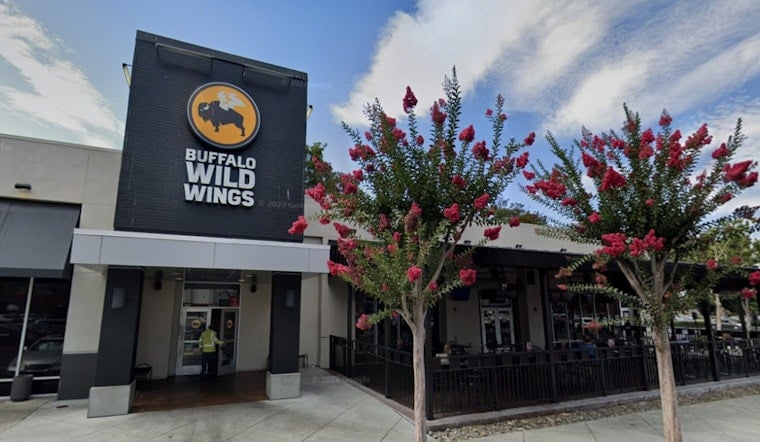
Two Buffalo Wild Wings sports bars in California have gone dark this year, closing their doors just as football season kicks off and the chain rolls out a nostalgia-driven menu meant to draw fans back to the bar stool. The Westgate Center location at 1620 Saratoga Avenue in San Jose closed in April, and the Marina Pacifica restaurant at 6314 East Pacific Coast Highway in Long Beach has also shut down.
The closures were reported by the New York Post, which noted Buffalo Wild Wings still operates many California locations, including four in the Los Angeles area, and that the chain remains the largest sports bar operator in the country with more than 1,400 locations nationwide. Reporting from Fast Company confirmed the same two California addresses among the year's shutterings and found no indication the chain is retreating from those markets entirely.
The California closures are not isolated. Fast Company's reporting also tracked 2026 closures spreading across Ann Arbor, Michigan; Hicksville, New York; Arlington, Virginia; McHenry and Morris, Illinois; Arvada, Colorado; Buford, Georgia; Indianapolis, Indiana; and Lawrence, Kansas — a footprint reduction touching at least seven states outside California. In Ann Arbor, where a location closed in May, store manager Paul Creely told MLive that customers simply have less money to spend eating out, and that pinch contributed to the shutdown.
A Menu Throwback Arrives as Stores Close
Even as it trims full-service locations, Buffalo Wild Wings leaned into nostalgia last month, launching a limited-time throwback menu on August 19 built around fan favorites from the 2000s. The lineup includes buffalo chips, mini corn dogs, garlic mushrooms, and the returning hot BBQ sauce, and it's scheduled to run through November 9 — squarely inside the NFL season the chain is banking on to drive traffic.
The timing underscores a split strategy: comfort-food marketing aimed at pulling dine-in customers back to the bar, even as the underlying real estate footprint keeps shrinking. Per the same Fast Company account, the company is repositioning its footprint for the long term by shedding underperforming restaurants while emphasizing takeout-friendly formats and franchising.
Why California's Full-Service Bars Are Under Pressure
Underlying the store closures is a set of cost pressures specific to California. Under Assembly Bill 1228, which took effect in April 2024, the state set a $20-per-hour minimum wage for fast-food workers at chains with 60 or more locations nationwide, according to the California Department of Industrial Relations — the highest fast-food wage floor in the country. A research brief from the Cato Institute found that food-away-from-home prices in California metro areas rose 3.3% to 3.6% relative to non-California metros between September 2023 and December 2024 following the law's rollout.
Wing costs add another layer of volatility. Financial analysts at UBS, cited by Fast Company, noted that Buffalo Wild Wings sells more than 27 million chicken wings per week nationwide, leaving store-level profitability exposed to swings in wholesale wing prices and broader food commodity inflation.
Franchisees Push Back as Parent Company Eyes an IPO
The retreat from full-service stores comes as parent company Inspire Brands, backed by private equity firm Roark Capital, confidentially filed for an initial public offering with the SEC in May, seeking a $20 billion valuation and as much as $2 billion to pay down corporate debt, according to Entrepreneur. In August, the brand named Ahmed Awadallah, a former Espresso House Group chief operating officer and 14-year Yum! Brands veteran, as its new COO overseeing global franchising and operational efficiency, per Nation's Restaurant News.
Not everyone inside the system is on board with the direction. According to financial reporting by TradingView, franchisees pushed back against corporate strategy in June, citing flat sit-down sales over the previous two years and asking leadership to pull back on deep discounts in favor of marketing that drives dine-in traffic. That tension sits alongside Inspire Brands' expansion of its compact BWW GO takeout format — typically 900 to 1,600 square feet with heated pickup lockers — which had grown to 219 U.S. units by late 2025, according to Restaurant Dive.
Hoodline has tracked this Bay Area GO expansion since a Fremont franchisee began opening five takeout-only locations this spring, part of the same nationwide shift that has produced a Chicago sports bar relocation, a Houston airport buildout, and a co-branded Florida store paired with Jimmy John's. The California closures fit that broader pattern: full-service sports bars shrinking while smaller, lower-overhead takeout formats expand around them.
Retail tracking data from Coresight Research, reported by FinanceBuzz, projects U.S. retail and restaurant chain closures will top 8,200 locations in 2026 — though that figure actually represents a 4.5% decline from 2025 levels, suggesting Buffalo Wild Wings' pullback is part of a wider, if slightly easing, wave of store consolidation across the industry.





