

























































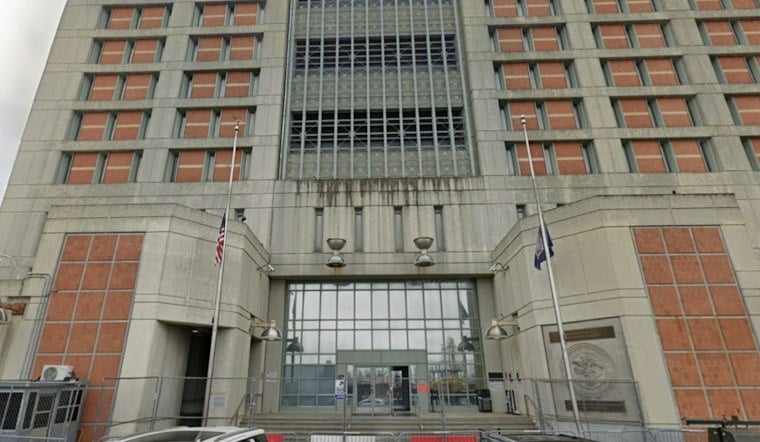
Cilia Flores, the wife of former Venezuelan President Nicolás Maduro, has filed a motion asking to be released from federal custody while she awaits trial, telling the court her health has sharply deteriorated during her months at Brooklyn's Metropolitan Detention Center. Her attorneys say the 69-year-old may have suffered a minor heart attack over the summer, has lost more than 25 pounds and two molars, and now sleeps no more than three to four hours a day.
The request, detailed in reporting by the Miami Herald, asks U.S. District Judge Alvin Hellerstein to allow Flores to serve out her pretrial detention under home confinement instead of remaining at MDC Brooklyn. Flores was already carrying documented rib trauma and facial bruising from the January raid that brought her and Maduro into U.S. custody, injuries her defense counsel disclosed at their initial court appearance, according to ABC News.
According to the Herald's report, Flores's legal team says her cardiac problems developed since she entered detention. A stress test on April 23 was stopped after she experienced shortness of breath and chest pressure, and the test reportedly showed abnormal heart rhythms and electrocardiogram changes. In May, she experienced a 33-beat episode of nonsustained ventricular tachycardia, and her attorneys argue recurrent episodes like it could place her at risk for a life-threatening cardiac event. Medical staff have recommended cardiac catheterization to determine whether she has coronary artery disease, though the Herald's account notes her attorneys separately said jail medical staff have provided excellent care.
Chest Pain, Lost Molars, and a Shrinking Frame
Flores also reported a 30-minute episode of intense chest pressure and shortness of breath on July 29, and has used her inhaler after complaining of chest tightness, per the same account. She keeps nitroglycerin available for chest pain and continues to experience weakness, occasional rapid heartbeat, shortness of breath, and dizziness, the report states. Before her detention, she took a monthly injection to control mitral valve prolapse and is also said to have rheumatic valve disease, mild stenosis, moderate regurgitation, and asthma, along with reflux and gastritis; she now takes multiple medications while incarcerated. Her legal team says it lacks laboratory tests confirming a minor heart attack but believes she may have suffered one after consulting cardiac experts.
Flores spent about three months in solitary confinement and is now housed with more than 40 female detainees at MDC Brooklyn, the report notes. A fight broke out in her unit on August 14, during which guards used pepper spray, the article states.
A Jail With a History of Judicial Rebuke
The proposed release plan leans on a documented pattern of federal skepticism toward MDC Brooklyn. Federal judges in New York, including Judge Jesse Furman in 2024, have repeatedly refused to send defendants to the facility, citing what one judge called “barbaric” understaffing, severe medical delays, and prolonged lockdowns as grounds for pretrial release under 18 U.S.C. § 3145(c), according to The Appeal. Hoodline previously detailed the facility's history of overcrowding and medical neglect when Maduro and Flores first arrived there following their capture.
Flores's defense has proposed a private security arrangement through Guidepost Solutions, a firm that employs former prosecutors and law-enforcement officers from the Secret Service, DEA, FBI, Department of Homeland Security, and New York Police Department. The firm's president, Louis J. Milione, is a former senior DEA official. Under the proposal, Guidepost would station several armed former law-enforcement officers at her residence around the clock, install cameras, door and window sensors, and alarms, and provide live and recorded video to the government along with visitor logs. The arrangement would also include GPS monitoring, surrendered passports and travel documents, random unannounced searches, a court-approved third-party custodian, and a controlled visitor list, with a monitored hardline telephone except for privileged attorney calls. Security personnel would be authorized to use reasonable force to prevent Flores from fleeing or violating release terms, and she would be permitted to leave only for court-approved reasons such as medical appointments or legal visits. Her attorneys have argued that Maduro's continued detention reduces her own incentive to flee, and that she intends to remain with him while they fight the criminal charges together.
Charges, Denials, and a Prosecution Prosecutors Oppose Releasing
Prosecutors oppose Flores's release. She is charged with conspiracy to import cocaine and two firearms-related counts, though she is not charged with the narcoterrorism conspiracy count lodged against Maduro. Prosecutors allege she participated for years in a drug-trafficking operation and accuse her and Maduro of ordering kidnappings, beatings, and murders, including the alleged murder of a local drug boss in Caracas. Both Flores and Maduro have denied wrongdoing.
Prosecutors allege that Flores and Maduro worked together to traffic cocaine roughly between 2004 and 2015, maintaining government-sponsored armed groups known as colectivos that facilitated and protected the alleged operations. Prosecutors further allege that in 2007, Flores attended a meeting where she accepted hundreds of thousands of dollars in bribes to broker a meeting between a large-scale drug trafficker and Néstor Reverol Torres, who headed Venezuela's national anti-drug office at the time; the trafficker allegedly paid Reverol Torres a monthly bribe plus roughly $100,000 for each cocaine flight through Venezuelan airspace, with a portion of those payments allegedly going to Flores.
The Broader Legal Fight Ahead
The defendants could face life sentences, according to reporting from PBS NewsHour. The State Department formally designated the Cartel de los Soles, the alleged drug-trafficking network named in the indictment, as a Foreign Terrorist Organization in November 2025, per the U.S. House Republican Policy Committee, which alleges the network coordinated cocaine shipments alongside groups including FARC and Tren de Aragua.
The bail fight unfolds against a broader legal timeline. The parties were seeking a June 2027 trial date, but Judge Hellerstein had not yet set one in July, according to The Guardian. Maduro's attorneys separately filed a motion on September 3 seeking dismissal of all charges on grounds of foreign sovereign immunity, arguing that sitting and former heads of state are protected under international law. The federal case itself dates back to March 2020, when the Justice Department first indicted Maduro in the Southern District of New York, nearly six years before the superseding indictment adding Flores was unsealed.
Maduro and Flores were brought into U.S. custody on January 3 during Operation Absolute Resolve, in which U.S. military personnel enabled federal law-enforcement officers to execute an arrest warrant at their Caracas compound. In April, the Treasury Department modified sanctions against Venezuela to allow the Venezuelan government to fund the pair's legal defense fees, easing an earlier obstacle to retaining private counsel.




