

























































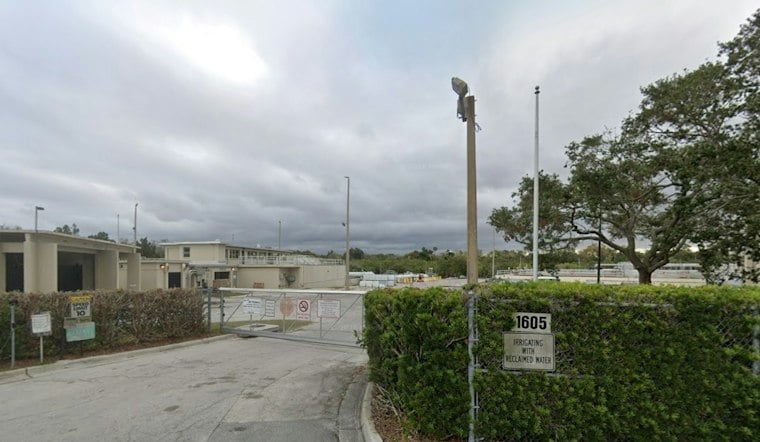
A power failure at Clearwater's Marshall Street sewage treatment plant sent untreated wastewater backing up through a nearby manhole on September 19, spilling 35,686 gallons over roughly 30 minutes about 300 feet from the shore of Stevenson Creek. The overflow landed less than 2,000 feet upstream from a manatee protection zone the city had approved just weeks earlier, putting fresh scrutiny on aging infrastructure sitting right beside newly won habitat protections.
The spill, enough wastewater to fill roughly 3.5 tanker trucks, occurred in the same estuary where manatees rely on aquatic grasses for food, according to reporting by Creative Loafing Tampa. On September 1, the Clearwater City Council gave final approval to a year-round, slow-speed Manatee Protection Zone covering the entire 3.2-mile tidal estuary of Stevenson Creek, from Clearwater Harbor upstream to Douglas Avenue, according to Tampa Bay Beacons. Local advocates had spent more than two years lobbying for the boating speed limits after increased sightings of female manatees and calves in the shallow creek, the outlet reported.
A Habitat Win Undercut By An Aging Plant
Enforceability of the new protection zone still hinges on final review and approval from the Florida Fish and Wildlife Conservation Commission before regulatory markers can be posted, per the same Tampa Bay Beacons report. In the meantime, the sewage spill has renewed pressure on the city's water infrastructure, the very system whose failures have repeatedly sent wastewater into the same creek advocates just won new protections for.
Sherry Day, president of the Stevenson Creek Advocacy Group, said Clearwater should prioritize its water treatment facilities and argued the city has had recurring mechanical and equipment failures without corrective action, according to Creative Loafing Tampa. Day's group has also opposed a multi-slip commercial dock proposal by developer Valor Capital along the creek, contending that dense dock construction and motorboat traffic threaten shallow manatee feeding areas, according to WTSP.
A Pattern Of Spills From The Same Plant
This is not an isolated incident at Marshall Street. The plant experienced a 500,000-gallon sewage spill caused by an equipment malfunction in 2023, and during Tropical Storm Debby in 2024, Clearwater allowed the plant's final treatment stage to overflow, resulting in a spill of more than 18 million gallons of partially treated sewage, per the seed report. Hurricane Milton struck later that year and caused a 25-million-gallon sewage spill, as the outlet's reporting notes; Hoodline has previously detailed how storm inflow and debris overwhelmed the same coastal plant during Milton, driving overflows into storm drains that emptied into Stevenson Creek and Clearwater Harbor.
Michael Flanigan, director of Clearwater's public works department, was promoted to his current role earlier in 2026. He told Creative Loafing Tampa that wastewater spills cannot be completely prevented, though the city is implementing measures meant to keep sewage from leaching into the creek during overflow events, with some upgrades expected to be completed later this year. Flanigan also noted that the Marshall Street plant benefits manatees in another way, discharging water that helps keep them warm during the winter months.
No Firm Timeline For Retiring The Plant
The Marshall Street plant is set to be decommissioned, but Clearwater has no clear timeline for when that will happen, according to the seed reporting. The city formally adopted a 30-year Water Reclamation Facilities Master Plan back in March 2023 that directs consolidating and eventually decommissioning the coastal facility, shifting all municipal wastewater treatment inland to the Northeast plant, according to the City of Clearwater. Decommissioning requires rerouting all sewage to another plant, and Flanigan said the process will be complicated.
Clearwater continues to allocate funds toward wastewater infrastructure upgrades intended to reduce future spills, according to Creative Loafing Tampa. As of August, the city was also seeking $9.3 million in FEMA Public Assistance reimbursements tied to 2024 storm damage, with remaining projects including repairs and upgrades at Marshall Street, as Hoodline's prior reporting found.
Under Florida Statute 403.077, the Public Notice of Pollution Act, utility operators that experience unauthorized discharges exceeding 1,000 gallons must notify the State Watch Office and issue a public notice within 24 hours or face potential civil penalties, according to the Florida Senate. The law dates to 2017 and was designed to stop municipalities from withholding news of sewage overflows from the public. The American Society of Civil Engineers gave America’s wastewater systems a D+ grade last year, according to ASCE.
In 2014, federal and local authorities dredged roughly 94,000 cubic yards of accumulated muck and sediment from Stevenson Creek under the U.S. Army Corps of Engineers' aquatic ecosystem restoration project, an effort that restored water flow and habitat after years of industrial runoff and urbanization, according to a project listing on SAM.gov. That public investment underscores what is now at stake as the creek's newest protections collide with a wastewater system still prone to failure.




