

























































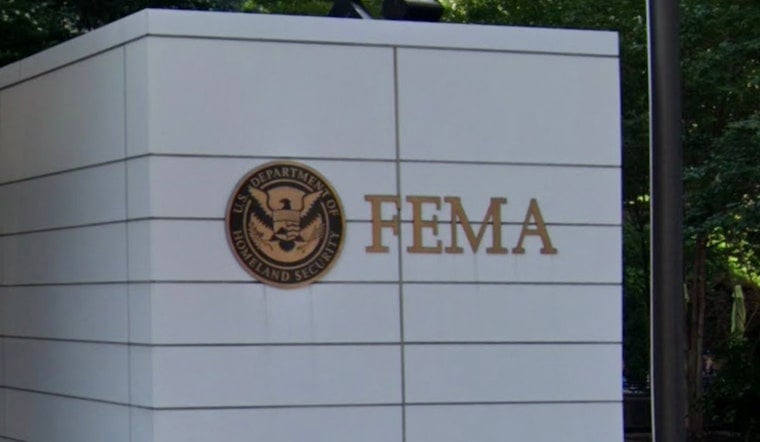
Two years after Hurricanes Helene and Milton tore through the Tampa Bay area, the City of Clearwater is still waiting on $9.3 million in FEMA reimbursement for storm-related damage, even as crews continue work on lingering repairs across the city. For residents like Rhonda Siegel, the financial and physical rebuilding is only part of the story — the emotional toll of that back-to-back battering still lingers every time hurricane season rolls around.
Siegel, who lives in Clearwater, experienced both storms hit her property in quick succession, according to Tampa Bay 28. Her home took on roughly 18 inches of water, damage severe enough that she had to replace her floors and subfloors, and she lost a large mango tree that had produced 3,000 mangoes just the year before. Despite the losses, Siegel says life has largely returned to normal — though not without a lingering psychological weight. “Every hurricane season I have PTSD,” she said, describing the anxiety that resurfaces each time storm season approaches, per the outlet's report.
That anxiety has translated into preparation. Siegel now keeps hurricane shutters and emergency kits on hand, along with a shed dedicated entirely to hurricane supplies. Her go-bag, in line with what the City of Clearwater recommends every resident stock ahead of storm season, includes batteries and a waterproof bag for important documents.
Millions Still Moving Through the Reimbursement Pipeline
The city's emergency management department has reported that recovery efforts remain ongoing as it works through the FEMA reimbursement process, per the same account. Miyah McClainey, an emergency management specialist with the City of Clearwater, is among those overseeing that continuing work. The remaining projects on the city's list include upgrades to Marshall Street and parks and recreation repairs, with city crews continuing storm-related projects across Clearwater.
The Marshall Street work traces back to a specific failure during Milton: the city's Marshall Street Water Reclamation Facility was overwhelmed by excessive storm inflow and debris, causing localized sewage overflows into storm drains that fed into Stevenson Creek and Clearwater Harbor, according to WUSF. That plant sits at the center of a longer-term fix: back in March 2023, Clearwater City Council approved a 30-year Water Reclamation Facilities Master Plan directing the eventual consolidation and decommissioning of the coastal Marshall Street facility, shifting flow instead to the inland Northeast plant to cut long-term storm surge risk, according to the City of Clearwater.
How Federal Cost-Sharing Shaped the Cleanup
The scale of the damage across the region helps explain why reimbursement remains a multi-year process. Disaster recovery contractors cleared roughly 250,000 cubic yards of debris from Clearwater alone, part of more than 12 million cubic yards collected across the Tampa Bay region after Milton, according to Florida Politics. While standard FEMA Public Assistance rules require a 75 percent federal cost-share, emergency declarations after Helene and Milton temporarily covered 100 percent of eligible costs for emergency protective measures and debris removal, per the Florida Policy Institute. That temporary full cost-share is part of why cities like Clearwater were able to launch massive initial cleanups without piling on immediate municipal debt.
County-Level Aid Fills the Long-Term Gaps
Alongside the city's own reimbursement track, Clearwater has partnered with Pinellas Recovers, the county program providing funding assistance for storm-damage repairs. The program's aid tiers cap disaster relief reimbursements at $15,000 for emergency home expenses, $50,000 for homeowner repairs, and up to $375,000 for major structural rehabilitation or reconstruction, according to Pinellas Recovers. By July, the program had approved more than $54 million in grant aid to help over 700 income-eligible households rebuild, repair, or cover storm-related expenses from the 2023-2024 hurricane seasons, per Pinellas County Government.
That county-level support draws on a much larger pool of federal money. In May 2025, the U.S. Department of Housing and Urban Development allocated an $813.8 million CDBG-DR grant to Pinellas County to fund long-term housing, infrastructure, and economic recovery following the 2024 hurricanes, with the county's action plan directing those dollars primarily toward low- and moderate-income households in every municipality except St. Petersburg, which received its own direct HUD allocation. Hoodline previously reported on pop-up cash lifelines for storm-battered residents in Dunedin and Palm Harbor tied to the same program, and on similar grant eligibility for Largo residents chasing hurricane payouts.
The bigger financial picture underscores just how deep the 2024 storm season cut into the region. By mid-October 2024, FEMA had received 67,289 Individual Assistance applications from Pinellas County residents for Helene and 98,619 for Milton, ultimately disbursing more than $106 million in combined individual disaster aid to county residents, per Pinellas County Government. Officials note that despite steady progress on infrastructure and grant disbursements, complete financial accounting and full physical recovery remain multi-year processes tied to strict federal audit and reimbursement cycles.
For Siegel, the numbers on a spreadsheet don't erase what living through both storms felt like. Her preparations — the shutters, the go-bag, the shed full of supplies — are as much about managing the dread that returns every June as they are about weathering the next storm itself.





