

























































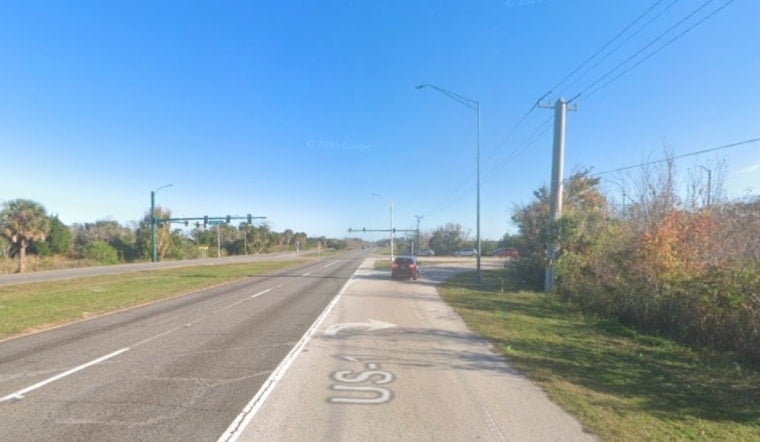
A 39-year-old Clermont man died Friday after he was struck by a car while riding his bicycle on North U.S. Highway 1 in Ormond Beach, according to police. Edward Joseph Ambro was pronounced dead at the scene in the 800 block of the highway after a 2025 Chevrolet Malibu struck him as he rode south in the outside travel lane.
According to a preliminary investigation reported by Observer Local News, Ambro had been riding southbound on the shoulder before he swerved into the Malibu's travel lane. Investigators found no indication that speed or impairment played a role in the crash, and the driver stopped immediately, called 911, and stayed at the scene until emergency personnel arrived. Medical personnel pronounced Ambro dead at the scene, and his next of kin has since been notified.
Missing Rear Light Raises Legal Questions
Police also determined that Ambro's bicycle was not equipped with an operable rear light at the time of the crash, the outlet's report noted. Under Florida Statute § 316.2065(7), bicycles ridden on public roads between sunset and sunrise must carry a front lamp visible from 500 feet along with a rear red reflector and a rear light visible from 600 feet, according to St. Johns County.
That detail could carry weight beyond the police report. Under Florida's comparative negligence framework, a cyclist's failure to equip a bike with required lighting can be used by insurance adjusters and defense attorneys to shift partial or primary financial fault onto the cyclist, per Palaidis Law. Even so, Florida law defines bicycles as vehicles under Florida Statute § 316.2065(1), granting cyclists equal rights to the road while holding them to many of the same duties as motorists, as explained by the Ticket Clinic. The investigation into Friday's crash remains ongoing, and Ormond Beach police are asking witnesses or anyone with information to contact Officer Carlos Ortiz.
A Corridor With A Deadly History
Friday's crash is not the first fatal bicycle collision on this stretch of highway. In March, a 64-year-old Ormond Beach bicyclist was killed after being struck by a pickup truck on U.S. 1 near the Flagler-Volusia county line, with troopers reporting that the cyclist had moved into the vehicle's travel lane before impact, according to WJXT News4JAX. Hoodline covered that crash in a piece on the deadly county-line bike crash.
The pattern extends well beyond Ormond Beach. A study analyzing National Highway Traffic Safety Administration crash data from 2017 to 2021 identified Volusia County as the seventh-deadliest U.S. county for bicyclists, recording 4.88 cyclist fatalities per 100,000 residents, according to The Guardian. Seven of the ten deadliest U.S. counties for cyclists in that federal study were located in Florida. Florida Highway Patrol data cited by the West Volusia Beacon showed the county recorded 240 bicycle crashes in 2023 alone, resulting in five deaths and 227 injuries, up from just 177 crashes in 2020.
Statewide Numbers Keep Climbing
The trend lines statewide are similarly grim. Florida leads the nation in pedalcyclist fatalities, averaging 1,031 deaths annually between 2020 and 2024, a rate more than three times the national average, per an analysis from the Blakeley Law Firm. Separate research from Santini Research found that average annual bicycle fatalities in Florida jumped 46.6 percent after the pandemic, rising from roughly 148 annual deaths between 2017 and 2019 to about 217 between 2022 and 2025.
State officials have acknowledged the risk on this specific corridor. In April, they broke ground on a $294 million reconstruction of the I-95 and U.S. 1 interchange in Ormond Beach, a project that includes widening U.S. 1 and building 10- to 14-foot shared-use paths to replace the existing 5-foot bike lanes, as Hoodline reported in coverage of the I-95 interchange overhaul. The city's own comprehensive plan already designates U.S. 1 as a key multi-modal transit corridor requiring sidewalk and bicycle trail improvements near transit stops, according to the City of Ormond Beach. Whether those upgrades arrive quickly enough remains an open question for a corridor that has now claimed at least two cyclists' lives within a matter of months.





