

























































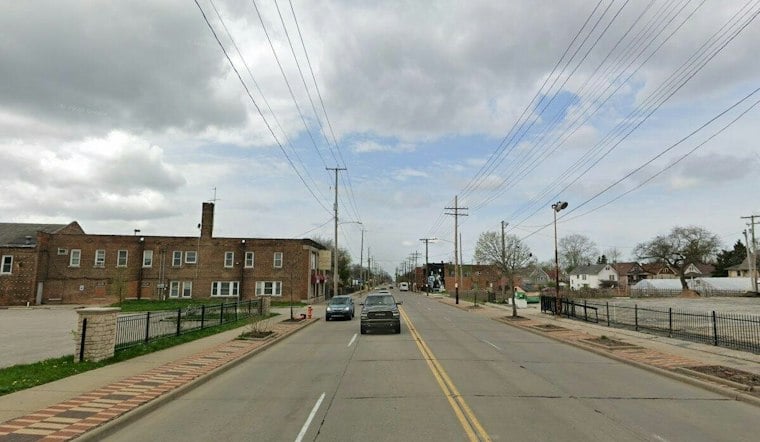
Cleveland City Council has signed off on accepting roughly $1,640,368 in Ohio Department of Transportation grants to fund safety improvements at 18 locations across the city. WOIO has identified East 93rd Street and Kinsman Road as a location with several serious or fatal crashes, and residents and city officials alike have flagged the stretch as dangerous for as long as anyone can remember.
The ordinance, covered by WOIO, authorizes the city to apply for and accept the state funding, which state grants typically require be matched with local dollars. Cleveland City Council records also reference Emergency Ordinance No. 353-2026, according to Cleveland City Council records.
A Corridor Residents Already Know Too Well
Trevor, who lives in the Kinsman neighborhood, told WOIO that Cleveland streets feel unsafe because drivers routinely run red lights and ignore traffic laws. He suggested installing speed cameras and increasing vigilance specifically on Kinsman Road, per the same station's report. Kinsman Boulevard and Shaker Boulevard are both state roads running through Cleveland, and East 93rd and Kinsman has experienced several serious or fatal crashes over the years, WOIO reported.
That stretch of Kinsman Avenue, between East 75th Street and East 140th Street, is designated a primary high-crash corridor on the city's High Injury Network, and it passes almost entirely through census tracts classified as historically transportation-disadvantaged, according to a City of Cleveland grant application. Council President Blaine Griffin said speeding and poor traffic patterns rank among the city's top three resident complaints, the station reported, and he expects additional safety upgrades now that the ordinance has passed.
Why Cameras Aren't Part of the Plan
Trevor's call for speed cameras runs into a legal wall. Under Ohio Revised Code § 5747.502, upheld by the Supreme Court of Ohio in 2022, the state reduces local government fund allocations to cities dollar-for-dollar based on traffic camera fine revenue collected, and state law also requires a full-time law enforcement officer be present at automated speed camera enforcement sites for civil ticketing to proceed.
The planned upgrades funded by the grants include bump-outs, decorative crosswalks, other street design changes, and beacons that display vehicle speeds, according to WOIO. Centerline hardening — rubber curbs and delineator posts installed at intersections — is designed to reduce collisions involving left-turning drivers and pedestrians in crosswalks, the station noted. Research from the Insurance Institute for Highway Safety found that centerline hardening reduced left-turn vehicle-pedestrian conflicts by 70 percent and reduced the odds of left-turning vehicles exceeding 15 mph by 67 percent in a study of Washington D.C. intersection redesigns. Separately, Federal Highway Administration guidelines show that crosswalk visibility enhancements like bump-outs and high-visibility markings can reduce pedestrian crashes by up to 32 percent by shortening crossing distances and increasing driver visibility, per an FHWA analysis.
A City Already Racing Against Rising Death Tolls
The stakes behind the new grants are stark. Traffic fatalities in Cleveland climbed from 43 in 2022 to 59 in 2023 and 75 in 2024 — a jump of more than 70 percent over two years, according to a report from Signal Cleveland relayed by Hoodline. Vehicle crashes on Cleveland streets struck at least 603 pedestrians and bicyclists in 2024, up from 550 in 2023, per Bike Cleveland data cited in that same report.
Cleveland launched its Vision Zero Action Plan in 2022, and the plan's stated aim is to prevent serious or fatal crashes on city streets, WOIO reported. Under Mayor Justin Bibb's administration, the city has also focused on multimodal transportation planning.
The tension between what residents want and what state law allows isn't unique to Kinsman Road. Cleveland has leaned on similar low-cost engineering fixes elsewhere, including other projects. Nearby, the state has taken its own steps on Interstate 90 in Cuyahoga County.





