

























































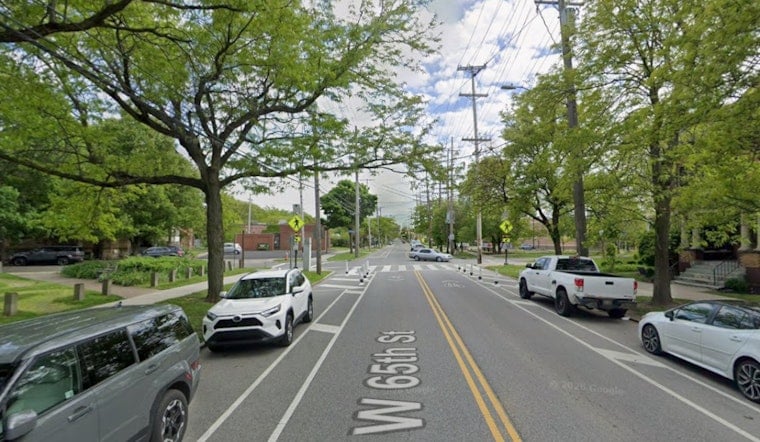
Cleveland is moving to add physical barriers separating existing bike lanes from traffic on West 65th Street, targeting a stretch of the West Side corridor that has seen 112 crashes over the past five years. The upgrade will start with plastic flexible posts known as delineators, installed between Lorain Avenue and Denison Avenue, as part of the city's broader push to harden painted bike lanes into physically protected ones.
Ward 14 Councilwoman Jasmin Santana announced the project in a Facebook post, citing speeding and crash data along the corridor, according to Cleveland.com. Santana said separated bike lanes can reduce crashes and dangerous vehicle speeds, and city officials echoed that the barriers will make West 65th Street safer for people biking while helping to slow vehicle traffic overall.
The stakes on this stretch of road are stark. Data cited by Santana shows vehicles traveling on West 65th Street are exceeding the speed limit, with speeding drivers going more than 5 mph over the limit, according to the same report. West 65th Street south of Lorain Avenue is one of the existing bike-lane corridors eligible for physical separation during the first three years of Cleveland Moves, the city's five-year transportation plan adopted in 2025.
How Cleveland Moves Frames the Fix
Cleveland Moves argues that separated bike lanes can slow vehicle speeds, create more space between sidewalks and moving traffic, and reduce the number of vehicle lanes pedestrians must cross before reaching the other side of the street. The plan calls for adding protection to existing bike lanes citywide and for building 50 miles of high-comfort bikeways over three years, with West 65th Street representing one of the first test cases. Cleveland is also considering concrete curbs and Jersey barriers as additional separation options beyond the initial delineators.
The approach relies on quick-build projects that can be installed without waiting for a street to be repaved or completely rebuilt, a strategy the city has already used elsewhere. Cleveland's first quick-build protected bike lanes went in on Huron Road and Prospect Avenue downtown in June 2025, reconfiguring those streets into one-way pairs with separated two-way bike lanes, according to the City of Cleveland. Hoodline covered a similar quick-build approach in July when parking-protected lanes arrived on Payne Avenue.
Why West 65th Street Was Chosen
West 65th Street carries particular weight for Cleveland's West Side because it connects directly to the Red Line Greenway, a two-mile paved active transportation corridor that Cleveland Metroparks opened in May 2021 linking the neighborhood to Downtown Cleveland along the RTA rapid transit line. Ward 14, which Santana has represented since 2018, includes the West Side neighborhoods of Clark-Fulton and Stockyards along with portions of Brooklyn Centre, Tremont, and West Boulevard, according to a newsletter from the Cleveland City Council office. Lakeshore Boulevard and Miles Avenue are among the other corridors identified for potential bike-lane separation as the plan expands.
The Cleveland Moves planning process that produced these priorities drew more than 1,350 participants during a year-long public engagement effort launched in the summer of 2024, a timeline Hoodline previously reported when the city unveiled its Cleveland Moves initiative. A survey conducted by the Baldwin Wallace University Community Research Institute before that planning process found that a majority of Cleveland residents were interested in riding a bicycle more often and supported more city investment in biking, walking and public transit. Survey respondents also said they would sometimes ride a bicycle instead of driving if a separated bike lane connected their home with destinations such as work, school, a restaurant or a store, while people who ride bikes cited concerns about being hit by a vehicle as a barrier to riding more.
A Citywide Pattern of Rising Risk
The push toward physical protection comes as Cleveland's overall traffic safety numbers have worsened. Traffic fatalities in Cleveland climbed from 43 deaths in 2022 to 75 in 2024, a jump of more than 70% in two years, as reported by Signal Cleveland. A Bike Cleveland analysis found that 603 pedestrians and bicyclists were struck by vehicles in Cleveland in 2024 alone, including 15 fatalities and more than 100 injured children, up from 550 total crashes the year before. That report drew on 911 dispatch records in addition to police crash data to capture incidents that might otherwise go unrecorded.
The city's own tracking shows 28 traffic-related fatalities occurred citywide through August 2, 2026, compared with 23 during the same period in 2025. Cleveland adopted a Vision Zero Action Plan in September 2022 setting a goal of eliminating all traffic fatalities and severe injuries on city streets by 2032, a target that has come under pressure as crash numbers continue climbing rather than falling.
More Programs Aimed at Cyclists
Cleveland and Bike Cleveland this week launched a pilot E-Bike Rebate Program offering up to 100 point-of-sale rebates of up to $1,500 for city residents to purchase electric bicycles, funded by local foundations to encourage low-cost transit options. Bike Cleveland has also scheduled a community focus group for Thursday at MetroWest CDC in Ward 14 to gather resident feedback on proposed Cleveland Moves street safety investments, organized in partnership with Neighborhood Connections. Whether flexible plastic delineators alone can meaningfully slow the more than 80% of drivers currently exceeding the speed limit on West 65th Street, or whether the city eventually turns to concrete curbs and Jersey barriers already under consideration, remains an open question as the project moves forward.





