

























































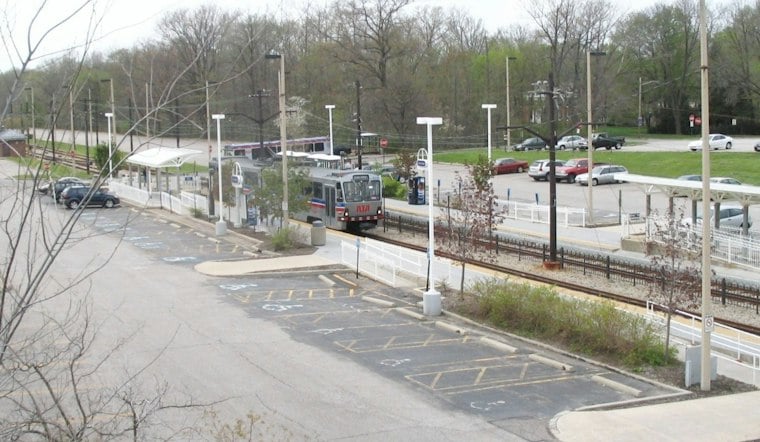
Cleveland's Green Line is about to get the accessibility overhaul transit riders with disabilities have waited decades for. The Greater Cleveland Regional Transit Authority has landed a $20 million federal grant to rehabilitate seven of the line's 11 stations, replacing 40-year-old platforms and ramps that have long fallen short of Americans with Disabilities Act standards.
The award comes through the Federal Transit Administration's All Stations Accessibility Program, a competitive grant fund created to help legacy rail systems retrofit stations built before the ADA took effect, according to Cleveland.com. Paired with a $5 million local match, the money will fund new concrete platforms, warning panels, redesigned ramps, upgraded parking stalls, curb ramps and sidewalk replacement across the affected stops, work the outlet reports is also meant to improve safety and security along the corridor.
Once finished, RTA says the project will make the entire Green Line accessible to people with disabilities and, according to the agency, bring its whole rail system into full ADA compliance for the first time. RTA General Manager and CEO India Birdsong Terry said every rail station in the system will be ADA accessible after the project wraps up, per the same report.
Federal Backing and Local Political Support
The grant flows from the Bipartisan Infrastructure Law, which made the funding available nationally. The Federal Transit Administration opened $686 million in competitive ASAP funding in March 2026 to help legacy rail systems nationwide upgrade pre-ADA infrastructure, covering up to 80 percent of capital costs for these retrofits, according to the Federal Transit Administration.
U.S. Sen. Jon Husted and U.S. Rep. Shontel Brown both backed RTA's grant application with letters to federal transportation officials, the report notes. Husted said the project will address deteriorating platforms and sidewalks that limit access for people with disabilities, while Brown called the funding a big win for the community that provides $20 million for its transit system.
The Last Stations Standing
These seven Green Line stations are described as the last remaining light rail stops in the RTA system that are not fully compliant with the ADA, meaning the project effectively closes out a years-long, station-by-station accessibility campaign. That campaign has already produced real results elsewhere in the system: in May 2024, RTA secured a $16 million ASAP grant to reconstruct eight non-compliant Blue Line stations along Van Aken Boulevard, according to RideRTA. The agency also broke ground in July 2025 on a $10 million rebuild of the East 79th Street station, which serves both the Blue and Green lines near the Opportunity Corridor and was funded by an earlier $8 million ASAP grant plus a $2 million local match, per RideRTA's account of that groundbreaking.
The Green Line station work will also make the platforms compatible with RTA's new railcar fleet. The agency took delivery of its first Siemens Model S200 light rail vehicle on August 31, kicking off a $435 million program to replace 54 aging railcars, as reported by Progressive Railroading. Those new trainsets require specific platform heights and configurations for level boarding, tying the station rebuilds directly to the fleet overhaul.
New Trains, Long Testing Runway
The Siemens cars still have a long road before Green Line riders see them. According to WKYC, the new railcars are scheduled to enter Red Line revenue service in summer 2027 and reach Blue and Green line service in summer 2028, after 22 weeks of static and dynamic commissioning tests at the Brookpark railyard.
Progressive Railroading reports that replacing the 40-year-old fleet is projected to save RTA roughly $7 million annually in maintenance costs and boost the mean distance between service disruptions from 10,000 miles to 80,000 miles, as replacement parts for the 1980s-era railcars have grown scarce and costly.
Capital Wins Collide With Operating Budget Strain
The Green Line grant underscores a pattern: RTA has repeatedly succeeded at winning competitive federal capital dollars even as its day-to-day operating budget remains under pressure. Facing projected 2026 operational deficits driven by healthcare and vendor cost growth, the agency proposed service cutbacks in April, including eliminating the downtown B-Line trolley and limiting Waterfront Line service to special events, as Hoodline previously reported. Capital grants like the Green Line award cannot be used to plug those operating gaps, since federal accessibility funding is restricted to construction and equipment projects.
RTA has also been modernizing the rider experience on other fronts. On June 1, the agency launched account-based ticketing with automatic fare capping, ensuring riders using smartcards or mobile apps are charged the lowest possible fare rate, a system Hoodline covered at its launch. Systemwide ridership reached more than 24.8 million trips in 2024, part of a gradual recovery after the pandemic dropped annual trips from 32 million to under 16 million in 2021, according to RideRTA's 2025 budget documents.




