

























































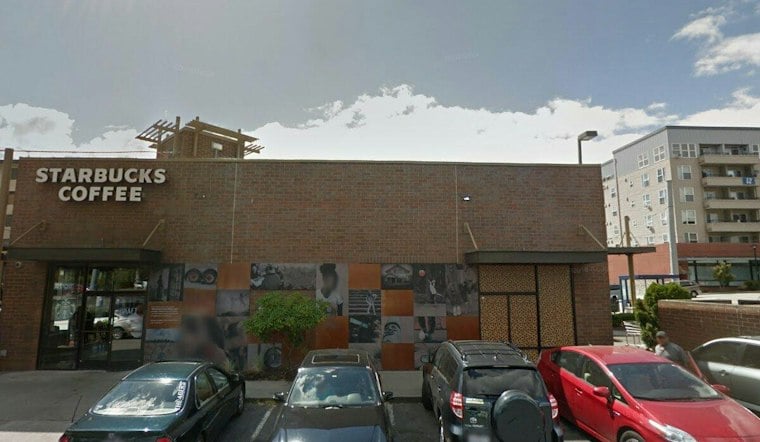
A storefront at 23rd Avenue South and South Jackson Street that sat empty for four years has a new tenant. Coffee TAB, a nonprofit that trains foster youth and other young people facing barriers to employment as baristas, has opened its third Seattle location in the space Starbucks abandoned in 2022.
The shop, which Coffee TAB founder Johnathan Tran showed KIRO 7 News Seattle, includes a roaster, snack and pastry cases, an espresso machine, and tables for customers. Tran told the station he hopes the location will again draw people to a corner that had been dark for several years. Starbucks attributed its 2022 closure of the store to growing crime and safety concerns.
The 23rd and Jackson storefront is now home to Coffee TAB. Tran said he wants the corner to become a place where neighbors can gather after the closure left it dark.
A Vacant Corner Reopens
The former Starbucks storefront is now occupied by Coffee TAB.
The surrounding block also lost several businesses during the vacancy. Amazon Fresh across the street and a nearby Walgreens have closed. Coffee TAB's arrival puts a workforce-focused nonprofit in a storefront that had become part of a broader pattern of disinvestment along the corridor.
Baristas Trained From the Inside Out
The Central District shop employs baristas who completed Coffee TAB's own apprenticeship program. Dulce Gonzalez-Rodriguez joined the program more than a year before the shop opened after a referral from a counselor with a foster family program, KIRO 7 News Seattle reported. She said the training became her first job and helped build her confidence and workplace skills.
At least one participant was referred to the program by a foster family program. The apprenticeships provide hands-on training and mentorship for young people.
A Founder Who Once Needed the Same Refuge
Tran's interest in the model is also rooted in his adolescence. He spent time in foster care and is the child of Vietnamese refugees. He has said that counselors, youth leaders, and other mentors guided him during that period, including through meetings in local coffee shops.
Tran told KIRO 7 News Seattle that those experiences shaped his view of coffee shops as places where young people can find support and relationships. Coffee TAB takes its name from tabernacle, a place of meeting and dwelling in the Hebrew scriptures, and the nonprofit's model centers on community coffee shops.
Three Shops, Four Years
Coffee TAB opened its first cafe in Seattle's Belltown neighborhood in 2023. A second location followed in Pioneer Square on 2nd Avenue in December 2025, and the Central District shop now makes three, according to the timeline reported by the I Examiner. The 23rd and Jackson storefront itself is owned by Vulcan Real Estate, the developer that redeveloped the surrounding Jackson Promenade complex and partnered with Coffee TAB to reactivate the corner, per the company's own announcement.
A Local Workforce Precedent
Coffee TAB is not the first Seattle-area organization to use coffee service as a workforce pathway. According to a 2023 U.S. Administration for Children and Families case study, FareStart has operated a barista and customer-service training program for young people facing barriers to employment. FareStart says more than 1,400 youth and young adults have completed the training since its inception in 2003, though that record belongs to a separate organization and does not establish Coffee TAB's results.
State data provide additional context for the population Coffee TAB serves. The Washington Workforce Training and Education Coordinating Board's 2023–2024 Youth Employment Report says youth employment and labor-force participation were recovering as the pandemic receded. Separately, Washington State Department of Children, Youth, and Families data show that from 2017 to 2023 the employment-rate gap between young adults who had experienced foster care and those who had not remained fairly consistent, while the median-earnings gap widened.
Tran told KIRO 7 News Seattle that a busier, more connected corner could help address the conditions that Starbucks cited when it closed. The long-term effect remains uncertain, but the former Starbucks space now has coffee, pastries, and a staff that includes apprentices gaining experience one shift at a time.




