

























































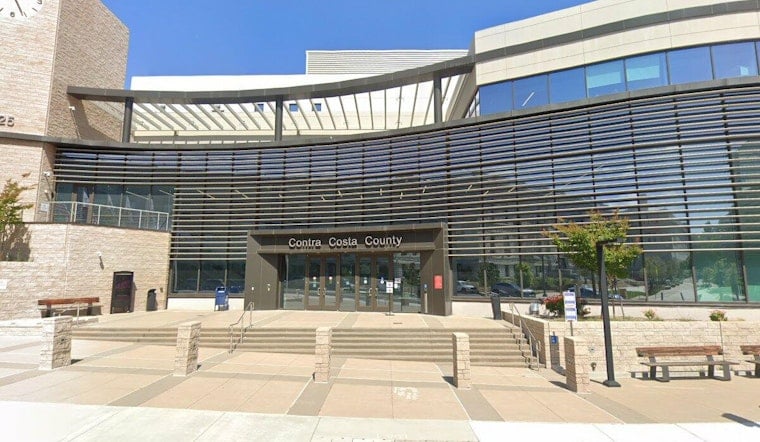
Contra Costa County supervisors voted unanimously Tuesday in Martinez to adopt a policy barring county resources from being used to assist federal immigration enforcement without a judicial warrant, capping more than a year of deliberation over how far the county should go to shield residents from ICE. The vote makes Contra Costa one of the last major Bay Area counties to formalize a non-cooperation framework, aligning it with jurisdictions including Alameda, Santa Clara, San Mateo and Santa Cruz counties, as well as cities like Berkeley, Oakland, Richmond, San Jose, Antioch and Pinole.
The new rules, first reported by The Mercury News, prohibit county staff from using facilities, funds or administrative resources to help ICE with civil immigration operations absent a judicial warrant, and require any staff who receive immigration-related requests to route them to legal counsel or designated personnel. County employees who violate the policy face disciplinary action. The policy incorporates model guidance that state Attorney General Rob Bonta released on July 1, which itself was required under Senate Bill 580, a law authored by state Senator María Elena Durazo and signed by Governor Gavin Newsom in 2025, according to the California Department of Justice. SB 580 gives local California jurisdictions until January 1, 2027, to adopt the model policy or an equivalent standard.
A Policy, Not an Ordinance — And a Fight Over Which Matters More
The vote followed a lengthy debate over whether the county should adopt the protections as a policy, which takes effect immediately, or as an ordinance, which requires approval at two public meetings and carries a 30-day waiting period before taking effect. A motion from Supervisor Shanelle Scales-Preston to adopt the protections as an ordinance failed, with Supervisors Ken Carlson, Diane Burgis and Candace Anderson voting against it in favor of a policy they said could be amended more quickly. County Counsel Tom Geiger told the board that enforcement would be identical whether the protections took the form of a policy or an ordinance.
Community members and advocates argued an ordinance would provide stronger, more durable protections that a future board couldn't easily unwind. That argument echoed a rally the Antioch Herald reported the Contra Costa Immigrant Rights Alliance held in August, where organizers pointed out that neighboring counties had already locked in their protections through binding ordinances rather than administrative policy. Supervisor John Gioia countered that the delay built into passing an ordinance could actually work against advocates, since it would give a future board more room to change course before protections took hold; he described the board's deliberation overall as rigorous and said the policy sent a clear message and offered real protection.
Advocates Told Not to See the Outcome as All-or-Nothing
Scales-Preston, who worked for roughly a year on the anti-cooperation proposal alongside Vice Chair Carlson, said advocates had been showing up to push for these protections for a year and a half. Board members Scales-Preston and Carlson also served on the equity committee that helped shape the proposal. Gioia urged advocates not to view the board's choice of a policy over an ordinance as a loss or an all-or-nothing outcome, framing it instead as a meaningful step that takes effect right away.
The July delay that led to Tuesday's vote was itself the subject of an earlier fiery hearing Hoodline covered, when the Board of Supervisors voted 4-1 on July 7 to postpone action so county counsel could review how a draft non-cooperation proposal aligned with the newly issued state model guidance. That review set the stage for Tuesday's unanimous approval.
Where the Sheriff's Office Still Has Discretion
The county policy governs how supervisors, department heads and county staff interact with federal immigration authorities, but it does not override the discretion the independently elected sheriff holds under state law. Sheriff David Livingston's office can still share inmate release dates for certain qualifying convictions under the California Values Act, also known as SB 54, which since January 2018 has restricted such notifications to specific violent or serious felony cases, according to the ACLU of Southern California. During an August TRUTH Act public hearing required under a 2016 state law, Livingston reported his department received 724 ICE notification requests in 2025 and provided release dates 124 times, covering 92 unique individuals with felony or misdemeanor records, per Patch.
That sheriff's-office practice traces back to a decision Livingston made in July 2018, when he terminated a longstanding federal contract that had housed up to 200 ICE detainees daily at the West County Detention Facility in Richmond, ending as much as $6 million in annual federal revenue after community protests and rising operating costs, according to Freedom for Immigrants.
Why the Vote Resonates Beyond County Government
Contra Costa County's foreign-born population is substantial: U.S. Census Bureau estimates cited by Data USA put it at roughly 26.4% as of 2024, or about 308,000 of the county's 1.17 million residents, nearly double the national foreign-born average of 14%. A 2021 report from New American Economy, developed with Contra Costa Health Services and the county's Employment & Human Services Department, found foreign-born residents made up 32.1% of the county's employed workforce and held $11.2 billion in spending power in 2019.
The West Contra Costa Unified School District has its own protocols for responding to ICE activity, a detail Hoodline noted in earlier coverage of armed security guards rattling parents outside an El Cerrito elementary school. That coverage, along with a Valentine's Day demonstration in Concord and Oakland against ICE enforcement actions, reflects a broader pattern of East Bay pushback against federal immigration enforcement that predates Tuesday's vote.





