

























































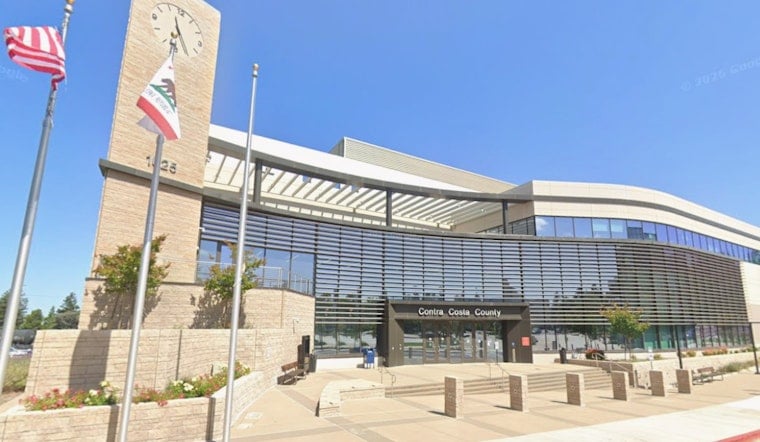
Contra Costa County’s long-awaited vote on an immigration enforcement policy hit pause this week, after a tense, hours-long hearing ended with supervisors sending the proposal back to the lawyers instead of over the finish line.
The Board of Supervisors on Tuesday delayed action on a draft non-cooperation policy that would limit the county’s voluntary work with U.S. Immigration and Customs Enforcement. After emotional testimony from residents and warnings from some supervisors about legal exposure, the board voted 4-1 to kick the draft back to county counsel for another round of legal review.
What is in the draft?
The proposal on the table is a resolution that would sharply restrict how county resources are used in federal immigration enforcement. It would bar county personnel, funds and property from assisting immigration enforcement except where state or federal law explicitly requires it, limit ICE access to non-public county facilities and require monthly reports from the sheriff’s office.
Supporters argue that those guardrails are meant to reassure immigrant residents who are worried about contacting local government or law enforcement. Critics counter that the language, as written, could make the county an easy target for legal challenges. Those competing arguments, along with the decision to send the measure back for more work, were detailed by SFGATE.
The draft was forwarded to the full board by the supervisors who chair the county’s equity committee, Ken Carlson and Shanelle Scales-Preston. Carlson said the policy would send a message to a community that is divided and afraid, while Scales-Preston pressed colleagues to move forward so residents would feel protected and supported.
Scene at the meeting
By the time the item came up, the chambers were packed. Immigrant-rights advocates, faith leaders and attorneys turned out in force and made it clear they wanted something stronger than a policy statement. Over and over, speakers urged supervisors to adopt a binding ordinance instead of a nonbinding resolution, arguing that only an ordinance would give community members meaningful legal recourse if county agencies strayed from the rules.
One of the biggest pressure points was language dealing with third-party contractors. Local coverage of the drafting process noted that a provision explicitly addressing contractors had been removed, and that decision became a flashpoint during public comment, as residents questioned why vendors would not be clearly held to the same standards, as per Patch.
How state rules shape the options
Even before the first public speaker approached the microphone, California law was already shaping the boundaries of what Contra Costa could do.
Senate Bill 580 requires the state attorney general to publish model policies on how local agencies interact with immigration authorities by July 1 and tells those agencies to either adopt the model or put an equivalent policy in place by January 1, 2027, according to the bill text.
The California Attorney General’s office has already issued guidance and model policies meant to help counties and cities line up their local practices with both state and federal law, and to clarify the intent and timing of the coming statewide framework. The resources are detailed on the attorney general’s immigrant resources page, per the California Department of Justice.
County counsel's concerns
County Counsel Thomas L. Geiger has been walking supervisors through the legal terrain for weeks. At earlier meetings, and again as the board weighed its next move, he stressed that a policy can, in practice, be enforced much like an ordinance.
Geiger has said employees who violate county guidance could face discipline, and that the county could terminate contracts with third-party vendors that ignore county rules on cooperation with immigration enforcement. Reporting on those legal points was provided by The Press Democrat.
What comes next
After hearing from residents and county counsel, supervisors opted not to force a final decision. Instead, they asked for a more detailed legal scrub of the draft, including how it might fare if challenged in court and how it interacts with state requirements that are still evolving.
The board expects to bring the item back later this summer. At that point, supervisors will have to decide whether to stick with a resolution or pursue the stronger step of adopting an ordinance. Local coverage indicates the policy will return to the board’s calendar once counsel finishes the analysis.
Where it fits in the Bay Area
Contra Costa’s debate is unfolding against a regional backdrop that is already pretty crowded. Across the Bay Area, cities and counties, including Berkeley, Oakland, San Jose, Richmond, Pinole, and Antioch, along with larger counties such as Alameda, San Mateo, Santa Clara, and Santa Cruz, have adopted their own versions of non-cooperation policies or ordinances in recent years.
That regional context weighs heavily in Contra Costa, where roughly a quarter of residents were born outside the United States, a demographic fact that local officials say raises both the political and legal stakes of how the county engages with immigration enforcement. That figure is drawn from U.S. Census data summarized on CensusReporter.





