

























































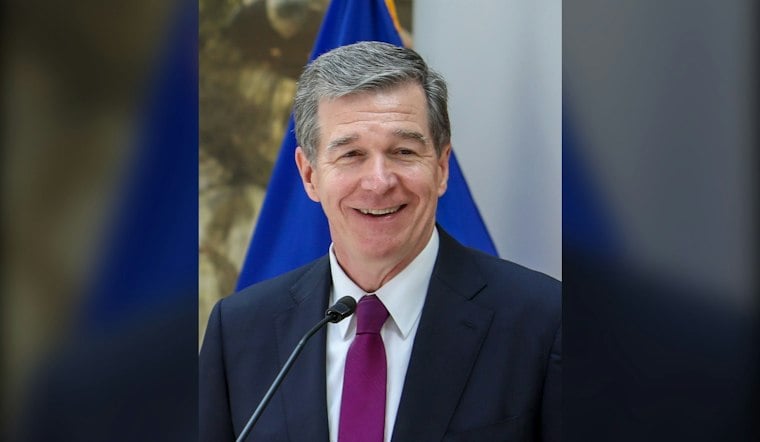
Roy Cooper holds an 11-point lead over Michael Whatley in North Carolina's U.S. Senate race, but flip the numbers to voters age 50 and older and the race turns upside down, with Whatley ahead by 6 points among that group. The findings come from a new poll commissioned by AARP, which surveyed 1,115 likely North Carolina voters between September 17 and 20, 2026, with a margin of sampling error of plus or minus 2.9 percentage points.
Statewide, Cooper leads Whatley 53% to 42%, according to AARP. Among voters 50 and older, though, Whatley leads Cooper 51% to 45%. Voters age 18 to 49 tell a very different story, favoring Cooper 66% to 27%, per The Center Square. The gap illustrates just how much the state's older electorate could swing the outcome, since voters 66 and older made up 35% of all ballots cast in North Carolina's 2026 primary, the AARP release notes.
Affordability Tops the List for Both Age Groups
Despite their divergent candidate preferences, younger and older North Carolina voters agree on what matters most: the cost of living. Rising prices and affordability ranked as the top issue for both age groups, cited by 40% of voters 50 and older and 57% of voters 18 to 49, according to the same Center Square report. Threats to democracy came in second for both groups, at 29% among older voters and 26% among younger ones.
Older voters ranked Social Security and Medicare as their third-most-important issue, at 25%, while younger voters instead pointed to taxes, government spending and debt, which drew 20% support, the outlet reported. Motivation to vote also diverged sharply by age: 83% of voters 50 and older rated their motivation a perfect 10, compared with just 66% of voters under 50, per AARP's polling.
Social Security Looms Large for Older Voters
For voters 50 and older, Social Security and Medicare are not abstract policy debates — they are deciding factors at the ballot box. Eighty-three percent of that group said Social Security was an important issue in deciding their vote, while 77% said the same about Medicare, AARP found. Ninety-three percent of respondents older than 50 said they were more likely to support a candidate who would ensure workers receive the Social Security benefits they paid into, according to NC Newsline.
Eighty-four percent of that same group said they were more likely to back a candidate who would expand Medicare's ability to negotiate prescription drug prices, the outlet's report notes. Two-fifths of voters older than 50 named affordability as their single top concern, with 29% ranking threats to democracy as their second-biggest issue, according to the same account.
Housing and Utility Costs Also Draw Broad Support
Beyond entitlement programs, the poll found notable consensus on other pocketbook issues. Seventy-four percent of respondents supported requiring local communities to permit more accessory dwelling units, while 80% said state policymakers should prevent utility costs tied to new data centers from being passed on to residential ratepayers, AARP reported. Swing voters age 50 and older, meanwhile, made up 6% of North Carolina's electorate, a small but potentially decisive slice given how close the older-voter numbers are between the two candidates.
How North Carolina Compares to Other 2026 Polls
The AARP survey is one of several recent polls to gauge the North Carolina Senate contest, and while the size of Cooper's lead varies, every poll examined shows him ahead. A Fox News poll conducted in late July had Cooper leading Whatley 53% to 44%, according to Fox News, which also found Democrats reporting higher extreme interest and motivation to vote than Republicans heading into the midterms.
More recent surveys found tighter margins. A YouGov poll conducted in mid-September gave Cooper an 11-point edge, 52% to 41%, while an InsiderAdvantage poll from roughly the same period showed Cooper up 48.4% to 42.5%, and a Quantus Insights poll taken just after the AARP fieldwork found Cooper leading 48% to 43%, according to Newsweek. The spread across these polls underscores that while Cooper's advantage appears consistent, its exact size remains a moving target this close to Election Day.
A Similar Age Divide Playing Out in Michigan
North Carolina is not the only state where AARP polling has found a generational split shaping a Senate race. In Michigan, an AARP poll from August found Democrat Abdul El-Sayed holding a razor-thin 48% to 47% lead over Republican Mike Rogers statewide, with voters under 50 favoring El-Sayed by 14 points and voters 50 and older favoring Rogers by 9 points. The pattern echoes what pollsters are now seeing in North Carolina, where age has emerged as one of the sharpest dividing lines in the race, as reported by the News & Observer.



