

























































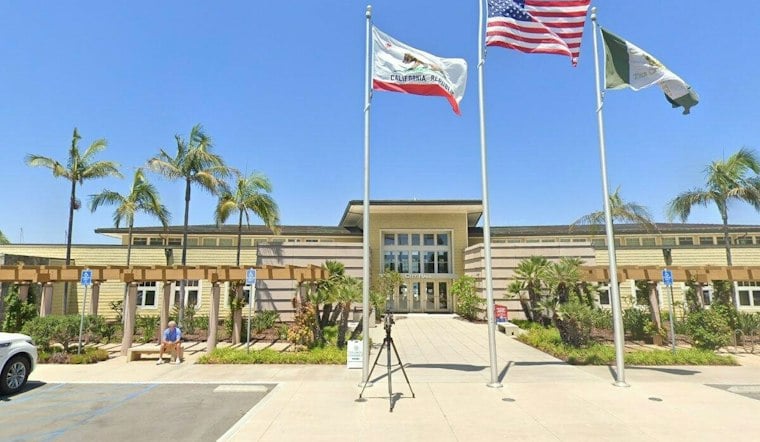
Coronado is officially the newest member of San Diego Community Power, after the agency's board voted unanimously Thursday to approve a resolution adding the city to its roster. The move brings 12,000 customer accounts into the fold and makes Coronado the seventh city and eighth member of the community choice aggregator, which now counts more than 972,000 active accounts across the region.
As reported by the San Diego Union-Tribune, the Coronado City Council voted in July to sign a Joint Powers Agreement joining the agency.
Why Coronado Made the Switch
Coronado adopted a Climate Action Plan in 2022 that seeks to reduce the city's greenhouse gas emissions 39 percent below 2016 levels by 2030, per the Union-Tribune's reporting, and joining a community choice aggregator was part of that strategy. San Diego Community Power officials said adding Coronado will increase the agency's total annual energy load by about 1 percent, a modest bump for an agency already serving San Diego, Chula Vista, La Mesa, Encinitas, Imperial Beach, National City and unincorporated San Diego County.
“Coronado's membership reflects the growing demand for locally governed energy choices that prioritize affordability, accountability and community investment,” said Terra Lawson-Remer, chair of the San Diego County Board of Supervisors, according to the Union-Tribune. Coronado council member Carrie Downey, who will serve as the city's alternate representative on the agency's board, said, “We are excited to bring the options and benefits available through community choice to Coronado.” Fellow council member Kelly Purvis will represent Coronado on the board itself.
What Changes, and What Doesn't
Coronado customers will be automatically enrolled under state rules, meaning residents and businesses won't need to fill out enrollment forms, though they can opt out for free if they choose to stick with SDG&E generation. Customers will still receive a single monthly SDG&E statement, now carrying a notation showing the CCA as their electric generation provider. SDG&E itself continues to deliver electricity, maintain poles and wires, and handle customer service functions under the CCA model, a division of duties Hoodline has previously detailed in coverage of recent SDG&E outages across the county.
The default plan for Coronado will be PowerOn, which includes 53 percent renewable energy and 2 percent carbon-free energy, compared with SDG&E's 41 percent renewable portfolio. The agency also offers PowerBase, at 45 percent renewable energy, and Power100, which is fully renewable but costs more than the other two tiers. In 2026, PowerOn residential customers using an average of 341 kilowatt-hours paid 1.28 percent less per month than SDG&E customers, saving about $2.10 monthly, while PowerBase customers saved $5.56 monthly, a 3.38 percent discount. Power100 customers, by contrast, paid nearly 1 percent more, or about $1.30 extra per month.
The Fine Print on Your Bill
Those generation savings, however, tell only part of the story. Coronado residents will still face SDG&E's delivery charges, which the utility restructured in October 2025 by adding a roughly $24 monthly Base Services Charge to standard residential accounts while cutting per-kilowatt-hour delivery rates by about 10 percent — a shift that, according to Coronado Times, can leave lower-usage coastal households with higher fixed delivery bills no matter who supplies their power.
Those fixed and legacy charges help explain why SDG&E's bundled residential rates, averaging between 45.7 and 46.4 cents per kilowatt-hour in 2026, have made San Diego-area electricity the most expensive among major utilities in the continental United States — roughly two and a half times the national average of under 19 cents per kilowatt-hour, per the same Coronado Times report. The gap has pushed cities across the county to keep weighing community choice aggregation as an alternative path on generation costs, even if it can't touch the delivery side of the bill.
An Agency Still Finding Its Footing
San Diego Community Power is now the second-largest community choice aggregator in the country, part of a statewide field of roughly 25 such agencies, according to the Union-Tribune's account of state figures. The California Legislature created community choice aggregators in 2002 to spur renewable energy growth and give residents an alternative to investor-owned utilities like SDG&E.
The agency has served customers since 2021, growing out of a Joint Powers Authority formed in October 2019 by San Diego, Chula Vista, La Mesa, Encinitas and Imperial Beach, before National City and unincorporated San Diego County joined. The agency is navigating leadership turnover: Chief Operating Officer Jack Clark was serving as acting CEO while CEO Karin Burns was on administrative leave in June, as Hoodline reported in its earlier coverage of the agency's sudden CEO exit.
San Diego Community Power now plans to file an implementation plan with the California Public Utilities Commission, with service in Coronado expected to begin around March 2028. Until then, Coronado remains served by SDG&E, while Clean Energy Alliance is the county's other community choice aggregator.



