

























































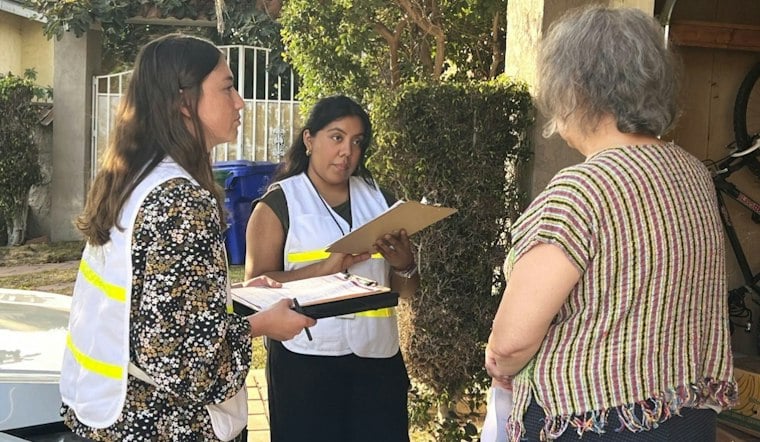
San Diego County and the Centers for Disease Control and Prevention conducted a Community Assessment for Public Health Emergency Response to examine how the ongoing Tijuana River sewage and pollution crisis is affecting residents' health.
The earlier assessment was described in a post from SD HHSA.
The first CASPER survey, whose results were released in January 2025, was a door-to-door survey of 189 households in Imperial Beach and Nestor that found 67% of respondents believed their health had worsened because of the sewage crisis, while 69% reported physical symptoms such as headaches, nausea, cough, and throat irritation, according to the
County News Center
. A July 2025 Assessment of Chemical Exposures survey of more than 2,100 South Bay residents found that 67% considered the Tijuana River Valley area unsafe to live, work, or visit, while 97% cited air quality as their top concern, per the same county source.
Science Links Water Pollution to Toxic Air
The push for more health data comes after peer-reviewed research published in Science in August 2025 found that turbulent sewage flows in the Tijuana River release airborne hydrogen sulfide gas that peaked at 4,500 parts per billion at night — thousands of times higher than normal urban baseline levels, according to San Diego State University News. Researchers from UCSD Scripps and SDSU identified a turbulent hotspot at Saturn Boulevard in Nestor, where churning water turns polluted flows into airborne toxic foam. The findings underscored the public-health implications of the crisis.
Federal lawmakers had already moved to get CDC involvement well before that research came out. The San Diego Congressional Delegation announced in January 2025 that the CDC's Agency for Toxic Substances and Disease Registry agreed to conduct a formal public health assessment evaluating hydrogen sulfide exposure in Imperial Beach, Coronado, and San Diego, according to the Office of U.S. Representative Juan Vargas. That request followed growing community outcry over the smell and health effects lingering across South County neighborhoods.
Local and Binational Fixes Move Slowly
San Diego County has maintained a local state of emergency over cross-border sewage pollution, a period during which officials estimate more than 200 billion gallons of contaminated water — containing raw sewage, heavy metals, industrial solvents, and forever chemicals — have flowed across the border, per the Times of San Diego. Earlier this month, the Board of Supervisors approved $1.8 million for preliminary design work on a proposed $1 billion river diversion and treatment plant meant to intercept polluted flows before they reach South Bay communities, the Los Angeles Times reported, noting the vote passed 4-1 to fund initial conceptual engineering.
The county has also allocated $4 million in emergency funding to remediate the sewage hotspot at Saturn Boulevard in Nestor, where vertical water drops churn polluted water into airborne toxic foam, with engineering fixes including extending piping below the water surface, per the same Los Angeles Times report. On the binational side, the EPA has issued quarterly updates about cross-border sewage projects.
Beaches Still Closed, Residents Still Pushing
Meanwhile, transboundary flows from the Tijuana River and coastal sewage discharges — including failures at Tijuana's Punta Bandera plant — have caused Imperial Beach to endure more than 1,600 consecutive days of beach closures, according to San Diego Coastkeeper. Frustrated by the pace of relief, South Bay community groups gathered more than 150,000 petition signatures last year to qualify a half-cent countywide sales tax initiative meant to fund Tijuana River cleanup, healthcare services, and local infrastructure projects, as Hoodline previously reported.
The crisis has prompted public-health assessments as county leaders continue weighing local engineering fixes against binational repairs that remain years from completion.





