

























































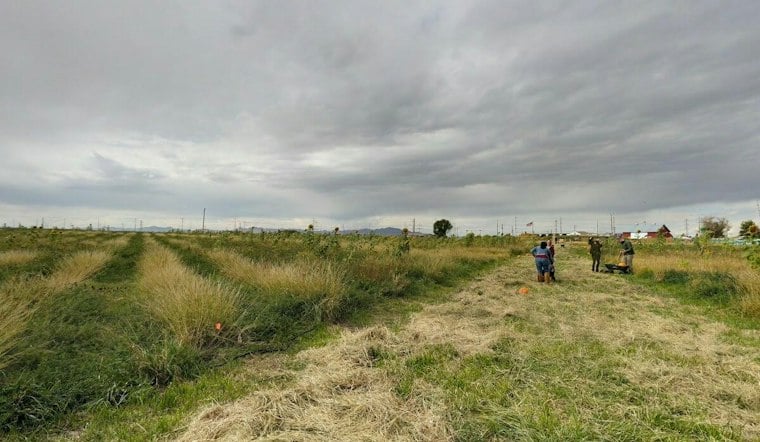
The family behind Cross E Ranch, a longtime agritourism draw on the Jordan River at Salt Lake City's far north end, has asked the city to rezone roughly 65 acres of the property for multifamily housing. Owner Heather Limon says the move is aimed at preserving what's left of the working farm, not abandoning it. The ranch has not sold any part of the property, and no contracts for a sale exist yet.
According to Building Salt Lake, the proposed rezone would split into about 40 acres of RMF-30 zoning, allowing lower-scale development, and roughly 25 acres of RMF-45 zoning for moderately-scaled buildings. The remaining ranchland, about 150 acres, would stay in the M-1A Northpoint light industrial zone that the city created for uses near homes and farms. Cross E Ranch itself covers about 215 acres near 2200 West at the Jordan River, close to the Salt Lake City-Davis County boundary, and the proposed residential tract sits south of Center Street between 3200 West and the Jordan River — an area that includes the current fall festival site.
Limon told the outlet that housing would help the family keep the rest of the farm running, framing the choice bluntly: the realistic land-use options for the property are housing or warehousing. If the housing rezone fails, the likely outcome, per the report, is a full sale to industrial users. The rezone application itself does not approve any particular subdivision, building program, density or site plan — those details remain undetermined.
What the Family Would Get in Return
Under Salt Lake City's rules, a privately initiated rezone requires community benefits roughly proportionate to the new development rights granted. The Cross E community benefits package described in the reporting includes housing itself, protection of about 150 acres of ranchland, and an airport navigation easement. A development agreement — which Utah law defines as a written agreement between a municipality and a party that regulates use of a specific area of land, according to the Utah Legislature — would define the uses allowed on the remaining M-1A land and rule out a public RV campground or KOA-style operation. City staff may still require a general plan amendment before anything moves forward, and Salt Lake City has not approved the rezone or any related development.
The ranch's day-to-day attractions are mostly movable, the report notes, and permitted ranch uses under the arrangement could include goat barns, you-pick orchards, zip lines, high and low ropes courses, a paintball range, a paddle boat and fishing lake, a wedding and event barn, and private group tent camping with seasonal RV and boat storage. If the development moves forward, the fall festival — which runs through Halloween — would shift across Center Street to the ranch's northern area, and the corn maze would need to relocate there too. Pumpkins already grow on that north field. Revamped old sheds would reportedly give way to new structures including food venues.
A Family Farm Squeezed by Growth
Family pressure is driving the proposed sale, the reporting indicates, and the ranch has never generated enough income to cover its own costs. Heather Limon's father once supported the operation with income from family farms near Raft River and American Falls, Idaho, using Cross E Ranch to winter cattle in a milder climate than Idaho or Wyoming offered. After his death, an entertainment business kept the ranch operating.
The Limon family has a long history of losing ground to regional infrastructure. They previously farmed land where Salt Lake City International Airport now sits, leased land where the new state prison was built, and rented fields that later became the Northpoint warehouse district. Separately, Utah Farm Bureau reports that the ranch's cattle herd has declined from more than 1,000 head to fewer than 50 amid development and farming pressures, and that the family is separately working to secure a conservation easement that would compensate them for giving up the land's development potential while keeping the ranch operating.
Annexation and Zoning Battles Across Northpoint
The Cross E rezone request lands amid a broader fight over Northpoint's future. Salt Lake City annexed the ranch as part of roughly 1,300 acres of Northpoint in mid-2025, and according to The Salt Lake Tribune, the City Council hopes annexing parts of Northpoint will better protect the area as commercial development advances. The council had already approved a development plan for Northpoint in 2023, describing it as one of the last agricultural areas within city limits, and voted to create the M-1A zone specifically to regulate industrial development there, barring the largest warehouses. That zoning reportedly ended the Limon family's earlier plan to sell the ranch's south end for industrial use.
Housing and warehouse pressure has been building in the area for years. Building Salt Lake reported in 2022 that a hot market for warehouses was pushing industrial development into what it called SLC's last agricultural land, and in 2023 the outlet covered a separate proposal for 231 townhomes near 2100 South and the Jordan River in an area then dominated by light industrial uses — a sign of how quickly zoning fights can reshape land along the river corridor.
Attendance figures for the ranch's signature events vary depending on the source. Building Salt Lake's reporting puts the fall festival's draw at about 50,000 visitors, while Heather Limon told Utah Farm Bureau that the fall festival draws about 80,000 visitors and the ranch's spring festival draws around 40,000. Utah Farm Bureau also reported that the 2024 Sunflower Festival began September 6, with the fall festival following on September 20.


