

























































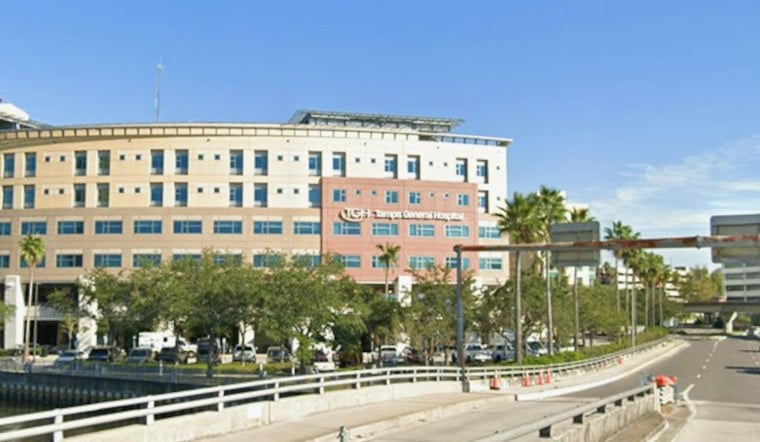
Larry Anzalone, a 73-year-old man from Dade City, went to bed after dinner with friends on June 3, and woke up days later inside the intensive care unit at Tampa General Hospital. What began as an ordinary ear infection in May 2026 had spiraled into bacterial meningitis, a brain clot, pneumonia and, ultimately, a life-threatening case of sepsis that left him in a medically induced coma for 10 days.
According to FOX 13 Tampa Bay, Anzalone said doctors told his family he was more likely than not to die. His wife, Sherry Anzalone, stayed by his side throughout the ordeal, and Larry says he could hear her voice even while unconscious. She told him, “You're the love of my life. And don't leave me,” a moment he credits, along with his family's support and the hospital's medical care, for pulling him through.
Dr. Kartik Cherabuddi, who serves as Chief Epidemiology Officer and Associate Chief Quality Officer at Tampa General Hospital, monitored Anzalone's care and described him as a fighter backed by the hospital's medical team, per the same report. Cherabuddi, also a professor of infectious diseases at the University of South Florida Morsani College of Medicine, called Anzalone's recovery miraculous, according to USF Health.
A Hospital-Wide Watch for Sepsis Warning Signs
Tampa General Hospital has a monitoring team that reviews every patient, prompting clinical teams the moment possible sepsis is detected, the station's report notes. That kind of vigilance matters: doctors say sepsis remains the primary killer of hospital patients nationwide, and clinical research compiled by Mass General Brigham shows that for every hour treatment is delayed during severe sepsis or septic shock, a patient's risk of death climbs by 4% to 9%.
Behind that bedside vigilance sits a broader technological push. Tampa General's early warning system, known as CareComm, pairs artificial intelligence with predictive analytics to continuously scan patient electronic health records, and the hospital credits the tool with cutting its 48-hour sepsis mortality rate by nearly half while saving an estimated 900 lives over four years, according to Tampa Bay Business and Wealth. The system reflects a partnership between the hospital, Palantir and GE HealthCare.
Why an Ear Infection Turned Deadly
Sepsis is far from rare in American hospitals. The Centers for Disease Control and Prevention estimates that roughly 1.7 million U.S. adults develop the condition every year, resulting in at least 350,000 deaths or discharges to hospice care. The CDC also reports that Streptococcus pneumoniae, the bacterium linked to Anzalone's case, is the causative organism in over half of all bacterial meningitis cases in the country, generating an estimated 2,000 cases of pneumococcal meningitis annually.
Anzalone had been vaccinated twice for pneumococcus before his illness, but public health data helps explain how a breakthrough infection was still possible. Even as pneumococcal conjugate vaccines protect against up to 24 bacterial strains, newer formulations like PCV21 omit serotype 4, meaning no single shot covers every circulating strain of the bacteria, according to the CDC. Federal guidance has also shifted in recent years: in October 2024, the CDC lowered the routine age threshold for adult pneumococcal conjugate vaccination from 65 to 50, per the University of Illinois Chicago.
Rebuilding Strength, One Month at a Time
Anzalone spent 10 days in that medically induced coma before beginning the long road back. He completed one month of rehabilitation and returned home without needing walking assistance, regaining weight he had lost during his hospitalization. He now says he is refocusing his energy and has a vacation with his wife on the horizon.
Looking back on everything his body endured, Anzalone described himself simply as a miracle man, by the grace of God. His case arrives as national data continues to underscore sepsis as an urgent hospital-wide problem: a June 2026 CDC survey of more than 5,400 U.S. hospitals found quality improvements across 24 of 28 priority areas established under the agency's 2023 Hospital Sepsis Program Core Elements framework, part of a wider federal effort that has also included a pediatric sepsis alert earlier this year.
Anzalone's recovery also lands amid a broader expansion of emergency care resources in the Tampa Bay region tied to Tampa General Hospital, including a $5 million donor gift announced this month to boost the hospital's emergency care network and a planned drone blood delivery program for Hillsborough County. For Dade City, a city of roughly 10,767 residents with a median age of 39.4, according to the U.S. Census Bureau, Anzalone's story is a stark reminder of how quickly an everyday illness can turn life-threatening, and how much timely detection and treatment matter when it does.





