

























































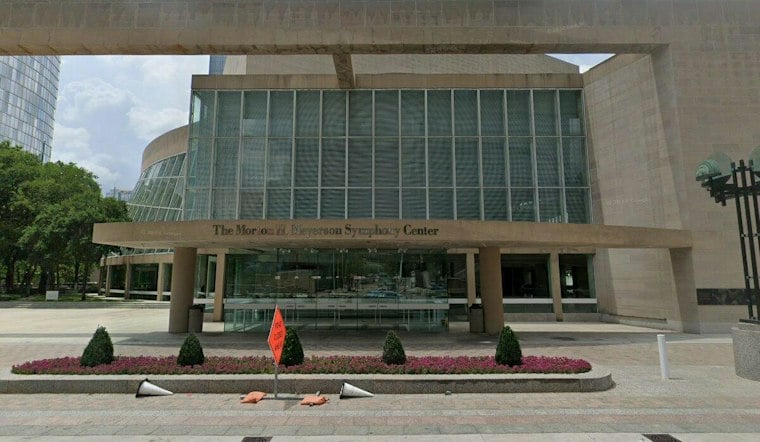
More than 400 performers are scheduled to take the stage at Dallas’s Meyerson Symphony Center this week for “Better Is Peace: 9/11 Remembered Through Song and Dance,” a large-scale collaboration between the Turtle Creek Chorale, Dallas Chamber Symphony, Bruce Wood Dance and roughly 100 teenage singers from Dallas ISD’s Barack Obama Male Leadership Academy. The program marks the 25th anniversary of the Sept. 11 attacks through choral music, orchestra and dance.
CBS News Texas reported that the concert has been about two years in development and is among the largest performances in the Turtle Creek Chorale’s 46-year history. The station also reported that current flight attendants will read excerpts from voicemail messages left by passengers aboard the hijacked planes, while Bruce Wood Dance’s movement accompanies the musical commemoration. Those event-specific creative details remain part of the organizers’ reported design rather than an independently documented account here.
A peace mass with roots before 9/11
The centerpiece is Karl Jenkins’ The Armed Man: A Mass for Peace, which the Turtle Creek Chorale arranged for tenor and bass voices for the Dallas performance. The work was not written specifically for the Sept. 11 attacks: Jenkins’ official website says it was commissioned by Britain’s Royal Armouries for the millennium year, premiered at London’s Royal Albert Hall in 2000 and dedicated to victims of the Kosovo crisis.
That history gives the Dallas program a different point of departure from a work composed as a direct memorial to 9/11. The mass’s anti-war subject allows the participating artists to connect a piece born of one conflict to a later American act of remembrance, while leaving the original circumstances of its commission intact.
Two documented precedents, not a frequency trend
The Dallas performance also has a specific precedent in the work’s later history. Jenkins’ official site records that The Armed Man was performed at New York’s Lincoln Center on Sept. 11, 2011—the 10th anniversary of the attacks—with Jenkins conducting. That was a separate commemoration from the Dallas concert, but it shows how the mass has been used in more than one setting to frame 9/11 remembrance through a broader appeal for peace.
A different example came immediately after the attacks: Church News reports that the Tabernacle Choir and Orchestra at Temple Square performed two memorial services on Sept. 14, 2001, during the national day of prayer and remembrance. These 2001 and 2011 examples illuminate possible roles for large musical organizations in commemoration, but they are only documented examples—not evidence that such responses have become more frequent.
The students change the meaning of the anniversary
The participation of about 100 singers from the Obama Male Leadership Academy places performers born after the attacks alongside adults who remember them firsthand. CBS News Texas previously reported that the Oak Cliff school opened in August 2011 as Texas’s first public all-boys magnet secondary school and has maintained a 100% college-acceptance rate across its graduating classes.
That generational handoff is part of the wider challenge facing the 25th anniversary. The National September 11 Memorial & Museum has said the anniversary requires particular attention to the 100 million Americans born since the attacks or too young to remember them. Its digital learning initiative connects students and teachers worldwide with first-person accounts and classroom resources, according to the museum’s education materials.
A Dallas institution built around collective memory
The concert’s local setting adds another layer. The Turtle Creek Chorale was founded in Dallas in 1980 and, according to Arts + Culture Texas, grew into a more than 200-member ensemble that lost over 190 members during the HIV/AIDS epidemic. That history helps explain why a choral organization might approach public catastrophe through collective performance, although it does not make the AIDS crisis and 9/11 interchangeable events.
The 2,062-seat Meyerson Symphony Center, designed by I.M. Pei with acoustical engineering by Russell Johnson, opened in the Dallas Arts District in 1989, according to the Texas State Historical Association. The Dallas Chamber Symphony, a 50-member professional ensemble founded in 2011, is providing the instrumental partnership for the mass. The available reporting establishes the collaborators and program, but not how audiences or the student singers will interpret the performance after it takes place.
The attacks killed 2,977 people in Lower Manhattan, at the Pentagon and near Shanksville, Pennsylvania, according to the National September 11 Memorial & Museum. At the Meyerson, the Dallas artists are not recreating those events; they are placing a Kosovo-era peace work, live movement and a younger generation of singers inside a 25th-anniversary act of remembrance.





