

























































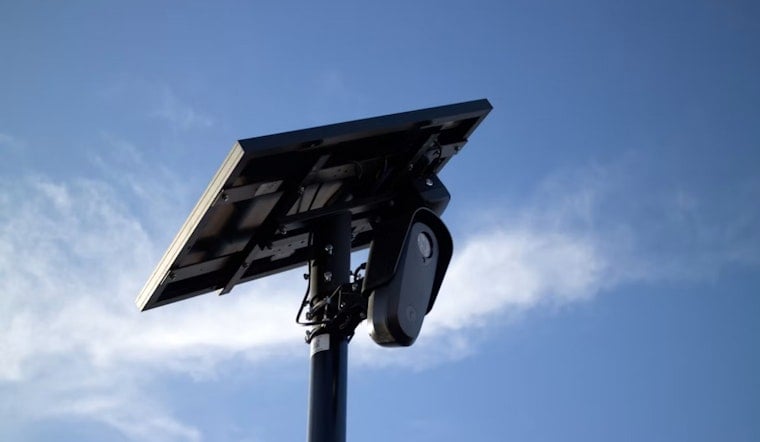
Dallas's sprawling network of 670 license plate-reading cameras could lose its city funding within days, as Councilmember Adam Bazaldua prepares to introduce a budget amendment Wednesday that would strip $1.5 million earmarked for the Flock Safety program next year. Bazaldua has said removing that funding would essentially terminate the city's contract with the company, forcing a citywide reckoning over a surveillance system police credit with helping solve dozens of violent crimes.
The stakes are high on both sides of the debate. As reported by NBC 5 Dallas-Fort Worth, the Dallas Police Department says Flock cameras helped solve 12 homicides this year and assisted in resolving 13% of business robbery cases, while Bazaldua counters that the technology has not yet been vetted to the desired level and deserves more scrutiny. He has also questioned whether the program is financially sustainable without state funding propping it up.
A Contract Built on Multiple Funding Streams
Dallas's current deal with Flock Group, Inc. is a three-year, $5.74 million service contract approved by the City Council in May 2025 and running through June 2028, according to City of Dallas legislative records. That total breaks down to $3.92 million from the city's General Fund, $1.69 million from a state catalytic converter grant, and $125,000 from federal Homeland Security grant funds. Bazaldua's proposed cut targets the recurring General Fund piece of that arrangement, the portion the city controls directly at budget time.
Complicating matters further, a Dallas police spokesperson said the department will not know the full impact of pulling city funding until it reviews updated state guidance, per the same NBC 5 report. The department has not received official word on how the cut would affect existing grant funding, previously purchased cameras, or future program expenditures. Roughly 1,900 Dallas police officers and city employees currently hold authorized access to the department's 684 Flock cameras, according to CBS News Texas, which reported that officers credit the network as their primary investigative tool in solving 12 homicides in 2026 and 15 in 2025.
State Funding Freeze Adds Pressure
The Dallas debate is unfolding just as Governor Greg Abbott ordered state agencies to stop funding Flock cameras statewide. That order followed criminal indictments of Texas police officers, including a Lufkin officer charged with 100 counts of misusing official information to stalk 11 people and a Katy officer charged with felony stalking after executing over 2,300 unauthorized searches, the station's report notes. Before the freeze, the state had relied on a $1 auto insurance fee passed in 2023 to combat catalytic converter theft, funneling at least $30 million toward more than 3,200 Flock cameras statewide, according to The Texas Tribune. The Texas Department of Public Safety had separately secured $15.9 million to install nearly 1,200 highway cameras, with 583 more planned for tollways, before Abbott's order froze that expansion.
Dallas is far from alone in reconsidering its relationship with the surveillance company. Wylie, Pflugerville, Hays County, and Hood County all voted in August to cancel or terminate their own Flock contracts over privacy risks and evidence of external data searches. Wylie kills Flock deal after backlash shows. In Pflugerville, public audit logs revealed that out-of-state entities performed searches hitting local cameras at a ratio of 315 to 1 compared to local police, underscoring the third-party access concerns fueling the pushback.
Vandalism and Oversight Questions Mount
At least 26 Flock cameras in Dallas have been vandalized since March as public frustration with neighborhood surveillance has intensified, CBS News Texas reported. During a Dallas Community Police Oversight Board briefing, community advocates questioned Flock camera placements positioned toward residential complex entrances, while department officials responded that federal agencies like ICE do not have direct access to Dallas Flock data, according to the Dallas Observer. DPD has maintained that direct data sharing is limited to a select group of vetted law enforcement partner agencies.
Flock Safety itself has pushed back on the broader narrative of misuse, saying it supports thoughtful legislation and strong privacy, transparency, and accountability guardrails. The company has defended what it calls responsible use of its technology, arguing that it should be used responsibly while preserving law enforcement's ability to deploy effective tools to keep people safe. Dallas Police Association leader Daniel Comeaux has voiced support for the department's use of the cameras, saying they have helped solve crimes throughout Dallas and will continue to help solve crimes throughout the city.
A Recent Case in Point
The debate comes just days after Dallas police relied on witness descriptions and the Flock network to locate and arrest a homicide suspect at a gas station 14 miles from a fatal shooting scene in Pleasant Grove on Sunday, as Hoodline's coverage of that arrest detailed. The arrest occurred along the Bruton Road corridor, an area that has seen multiple violent incidents over the summer, and stands as the kind of case police point to when defending the program's value.
At the federal level, U.S. Representative Keith Self of McKinney introduced the PRIVACY Act in July, legislation that would require federal law enforcement agencies to obtain a search warrant before querying or accessing state and local license plate reader data, according to Texas Scorecard. The bill is aimed at preventing federal agencies from using local systems like Dallas's to sidestep warrant requirements, adding another layer to the unresolved questions swirling around the technology's future.
For now, Dallas police say they cannot fully assess what happens if the council strips city funding Wednesday, since they are still awaiting updated state guidance on grants, existing cameras, and future spending. Flock camera technology nationally faces allegations of police misuse and concerns about oversight of authorities' ability to track motorists, a backdrop that will hang over the council chamber when Bazaldua's amendment comes to a vote.





