

























































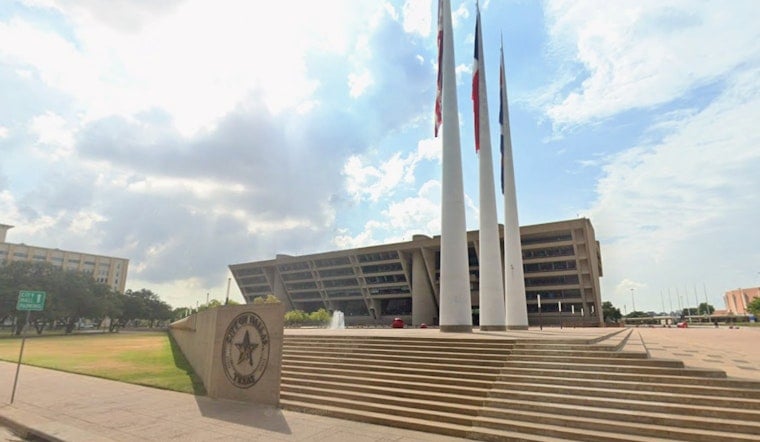
Dallas janitors, security guards and other city contract workers could see their pay floors cut under a new formula the Dallas City Council discussed Tuesday, a change that union leaders say could cost a full-time janitor as much as $13,000 a year. The council is scheduled to vote on the measure September 9, and city officials say it would apply only to future labor-intensive contracts, not existing ones.
The proposal, first reported by The Dallas Morning News, would set the wage floor for service contracts at whichever is cheaper: the MIT Living Wage Calculator figure or U.S. Bureau of Labor Statistics pay estimates for a given occupation. Under that approach, Dallas would use the MIT living wage for electricians because it comes in lower than other benchmarks, according to the outlet's reporting. City officials plan to exclude 28 of the city's 42 contracts from the new formula, and the policy would not touch software or insurance contracts.
Dallas voluntarily adopted a living-wage policy for its service contracts more than a decade ago, and the wage floor has climbed from a little over $10 an hour to $23 today, per the newspaper's account. The policy traces back to Resolution No. 15-2141, adopted by Dallas City Hall in November 2015, which mandates annual rate adjustments every October 1 based on the MIT Living Wage Calculator for Dallas County. When the ordinance first took effect, the hourly floor was set at $10.37; it climbed to $18.24 in fiscal year 2024 and $22.05 in fiscal year 2025, according to Dallas City Hall figures.
What Workers Stand to Lose
Under the current policy, Dallas security guards make $23 an hour, but they would make just $18.82 under market-rate federal numbers, per the newspaper's reporting. Electricians, by contrast, would make $30 an hour using federal data. Union leaders estimate a full-time janitor could lose as much as $13,000 in yearly earnings if the new formula takes effect, the outlet reports.
Chapter 9487 of the United Steelworkers represents Dallas County and City of Dallas workers, and John Mallon, speaking for the union, said working people should not shoulder the burden of the city's financial mismanagement, according to the same account. Dallas city officials, meanwhile, have said rising costs will add pressure to the annual budget, and the newspaper's subtitle frames the new formula as one that could lower pay for more than a third of the city's service contracts while reducing budget pressures.
Advocates Warn of Ripple Effects
Labor rights advocates say the city frames the change as resolving financial pressures on workers, but they worry the cuts will signal that employers do not have to keep up with the cost of living. Arash Farasat said the council's decision could have a cascading effect on other employers, warning that wage cuts brought about this way bring the market down for temporary workers. He added that when the council offers pay sufficient for living expenses, it effectively becomes part of the market — and that the effect of reversing that could echo out to the airport and beyond, per the newspaper's reporting.
City officials plan to review the included contracts every two years, and the future labor-intensive contracts covered under the new formula include landscaping, security services, cleaning and mechanical repairs. A living wage differs from the legally required minimum wage in that it considers the full costs of necessities such as food and housing, rather than a flat statutory floor. Dallas' living-wage policy is among the highest of U.S. cities with similar programs, the outlet notes.
Why Cities Have Limited Options
Texas law sharply limits what cities like Dallas can do on wages in the first place. Under the Texas Minimum Wage Act and the 2023 Texas Regulatory Consistency Act, local governments are legally barred from mandating minimum wages or benefit rules for private-sector employers, according to Littler Mendelson. That leaves municipal payrolls and vendor contracts as among the only levers Dallas has to influence wages at all.
On the direct-employee side, Dallas raised its internal minimum starting wage from $8.49 an hour in fiscal year 2016 to $19.25 an hour in fiscal year 2025, maintaining the highest entry-level municipal pay baseline among major cities in the region, per Dallas City Hall data. That stands in contrast to the contractor wage floor now on the table for cuts. Regionally, Austin adjusted its municipal living wage to $21.63 an hour for fiscal year 2025, while Fort Worth raised its starting municipal pay to $18.00 an hour in early 2025, according to KHOU 11.
The Cost-of-Living Backdrop
The debate arrives as the cost of simply getting by in Dallas County keeps climbing. A single adult with no children needs an annualized income of $48,485 — or roughly $23.31 an hour — to cover basic necessities like housing, food, and transportation, according to 2026 data from the MIT Living Wage Calculator cited by Dallas College. That is edging past the current $23-an-hour contractor floor even before any cut takes effect.
Broader wage growth across North Texas has also been cooling. Total compensation costs for private industry workers in the Dallas-Fort Worth area rose 2.7% over the 12 months ending in June, moderating from a 3.7% increase a year earlier and trailing the national growth rate of 3.3%, per the U.S. Bureau of Labor Statistics. Meanwhile, Hoodline's own reporting found only 31.45% of Dallas County adults aged 25 to 34 earned at or above a living wage in 2024, a slight improvement from 30.65% in 2023.
A city review conducted a year after Dallas enacted its original 2015 contractor living-wage ordinance found that higher contract pay floors improved worker morale and reduced turnover among contracted staff, according to a report cited by the Texas Observer. Whether reduced pay floors under the new formula could trigger similar turnover or service disruptions remains an open question as the council heads toward its next Wednesday vote.





