

























































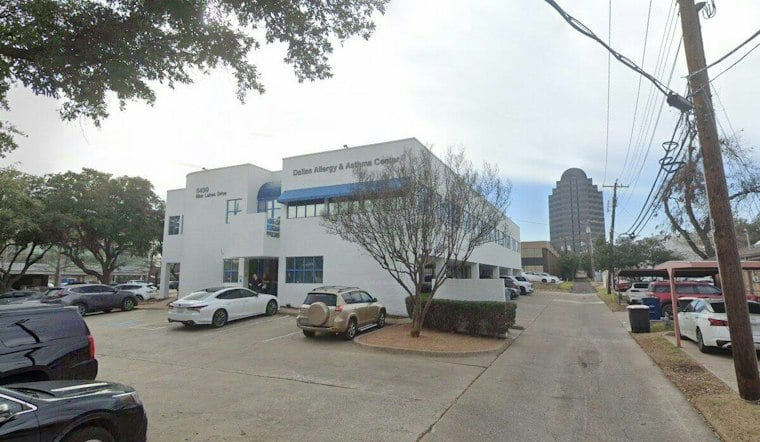
Dallas has been ranked the 18th most challenging city in the country to live with asthma, according to a new national report, and the reason has less to do with hospitals and more to do with health insurance. Michael Lanham, a Dallas-Fort Worth resident who has managed asthma and allergies for nearly 50 years, is one of thousands of North Texans navigating that gap firsthand.
The ranking comes from the Asthma and Allergy Foundation of America's 2026 Asthma Capitals report, which examined 100 metropolitan areas nationwide, as reported by Spectrum News. Allentown, Pennsylvania took the top spot as the most difficult city for asthma patients nationally, followed by Detroit at No. 2 and Rochester, New York at No. 3, according to the Asthma and Allergy Foundation of America. Allentown's top ranking stems from high asthma prevalence and the nation's highest rate of asthma-related emergency room visits, the foundation found.
Dallas was far from the only Texas city on the list. El Paso, San Antonio, Austin, McAllen and Houston were also named among the most challenging Texas metro areas for asthma, per the same Spectrum News report. Lara Gross, an allergist at the Dallas Allergy and Asthma Center, said she was surprised and disappointed by Dallas's ranking.
Insurance, Not Medicine, Is the Real Barrier
Gross said access to care remains a persistent challenge for asthma patients across Texas, and that patients without insurance often struggle simply to reach a doctor for routine asthma treatment. That barrier makes it harder for Texans to manage the disease before it escalates into a severe flare-up, she said — even though asthma can be well controlled when patients have the resources they need.
The numbers back up her concern. Dallas ranked third among all 100 metro areas evaluated for lack of health insurance, the report found. That statistic tracks with broader state trends: Texas cities dominated the top risk rankings for uninsured residents nationwide, with McAllen ranking No. 1 and El Paso No. 2, according to the foundation's analysis.
Those local rankings mirror statewide data. U.S. Census Bureau figures released in September 2025 showed Texas led the nation with the highest uninsured rate at 16.7%, or 5.1 million residents, including 21.6% of working-age adults and 13.6% of children, according to Texans Care for Children. Texas has declined to expand Medicaid under the Affordable Care Act.
Pediatric Coverage Losses Compound the Problem
The coverage gap has worsened for the state's youngest residents. A June 2026 Georgetown University study found that nearly 11% of Texas children under age 6 lacked health insurance in 2024, up from 7.9% in 2022, a jump largely driven by the post-pandemic Medicaid unwinding process that removed more than 2 million Texans from coverage, according to Click2Houston. Policy analysts estimate roughly half of uninsured Texas children remain eligible for Medicaid or CHIP but simply are not enrolled, the outlet reported.
Prescription access adds another layer of difficulty. Pharmaceutical manufacturer GSK discontinued its widely prescribed Flovent HFA inhaler at the end of 2023, forcing thousands of asthma patients and physicians to navigate generic transitions and insurance coverage hurdles, per Spectrum News. Allergists note that brand-name inhaler phaseouts often lead to out-of-pocket cost spikes for families already struggling to afford maintenance care.
Pollen and Ozone Add to the Strain
Environmental conditions in North Texas compound the coverage gaps. Texas has long pollen seasons and does not get the hard winter freezes that would otherwise interrupt them, which triggers asthma symptoms for many residents across the state, per Spectrum News. Pollen is Lanham's main asthma trigger, and he manages it by monitoring air conditions and adjusting his daily routine accordingly.
Summer smog compounds the seasonal pollen burden. The Dallas-Fort Worth region logged 14 days of unhealthy air during summer 2026, pushing the area's three-year ozone design value to 82 parts per billion — well above the EPA's federal standard of 70 ppb, Hoodline previously reported. Ground-level ozone forms rapidly during hot Texas summers and irritates already sensitive airways.
September brings its own surge in risk nationwide. The foundation designates September as Asthma Peak Month, with its third week marked as Asthma Peak Week, because back-to-school viral infections, peak ragweed pollen and classroom mold exposure converge to drive a sharp spike in emergency room visits — accounting for roughly 25% of annual pediatric asthma hospitalizations, according to Your Canada Drug Store. Researchers have noted pediatric hospital stays spike roughly 18 days after Labor Day.
Living With the Diagnosis Every Day
For Lanham, the daily reality of managing asthma has been constant for decades. He visits the Dallas Allergy and Asthma Center regularly, receiving shots and other treatments every five weeks, and relies on inhalers both for sudden attacks and for ongoing preventive and maintenance care, per Spectrum News. He said people living with asthma need to be diligent about managing the condition and expressed hope that all Texans with asthma can find the care and treatment they need.
The stakes behind that diligence are steep. Nearly 28 million Americans live with asthma nationwide, and an average of 9 to 11 people die from the disease each day, totaling 3,279 deaths in 2024, according to the foundation. Adult patients face six times higher mortality risk from asthma than children, the foundation noted.
Asthma causes nearly 1 million emergency department visits annually across the country, and asthma-related ER visit rates run nearly six times higher for Black patients than for White patients, per the foundation's 2026 health data analysis. Racial and socioeconomic disparities strongly correlate with higher reliance on emergency rooms over preventive care, the foundation found — a pattern that echoes the coverage gaps driving Dallas's own ranking.





