

























































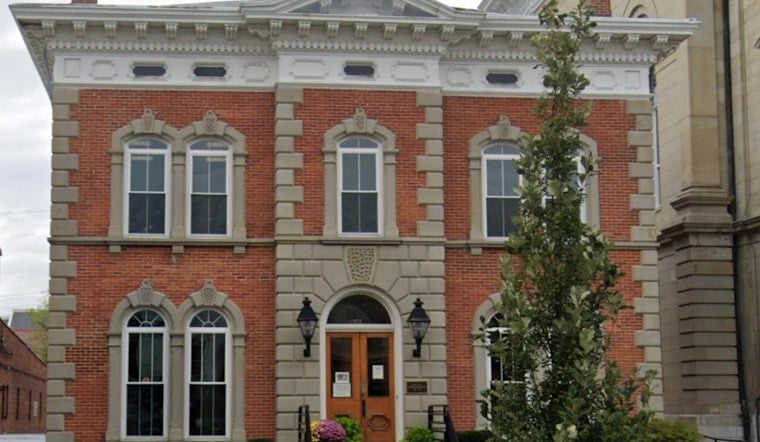
Darke County commissioners have formally come out against a proposed 765-kilovolt transmission corridor that would cut through some of Ohio's most productive farmland, approving a resolution and a letter of opposition aimed at reshaping how the project moves forward. County officials say the line, part of a sprawling regional grid expansion, threatens agricultural drainage systems, property values, and the rural character of a county where farming reigns as the top economic driver.
The resolution, approved by the Darke County Board of Commissioners, expresses concerns and opposition to routing the proposed 765-kV transmission project through the county, according to the Daily Advocate. The board concluded that a 765-kV corridor through Darke County does not serve the community's long-term interests, even as it says it supports continued improvements to the PJM transmission network overall. Commissioners also approved submission of a letter opposing the project's routing.
The project in question, known as Grid Growth West, is being proposed by Grid Growth Ventures, a joint venture between Transource Energy and FirstEnergy Transmission that regional grid operator PJM Interconnection selected in February 2026 to build roughly 220 miles of extra-high-voltage transmission lines across Ohio under its 2025 Regional Transmission Expansion Plan, according to Transource Energy. The broader Grid Growth West initiative spans approximately 147 miles of new lines across western and central Ohio, combining two 765-kV lines with one 345-kV line, with a targeted in-service date between 2030 and 2031, per Peak of Ohio.
A $1.9 Billion Farm Economy in the Crosshairs
Matthew Aultman, chairman of the Darke County commissioners, said the project will affect valuable, productive farmland, and warned it could alter the cultural makeup of the county, according to the Daily Advocate. Darke County has $1.9 billion in agricultural sales, produces 35.3 million bushels of grain, and is home to 10.5 million head of livestock, the paper reports — figures that echo the county's standing as Ohio's top agricultural production county. A separate accounting from the 2022 USDA Census of Agriculture, cited by My County Link, puts the county's annual agricultural sales at over $1.19 billion across more than 366,000 acres, or roughly 80% of its total land area.
Aultman said the commissioners deliberately delayed engaging publicly on the project while gathering information, the Daily Advocate reports. He encouraged landowners to attend information meetings, obtain legal counsel before signing any documents, and respond promptly to legal actions received by mail.
What a 765-kV Line Actually Looks Like
The scale of the infrastructure is part of what has alarmed local officials. A typical 765-kV transmission structure stands approximately 175 feet tall and requires an 180-foot-wide right-of-way corridor, with a single line capable of carrying enough power for two million homes, according to project specifications reported by AEP. Local officials elsewhere along the route have noted that towers of that height approach the scale of regional landmarks, such as the 185-foot Miami County Courthouse, per the same reporting.
The Grid Growth West project, as currently outlined, consists of approximately 76 miles of transmission line extending from the Ohio-Indiana border to a proposed Thistlewood substation in Clark County, and would affect portions of western and central Ohio including Darke County, the Daily Advocate reports. Aultman recommended a lengthy list of mitigation steps, including maximizing residential setbacks, using existing corridors first, clearly identifying future expansions and rights-of-way, and conducting an engineering analysis of undergrounding the lines. He also urged property-owner protections such as fair compensation and coverage for crop loss and soil impacts, along with alternative route analysis and independent review of the project.
Neighboring Counties Join the Pushback
Darke County is not alone. The Shelby County Board of Commissioners formally declared opposition to routing the line through their county on August 25, 2026, citing long-term disruptions to family farms, agricultural drainage systems, property values, and local public-safety communications, according to the Sidney Daily News. Shelby County officials said they support grid reliability broadly but do not believe a 765-kV corridor through their county serves the community's best interest, the outlet reported.
On September 4, 2026, the Champaign County Board of Commissioners issued its own formal statement opposing the project, raising concerns about damage to farmland, residential property values, future commercial development, and sensitive ecosystems including Cedar Bog, according to Peak of Ohio. Champaign County commissioners challenged grid planners to justify why semi-rural communities must bear the burden of high-voltage infrastructure, the outlet reported. State Representative Tim Barhorst, a Republican whose district covers western Ohio communities along the preliminary study corridors, also submitted a formal letter of opposition to the Ohio Power Siting Board on August 29, 2026, according to the Ohio House of Representatives.
Darke County commissioners addressed their own opposition letter to a long list of state and federal officials, including Governor Mike DeWine, Senator Bernie Moreno, Senator Jon Husted, Congressman Warren Davidson, State Senator Susan Manchester, State Senator Steve Huffman, and Ohio House Representatives Angie King and Johnathan Newman, per the Daily Advocate. Aultman requested engagement from U.S. senators and the governor specifically in opposition to the project, and encouraged elected officials broadly to engage in the project process, the paper reports.
Why the State, Not Counties, Holds Final Say
Despite the wave of county-level resolutions, the ultimate decision on where the lines go rests with the state. Under Ohio Revised Code Chapter 4906, major electric transmission lines rated at 100 kilovolts or higher must obtain a Certificate of Environmental Compatibility and Public Need from the Ohio Power Siting Board, which holds sole statutory authority to approve, modify, or reject proposed routes, according to the Ohio Power Siting Board. Applicants must present preferred and alternate routes while demonstrating minimal environmental and land-use impact, the board notes. The Daily Advocate reports that the project's approval process will involve the Ohio Power Siting Board, PJM, and the Federal Energy Regulatory Commission, and that Aultman expects the process to be lengthy.
The regional demand pressures driving the project are substantial. PJM Interconnection approved an $11.8 billion regional transmission expansion package across its 13-state footprint in February 2026, driven by forecasted electricity demand growth of nearly 4,800 megawatts by 2032 tied to expanding data centers, manufacturing plants, and technology facilities, according to Utility Dive. PJM has warned that its multi-year siting and regulatory processes require proactive transmission planning years in advance, the outlet reported.
Surveys Already Underway, More Meetings Ahead
While the political opposition builds, physical survey work is already happening overhead. Grid Growth Ventures scheduled aerial survey flights from September 3 through September 10, 2026, using low-flying small aircraft over study corridors in western Ohio to gather land elevation, vegetation, and structural data, the company said in materials distributed via PR Newswire. That data will help engineers narrow preliminary study corridors into proposed routes before formal applications are filed.
Grid Growth Ventures has provided photos and a map rendering of the proposed powerline routes and plans to host additional public meetings around the area, per the Daily Advocate. One such meeting is scheduled for September 29, 2026, running from 4:00 to 7:30 p.m. at Romer's Catering Greenville Ballroom, located at 118 E. Main St. in Greenville. Additional public meeting information is available through Grid Growth Ventures' website. Aultman said local consultations should include township trustees, county officials, municipalities, agricultural organizations, and other local stakeholders, and that the Darke County Board of Commissioners conducted its own research and discussions with potentially affected landowners and community members before taking its position.





